
Mit Magzter GOLD unbegrenztes Potenzial nutzen
Erhalten Sie unbegrenzten Zugriff auf über 9.000 Zeitschriften, Zeitungen und Premium-Artikel für nur
Wool: keeping a competitive edge
Farmer's Weekly
|September 12-19, 2025
To maintain competitiveness, the South African wool industry must maintain high standards of quality control and best practice. Nichelle Steyn explores some of these aspects.
-
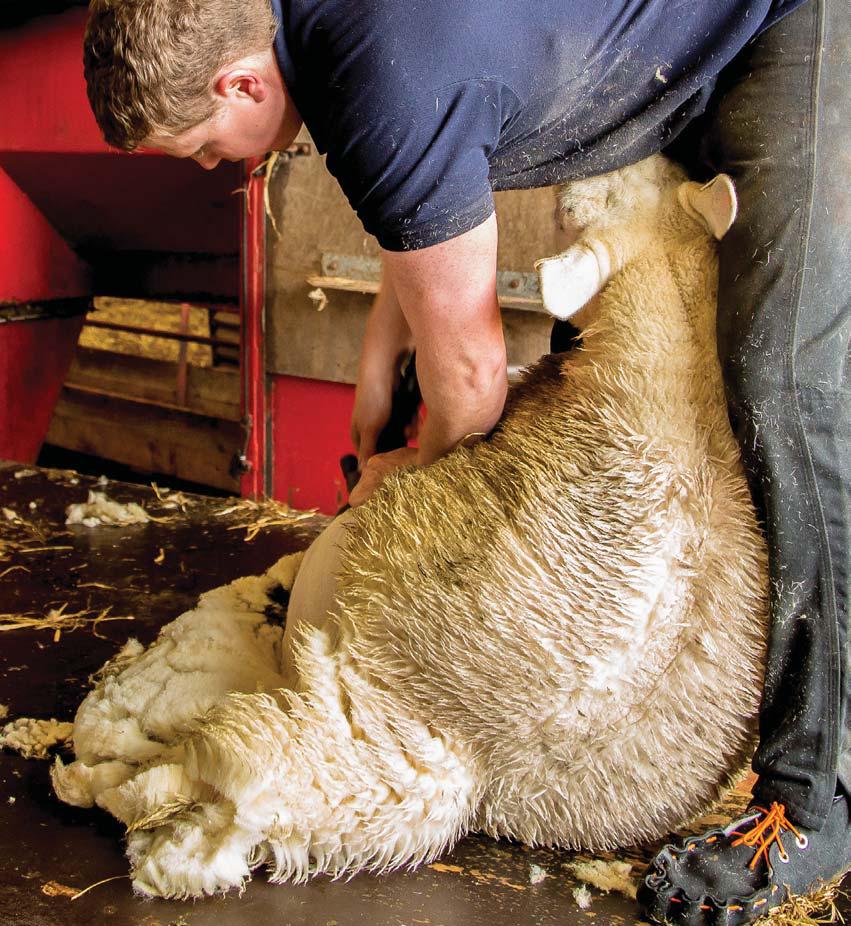
In a world of cashmere, alpaca and mohair, only the best-quality wool will command premium prices. To keep its competitive edge in the volatile textile markets, the wool industry must maintain high standards of quality control. South African wool has a good global reputation, particularly wool from Merino sheep that usually deliver yields that are clean, soft and uniform.
However, there is always room for improvement. When the quality of wool is judged by markets, fibre diameter (micron) and staple strength enhance value. Wool producers who adhere to sustainable practices, such as sheep covers, also boost competitiveness and attract demand.
Cape Wools SA states that expanding export markets, improving on-farm classing and developing the entire wool value chain, including small-scale farmers, are crucial strategies for increasing wool’s overall competitiveness.
According to the organisation, “Wool is not a mandatory choice in today’s apparel markets, and factors such a sustainability, animal welfare and ethics are increasingly becoming important factors influencing fibre choice when purchasing garments.”
That is why it emphasises the implementation of “traceability systems and transparency along the value chain to underpin the story of wool” – a great marketing tool to strengthen the good image of wool at consumer level.
“Best practices and assurance protocols must be introduced, implemented and maintained to support the overall promotion of wool products,” it continues. “These strategies must be supported by appropriate documented proof or evidence.”
HISTORY
South African wool growers are supported by the rich history of sheep and wool farming. This long history has established wool growers who have a keen appreciation of how to care for their animals and the environment. As a result, the industry consistently generates a high-quality, environmentally sound product for international markets.


Diese Geschichte stammt aus der September 12-19, 2025-Ausgabe von Farmer's Weekly.
Abonnieren Sie Magzter GOLD, um auf Tausende kuratierter Premium-Geschichten und über 9.000 Zeitschriften und Zeitungen zuzugreifen.
Sie sind bereits Abonnent? Anmelden
WEITERE GESCHICHTEN VON Farmer's Weekly

Farmer's Weekly
Christmas books to charm and delight
During the holiday season, one usually takes a well-earned break from the daily rutt, and there is no better time to catch up on some reading. Patricia McCracken has selected a wide spectrum of titles to tuck into.

4 mins
December 19-26, 2025

Farmer's Weekly
From chance to choice: a women's rise to farming success
Many raisin producers assume that retiring without a son to take over the farm means the end of the family business. Alcois Blaauw, this year's winner of the Raisins SA Female Producer Award, proves that assumption to be wrong. Glenneis Kriel reports.
4 mins
December 19-26, 2025

Farmer's Weekly
Grandparents below, and kids upstairs!
Dear Jonno,My wife and I want to escape to the countryside.
1 min
December 19-26, 2025
Farmer's Weekly
The Unseen Protector
The belief in the Unseen Protector or Unseen Shepherd endured for around 600 years, from the 13th century up until the 19th century. The farmer or his wife would provide a bowl of fresh cream and gruel to appease a spirit, whose blessing was imperative for a good summer harvest and animal health and fertility.
2 mins
December 19-26, 2025
Farmer's Weekly
THE HITCHING POST
I am a 67-year-old farmer residing on a farm near Harding in KwaZulu-Natal.
1 mins
December 19-26, 2025
Farmer's Weekly
Pet-friendly family accommodation in the Waterberg
With travel time of only a little over three hours from Johannesburg and 30 minutes from Vaalwater, guests will find Waterberg Cottages in Limpopo. Guests can plan a family-friendly holiday or weekend with plenty of activities to keep everyone occupied on this peaceful 2 500ha private game reserve.
4 mins
December 19-26, 2025
Farmer's Weekly
The Shuman legacy continues under the watchful eye of a fifth-generation farmer
Ken Shuman, co-owner of Hilson Shuman Farming, is committed to carrying on his father's towering legacy through innovation and adaptation.
9 mins
December 19-26, 2025

Farmer's Weekly
History's most famous musket
The Brown Bess musket was the standard issue firearm for British forces from 1722 to 1838. As Mike Burgess writes, this much-loved weapon contributed significantly to the consolidation of the British Empire that by 1922 was in control of a quarter of the earth's surface.
4 mins
December 19-26, 2025

Farmer's Weekly
Muddy soil can cause lameness due to footrot
It is important to clean legs and hooves and check for lameness in horses on a daily basis, especially when there is heavy rain
2 mins
December 19-26, 2025

Farmer's Weekly
The role of family farmers in sub- Saharan Africa
As part of the United Nations' recognition of family farming as a vital component of the global agricultural landscape, the decade between 2019 to 1928 was declared the Decade for Family Farming globally. Annelie Coleman compiled this report.
6 mins
December 19-26, 2025
Listen
Translate
Change font size