Versuchen GOLD - Frei
These Irish farmers influence public opinion
Farmer's Weekly
|Farmer's weekly 4 August
Public opinion on farming practices has taken a negative slant the world over as social media perpetuate stereotypes of farmers who only seek profit, to the detriment of the environment. Irish farmers Pete and Paula Hynes are challenging those views by placing their farm firmly in the spotlight. Lindi Botha reports

To call Pete and Paula Hynes, farmers who hail from Aherla, Ireland, celebrities seems out of place. The down-to-earth couple, donning muddy rubber boots, overalls and worn T-shirts as they rake soiled manure, do not personify stardom. While Paula’s lashes are tipped with mascara, there is little time to focus on personal luxuries as the couple run a dairy with 180 cows in milk and a cow stud, while balancing a full show schedule, raising three daughters and devoting any spare time to advocating for farmers.
Pete and Paula have garnered nearly 20 000 followers on social media and are regularly featured in mainstream media, each has a weekly column in a national newspaper, and they take part in reality TV programmes.
Their herd, larger than the average Irish herd of 120 cows, consists of Holsteins and Jerseys that are pasture-fed. With milk prices under pressure and input costs rising, the Hyneses state that anything less than 180 cows in milk would mean that the farm would not be able to support the family financially.
While remaining profitable is cause enough to keep farmers awake at night, Irish farmers face a far bigger existential crisis: the government has proposed culling 10% of the national dairy herd to meet methane reduction targets. This, while more feasible solutions are at hand.
“Science is advancing rapidly and there are feed additives available that can decrease methane emissions by 40%,” says Pete. “Cutting livestock numbers is not necessary and is a short-sighted, lazy way to reduce emissions. I have full confidence in science and research, but the challenge is to get the state and authorities to embrace that research.”
RAISING THEIR VOICES
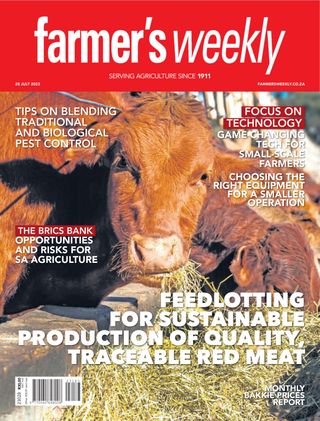

Diese Geschichte stammt aus der Farmer's weekly 4 August-Ausgabe von Farmer's Weekly.
Abonnieren Sie Magzter GOLD, um auf Tausende kuratierter Premium-Geschichten und über 9.000 Zeitschriften und Zeitungen zuzugreifen.
Sie sind bereits Abonnent? Anmelden
WEITERE GESCHICHTEN VON Farmer's Weekly

Farmer's Weekly
More about growing vegetable seedlings in trays
By considering various factors and tailoring care to specific vegetable needs, you can produce healthy, robust seedlings ready for transplanting into the garden, writes Shane Brody.

2 mins
March 27 - April 3, 2026

Farmer's Weekly
Prodigy of agriculture and land is now a presidential envoy
Wandile Sihlobo will be armed by state powers to accelerate any decision-making that the Presidency deems crucial to grow the sectors of agriculture and land
2 mins
March 27 - April 3, 2026

Farmer's Weekly
Notes from the Western Cape agricultural roadshow
We spent time last week engaging with agribusinesses and farmers in the Western Cape. The primary agricultural focus of the province is various fruits, citrus, table grapes, wine, wheat, barley, livestock, and aquaculture, among many value chains.
3 mins
March 27 - April 3, 2026

Farmer's Weekly
AGOA's promise fades under new US tariffs
Although the African Growth and Opportunity Act has been extended for another year, new US reciprocal tariffs have largely erased its duty-free benefits. Recent modelling shows sharp declines in African exports to the US, particularly in apparel-dependent economies such as Lesotho and Madagascar.
4 mins
March 27 - April 3, 2026
Farmer's Weekly
Egon Zunckel: a lifetime of learning from the soil
The Zunckel name is synonymous with no-till farming in South Africa. Egon Zunckel, a pioneer in the field and a passionate advocate for soil health, shared with Lindi Botha the lessons he has learnt over the years about building resilient soils and sustainable farming systems.
10 mins
March 27 - April 3, 2026
Farmer's Weekly
Researchers explore new tools to combat herbicide resistance
Research by students from Stellenbosch University aimed at combatting herbicide resistance was highlighted during a recent technical trial information day hosted by the Western Cape Department of Agriculture.
6 mins
March 27 - April 3, 2026

Farmer's Weekly
Lepas leaps into South Africa as the latest Chery-owned brand
Lepas has become Chinese carmaker Chery's latest local subbrand with the introduction of the L4 compact SUV. The Citizen's Charl Bosch reports.
2 mins
March 27 - April 3, 2026
Farmer's Weekly
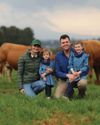
La Rhone Limousins: a small mixed herd turned renowned stud
The Western Cape is not typically known for cattle farming, particularly in its fruit-growing regions. Yet nestled among the orchards below the mountains of Tulbagh is a Limousin stud that has made a name for itself. AJ du Toit of La Rhone Limousins spoke to Henning Naudé about producing high-quality genetics now found on farms in all nine provinces.
6 mins
March 27 - April 3, 2026
Farmer's Weekly
Nitrogen: no easy fix
Products that claim to herald a nitrogen revolution that will boost global food production are nothing more than snake oil, say scientists.
4 mins
March 27 - April 3, 2026

Farmer's Weekly
Potato soup
Rich, creamy, and indulgent, this soup is the ultimate in comfort food.
1 mins
March 27 - April 3, 2026
Translate
Change font size