
Mit Magzter GOLD unbegrenztes Potenzial nutzen
Erhalten Sie unbegrenzten Zugriff auf über 9.000 Zeitschriften, Zeitungen und Premium-Artikel für nur
Versuchen GOLD - Frei
Preventing and controlling diseases of sunflowers
Farmer's Weekly
|Farmer's Weekly 6+13 January 2023
Diseases of sunflowers, such as brown rust and head rot, can cause severe economic losses for farmers. Janine Ryan looks at the signs of these and other diseases that can help farmers to identify them, as well as some control and prevention strategies.

In this article, we look at diseases that can affect sunflower crops in South Africa. While some are more common than others, all those listed here can cause severe yield and economic losses.
Foliar diseases of sunflower are caused by various pathogens, including Alternaria helianthi, Puccinia helianthi and Septoria helianthi. They cause various symptoms on foliage, which may result in lower sunflower yields during seasons that are favourable to their development.
The ideal environmental conditions for the development of these diseases vary, and so correct disease identification is crucial for developing appropriate disease-management strategies for each.
ALTERNARIA LEAF SPOT
Alternaria leaf spot is a major defoliating fungus that occurs in warm, humid climates all around the world, according to the Agricultural Research Council (ARC). There are many species that cause leaf spot, but A. helianthi is the most common. A. helianthi overwinters on infected plant residue, the ARC explains, but wild sunflowers can also be reservoirs. A. helianthi seeds are also wind-borne.
The optimal temperature for the germination of the fungus is above 26°C, and at least four hours of wetness are required. Seedlings are the most prone to infection.
What to look for
Alternaria causes linear spots on the stem of the plant, as well as sunken, water-soaked lesions on the back of the head, says the ARC. However, the council warns that all Alternaria species cause similar symptoms, making it difficult to identify the particular species in-field.
FAST FACTS

Diese Geschichte stammt aus der Farmer's Weekly 6+13 January 2023-Ausgabe von Farmer's Weekly.
Abonnieren Sie Magzter GOLD, um auf Tausende kuratierter Premium-Geschichten und über 9.000 Zeitschriften und Zeitungen zuzugreifen.
Sie sind bereits Abonnent? Anmelden
WEITERE GESCHICHTEN VON Farmer's Weekly
Farmer's Weekly
Cash flow budgets: keeping farmers in control of liquidity, risk, and their survival
Profit doesn't guarantee a farm's survival - cash does. Cobus du Plessis explains why cash flow budgets are one of the most important yet underused financial tools on South African farms.

5 mins
February 27 - March 06, 2026

Farmer's Weekly
The toast of the Navy
The incredible story of the World War II-era Great Dane dog Nuisance being enlisted in the Royal Navy is well documented. Graham Jooste shared some entertaining anecdotes involving the canine shipmate.
6 mins
February 27 - March 06, 2026
Farmer's Weekly
Healthier soils deter destructive locusts
Locust swarms remain a serious global threat, capable of devastating crops, livelihoods and local economies across vast regions.
1 min
February 27 - March 06, 2026
Farmer's Weekly
Wheat crisis dominates Grain SA regional meetings
As the ongoing wheat crisis continues to erode producers' margins, emotions ran high at Grain SA's regional meeting in Moorreesburg in the Western Cape.
2 mins
February 27 - March 06, 2026

Farmer's Weekly
A FARMER'S EXPERIENCE
Street Wallet has been a game-changer for Mario Athanasopoulos, hydroponic production consultant and owner of Green City Farms.
1 mins
February 27 - March 06, 2026
Farmer's Weekly
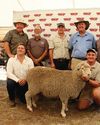
Kesieberg Merino Stud Production Sale
The Kesieberg Merino Stud Production Sale was held on the farm Leeuwfontein on 4 February on behalf of Willie and Herman Henning.
1 min
February 27 - March 06, 2026
Farmer's Weekly
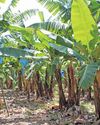
Not cheaper, just different: what you should know about farming in Mozambique
Although Mozambique is often viewed as a cheaper, easier farming location than South Africa, cost comparisons tell a more complex story. But while cross-border production presents real challenges, it also offers opportunities for complementary trade, diversification and regional food security, particularly when it comes to subtropical crops such as bananas.
10 mins
February 27 - March 06, 2026
Farmer's Weekly
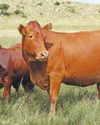
The all-rounder anchoring South Africa's beef value chain
Louis Steyl, CEO of the Bonsmara Cattle Breeders' Society of South Africa, spoke to Octavia Avesca Spandiel about how the versatile Bonsmara breed anchors the country's beef value chain, delivering balanced performance, reproductive and feed efficiency, and carcass traits across extensive and intensive systems.
6 mins
February 27 - March 06, 2026

Farmer's Weekly
THE HITCHING POST
I'm a 60-year-old white woman who loves camping, animals, the outdoors, and watching sport.
2 mins
February 27 - March 06, 2026
Farmer's Weekly
Foot-and-mouth disease in pigs
Recently, the radio news mentioned an outbreak of foot-and-mouth disease (FMD) in pigs in South Africa.
2 mins
February 27 - March 06, 2026
Translate
Change font size