
Mit Magzter GOLD unbegrenztes Potenzial nutzen
Erhalten Sie unbegrenzten Zugriff auf über 9.000 Zeitschriften, Zeitungen und Premium-Artikel für nur
Versuchen GOLD - Frei
Pomegranate's ruby-red allure is hard to beat
Farmer's Weekly
|August 23, 2024
As unfussy as they come, pomegranates are a relatively easy crop to cultivate. With market conditions picking up, the fruit offers first-time, part-time and long-time farmers an attractive option should they find themselves in the right climate.Lindi Botha reports on the success of a farm in Gauteng.

Hot summers, cold winters, and well-drained soil: these are the basic requirements to start farming pomegranates. “It’s not a fussy, high maintenance crop, although it does still need a bit of care. But someone who has never farmed before, for example, will likely succeed with pomegranates,” says Louis Swanepoel.
Swanepoel and his partner, Kobus van Zyl, who own Ubali Pomegranate Farm in Cullinan, Gauteng, are focused on producing pomegranate trees for farmers. The 3 000 trees in their mother block, used to produce cuttings, provide them with ample fruit and sound knowledge of what it takes to produce this crop.
When they moved onto the smallholding 13 years ago, they planted a test block of 100 trees to see if pomegranates were suited to the area. “It is a Mediterranean crop, and while Gauteng’s climate can’t be classified as such, the trees did really well, so we started expanding,” explains Swanepoel.
Today, the nursery has capacity for 45 000 trees, which are supplied to farmers from Gauteng to the Western Cape. A key consideration for planting pomegranates is cold units. “The temperature needs to drop to at least -5°C in winter to ensure the trees go dormant. If it doesn’t, the trees are unlikely to bear fruit,” he adds.
Swanepoel also cautions against tropical and subtropical climates, noting that areas suitable for apricot and peach production will likely be suitable for pomegranates, too.
GET THE BASICS RIGHT
Pomegranates prefer sandy soil and can cope in poor soils but not clay. Swanepoel relates advice he received to determine if the soil is suited to pomegranates: “Dig a 1m³ hole and fill it with water. If there is still water in that hole after 48 hours, then the land is not suited to pomegranates.”


Diese Geschichte stammt aus der August 23, 2024-Ausgabe von Farmer's Weekly.
Abonnieren Sie Magzter GOLD, um auf Tausende kuratierter Premium-Geschichten und über 9.000 Zeitschriften und Zeitungen zuzugreifen.
Sie sind bereits Abonnent? Anmelden
WEITERE GESCHICHTEN VON Farmer's Weekly
Farmer's Weekly
Cash flow budgets: keeping farmers in control of liquidity, risk, and their survival
Profit doesn't guarantee a farm's survival - cash does. Cobus du Plessis explains why cash flow budgets are one of the most important yet underused financial tools on South African farms.

5 mins
February 27 - March 06, 2026

Farmer's Weekly
The toast of the Navy
The incredible story of the World War II-era Great Dane dog Nuisance being enlisted in the Royal Navy is well documented. Graham Jooste shared some entertaining anecdotes involving the canine shipmate.
6 mins
February 27 - March 06, 2026
Farmer's Weekly
Healthier soils deter destructive locusts
Locust swarms remain a serious global threat, capable of devastating crops, livelihoods and local economies across vast regions.
1 min
February 27 - March 06, 2026
Farmer's Weekly
Wheat crisis dominates Grain SA regional meetings
As the ongoing wheat crisis continues to erode producers' margins, emotions ran high at Grain SA's regional meeting in Moorreesburg in the Western Cape.
2 mins
February 27 - March 06, 2026

Farmer's Weekly
A FARMER'S EXPERIENCE
Street Wallet has been a game-changer for Mario Athanasopoulos, hydroponic production consultant and owner of Green City Farms.
1 mins
February 27 - March 06, 2026
Farmer's Weekly
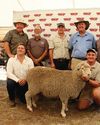
Kesieberg Merino Stud Production Sale
The Kesieberg Merino Stud Production Sale was held on the farm Leeuwfontein on 4 February on behalf of Willie and Herman Henning.
1 min
February 27 - March 06, 2026
Farmer's Weekly
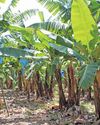
Not cheaper, just different: what you should know about farming in Mozambique
Although Mozambique is often viewed as a cheaper, easier farming location than South Africa, cost comparisons tell a more complex story. But while cross-border production presents real challenges, it also offers opportunities for complementary trade, diversification and regional food security, particularly when it comes to subtropical crops such as bananas.
10 mins
February 27 - March 06, 2026
Farmer's Weekly
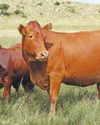
The all-rounder anchoring South Africa's beef value chain
Louis Steyl, CEO of the Bonsmara Cattle Breeders' Society of South Africa, spoke to Octavia Avesca Spandiel about how the versatile Bonsmara breed anchors the country's beef value chain, delivering balanced performance, reproductive and feed efficiency, and carcass traits across extensive and intensive systems.
6 mins
February 27 - March 06, 2026

Farmer's Weekly
THE HITCHING POST
I'm a 60-year-old white woman who loves camping, animals, the outdoors, and watching sport.
2 mins
February 27 - March 06, 2026
Farmer's Weekly
Foot-and-mouth disease in pigs
Recently, the radio news mentioned an outbreak of foot-and-mouth disease (FMD) in pigs in South Africa.
2 mins
February 27 - March 06, 2026
Listen
Translate
Change font size