Versuchen GOLD - Frei
More than space: designing pig housing systems for the future
Farmer's Weekly
|July 3-10, 2026
As South Africa's pig industry prepares for the transition away from gestation crates, producers will need to rethink far more than floor space. Research shows that the success of group housing depends on how housing design, feeding systems, ventilation, stocking density and day-to-day management work together to support both welfare and productivity.
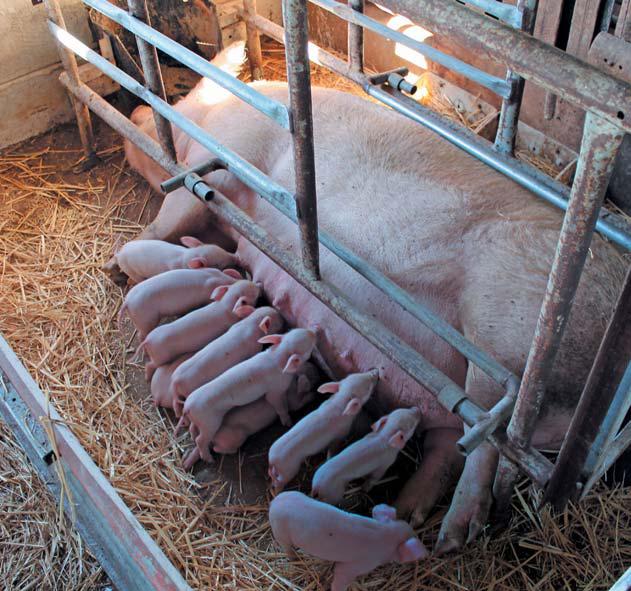
The South African Pork Producers’ Organisation (SAPPO) welfare code revision marks a significant shift in how breeding herds will be housed in the future.
While the 2023 code permits sows to be housed in gestation crates for up to eight weeks, the revised 2025 code phases out crates entirely from 1 January 2032 and increases the minimum space allocation to 2,25m² per sow.
For many producers, the immediate implication is the need to provide more space. However, research conducted by the National Pork Board in the US suggests that successful group housing involves far more than meeting a minimum floor-space requirement.
According to the researchers, factors such as feeding systems, group size, pen design and animal management all influence how effectively sows utilise available space. More importantly, they determine whether the transition to group housing improves welfare and productivity or simply introduces new challenges.
This aligns closely with the realities already facing many South African producers. According to Cara Nel, monogastric development manager at Vitam International, environmental stress remains one of the most consistent drivers of reduced feed conversion in commercial pig systems.
“Housing design is one of the most important determinants of environmental stability, yet many production systems have not kept up with upgrades that take into account the needs of modern herds. Adequate insulation is a common issue, which impacts ventilation capacity, limiting temperature control and increasing environmental stress on pigs,” she says.
GROUP HOUSING IS ABOUT MORE THAN SQUARE METRES
One of the strongest conclusions from the US National Pork Board review is that additional floor space alone does not automatically create a successful group housing system.

Diese Geschichte stammt aus der July 3-10, 2026-Ausgabe von Farmer's Weekly.
Abonnieren Sie Magzter GOLD, um auf Tausende kuratierter Premium-Geschichten und über 9.000 Zeitschriften und Zeitungen zuzugreifen.
Sie sind bereits Abonnent? Anmelden
WEITERE GESCHICHTEN VON Farmer's Weekly

Farmer's Weekly
Baked coconut pudding with passion fruit sauce
A custardy twist on traditional lemon delicious, this pudding can even be made on the braai.

1 mins
July 3-10, 2026
Farmer's Weekly
More than space: designing pig housing systems for the future
As South Africa's pig industry prepares for the transition away from gestation crates, producers will need to rethink far more than floor space. Research shows that the success of group housing depends on how housing design, feeding systems, ventilation, stocking density and day-to-day management work together to support both welfare and productivity.
7 mins
July 3-10, 2026
Farmer's Weekly
Managing herbicide resistance
Herbicide-resistant weeds are becoming a serious challenge for farmers and the agriculture sector globally. Magda du Toit asked industry experts how farmers can manage this problem.
5 mins
July 3-10, 2026
Farmer's Weekly
Ageing orchards and soaring costs pose challenge for guava growers
Guava orchard establishment costs have reached over R199 000/ha. This surge puts pressure on growers, as over half of South Africa’s orchards surpass 40 years in age.
2 mins
July 3-10, 2026
Farmer's Weekly
Integrated pest management reduces risk without lowering productivity
Controlling insects is becoming a science on its own, and with mounting pressure from environmentalists and consumers, farmers need to look at softer and more environmentally friendly methods to combat insect pests. Magda du Toit investigates.
4 mins
July 3-10, 2026

Farmer's Weekly
The Great American bison slaughter
From 1850 to 1890, the population of bison roaming North America were reduced from an estimated 30 million to 60 million to fewer than a thousand. Mike Burgess uncovers the reasons why and how a species was hunted to the brink of extinction.
3 mins
July 3-10, 2026

Farmer's Weekly
Unlocking inclusive agricultural growth
Partnerships between financial institutions, commodity associations, agricultural trusts, and government could help unlock opportunities for emerging farmers, says Dr Sifiso Ntombela.
2 mins
July 3-10, 2026

Farmer's Weekly
A collection of comforting winter warmers
Whether your house is bursting with children on holiday, you're taking a break yourself, or you just need to reward yourself with a good book, Patricia McCracken has selected these titles to warm your winter days.
3 mins
July 3-10, 2026

Farmer's Weekly
New agri careers in science and technology
Agriculture's future lies in interdisciplinary STEM (science, technology, engineering and mathematics) careers. Petri de Beer explores the growing range of science- and technology-driven opportunities across the sector.
3 mins
July 3-10, 2026

Farmer's Weekly
Pig nutrition: the right diet for every stage of production
Understanding the nutritional needs of pigs at different stages of production is essential for maintaining animal health, improving growth rates and ensuring profitable production
2 mins
July 3-10, 2026
Listen
Translate
Change font size