
Mit Magzter GOLD unbegrenztes Potenzial nutzen
Erhalten Sie unbegrenzten Zugriff auf über 9.000 Zeitschriften, Zeitungen und Premium-Artikel für nur
Versuchen GOLD - Frei
Merinos: the cornerstone of South Africa's sheep industry
Farmer's Weekly
|26 September - 3 October 2025
Grant Naudé, president of Merino South Africa, spoke to Octavia Avesca Spandiel about the Merino breed's adaptability, dual-purpose strengths and vital role in sustaining South Africa's wool and meat industries.
-
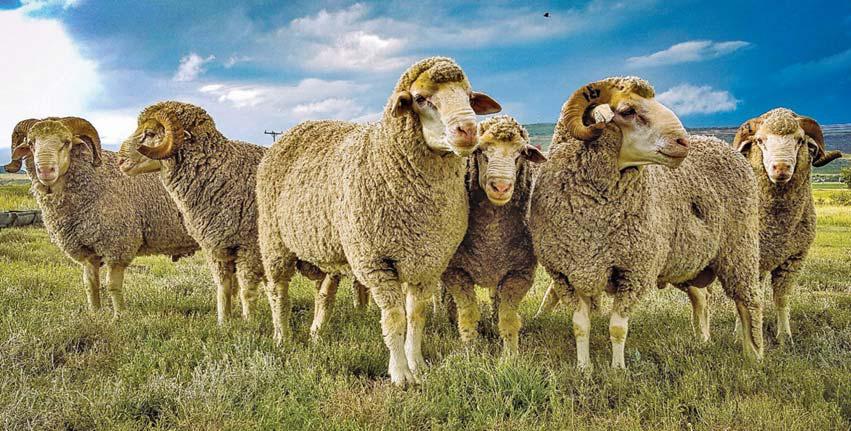
Merino sheep remain at the heart of South Africa’s wool and mutton industries, with their adaptability, dual-purpose traits and genetic progress driving their continued dominance in the country’s livestock sector.
Speaking to Farmer's Weekly, Grant Naudé, president of Merino South Africa (Merino SA), says the breed’s versatility gives farmers a unique level of stability in a volatile agricultural market.
“The Merino is not just another sheep. It is the cornerstone of the South African sheep industry.
“What makes it stand out is its dual-purpose advantages. It produces world-class wool that sells at premium prices internationally, while also delivering lean, tender meat that meets both local and export demand.
“If wool prices dip, carcass value can carry you through, and if the meat market is under pressure, the wool cheque brings stability,” he says.
ADAPTABILITY ACROSS SOUTH AFRICA
According to Naudé, South Africa's diverse climate and landscapes make adaptability a key trait in any successful livestock breed.
Merinos have proven themselves in regions ranging from the dry Karoo to the sourveld and irrigated pastures.
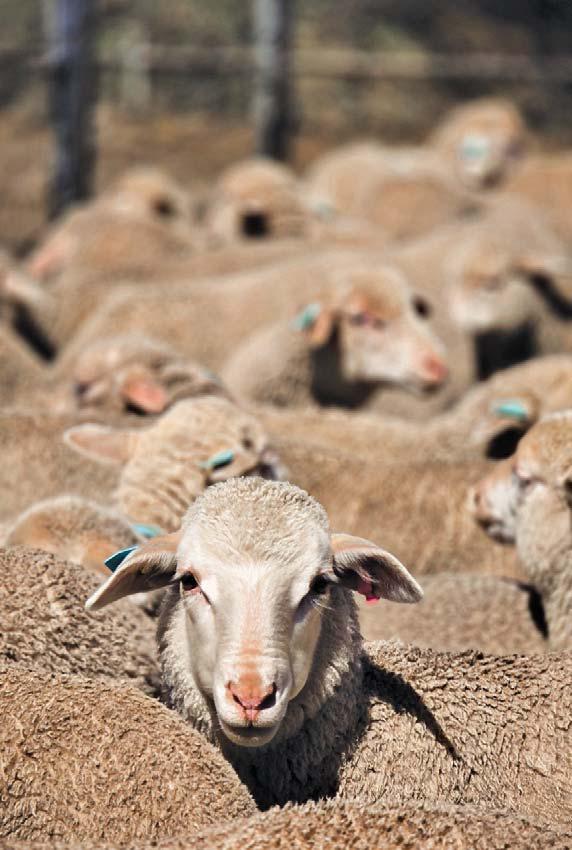 Naudé adds that this flexibility is a major reason why Merinos dominate sheep numbers across the country, offering both small-scale and commercial farmers reliable production options.
PRODUCTION SYSTEMS
Unlike many breeds, Merinos do not force farmers into one production system. Naudé says they excel in both extensive and intensive setups.
"In extensive systems, they survive well on natural grazing, keeping input costs low. But in intensive conditions on irrigated pastures or in feedlots, they also perform exceptionally.
The lambs convert feed efficiently and provide a uniform product for the market."

Diese Geschichte stammt aus der 26 September - 3 October 2025-Ausgabe von Farmer's Weekly.
Abonnieren Sie Magzter GOLD, um auf Tausende kuratierter Premium-Geschichten und über 9.000 Zeitschriften und Zeitungen zuzugreifen.
Sie sind bereits Abonnent? Anmelden
WEITERE GESCHICHTEN VON Farmer's Weekly
Farmer's Weekly
Cash flow budgets: keeping farmers in control of liquidity, risk, and their survival
Profit doesn't guarantee a farm's survival - cash does. Cobus du Plessis explains why cash flow budgets are one of the most important yet underused financial tools on South African farms.

5 mins
February 27 - March 06, 2026

Farmer's Weekly
The toast of the Navy
The incredible story of the World War II-era Great Dane dog Nuisance being enlisted in the Royal Navy is well documented. Graham Jooste shared some entertaining anecdotes involving the canine shipmate.
6 mins
February 27 - March 06, 2026
Farmer's Weekly
Healthier soils deter destructive locusts
Locust swarms remain a serious global threat, capable of devastating crops, livelihoods and local economies across vast regions.
1 min
February 27 - March 06, 2026
Farmer's Weekly
Wheat crisis dominates Grain SA regional meetings
As the ongoing wheat crisis continues to erode producers' margins, emotions ran high at Grain SA's regional meeting in Moorreesburg in the Western Cape.
2 mins
February 27 - March 06, 2026

Farmer's Weekly
A FARMER'S EXPERIENCE
Street Wallet has been a game-changer for Mario Athanasopoulos, hydroponic production consultant and owner of Green City Farms.
1 mins
February 27 - March 06, 2026
Farmer's Weekly
Kesieberg Merino Stud Production Sale
The Kesieberg Merino Stud Production Sale was held on the farm Leeuwfontein on 4 February on behalf of Willie and Herman Henning.
1 min
February 27 - March 06, 2026

Farmer's Weekly
Not cheaper, just different: what you should know about farming in Mozambique
Although Mozambique is often viewed as a cheaper, easier farming location than South Africa, cost comparisons tell a more complex story. But while cross-border production presents real challenges, it also offers opportunities for complementary trade, diversification and regional food security, particularly when it comes to subtropical crops such as bananas.
10 mins
February 27 - March 06, 2026
Farmer's Weekly
The all-rounder anchoring South Africa's beef value chain
Louis Steyl, CEO of the Bonsmara Cattle Breeders' Society of South Africa, spoke to Octavia Avesca Spandiel about how the versatile Bonsmara breed anchors the country's beef value chain, delivering balanced performance, reproductive and feed efficiency, and carcass traits across extensive and intensive systems.
6 mins
February 27 - March 06, 2026

Farmer's Weekly
THE HITCHING POST
I'm a 60-year-old white woman who loves camping, animals, the outdoors, and watching sport.
2 mins
February 27 - March 06, 2026
Farmer's Weekly
Foot-and-mouth disease in pigs
Recently, the radio news mentioned an outbreak of foot-and-mouth disease (FMD) in pigs in South Africa.
2 mins
February 27 - March 06, 2026
Listen
Translate
Change font size