
Mit Magzter GOLD unbegrenztes Potenzial nutzen
Erhalten Sie unbegrenzten Zugriff auf über 9.000 Zeitschriften, Zeitungen und Premium-Artikel für nur
Versuchen GOLD - Frei
In search of the ultimate grazing strategy: Part 2
Farmer's Weekly
|November 7-14, 2025
Prof Richard Fynn, of the Rangeland Ecology, Okavango Research Institute, University of Botswana, explains how Facilitative Recursive Grazing (FRG) can improve grazing management
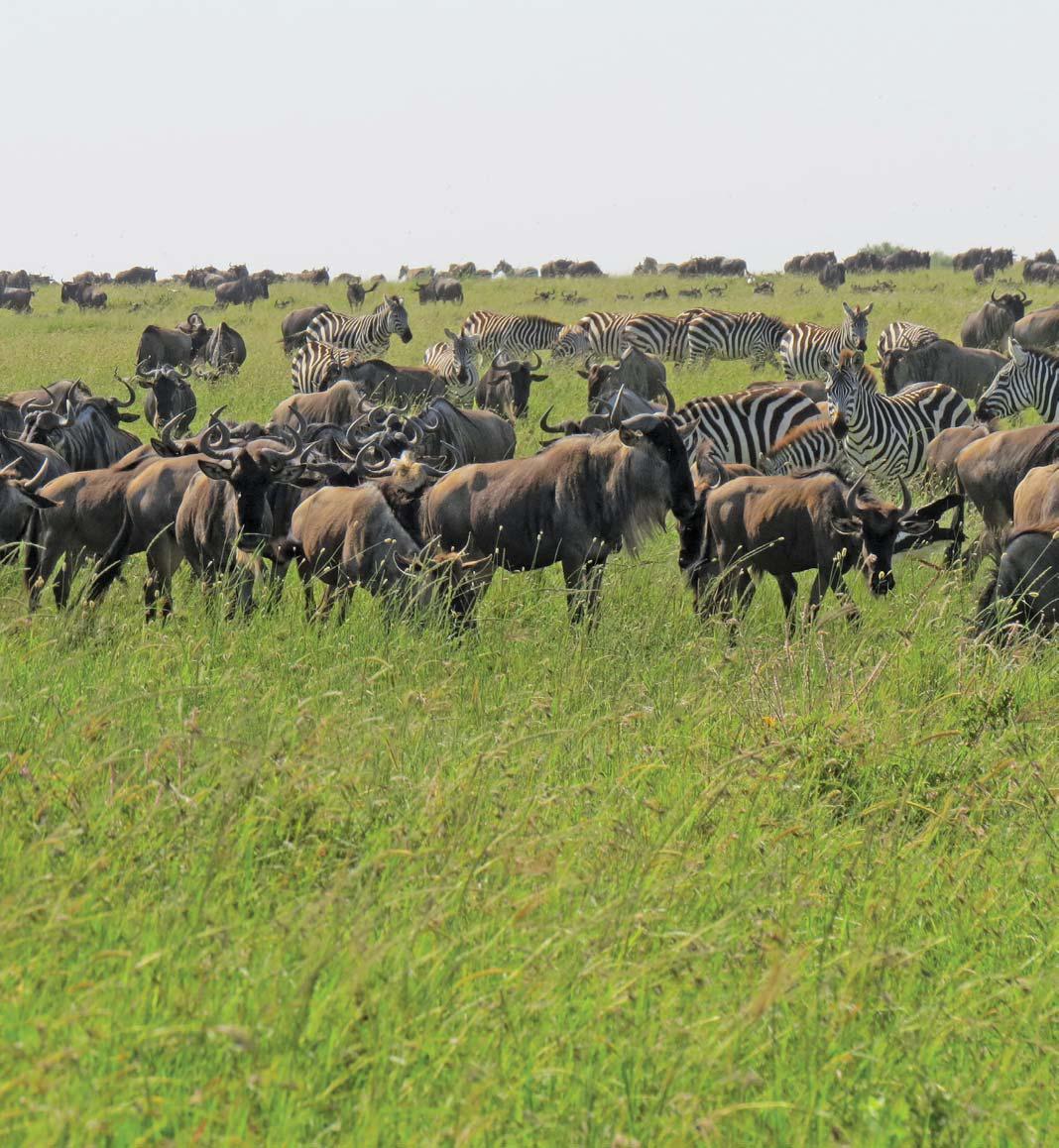
Non-selective grazing can only be effectively achieved when both the palatable and unpalatable grasses are kept in a short, high-quality state the entire growing season.
This gives better forage quality and animal performance and promotes non-selective grazing. The only way to get both the palatable and unpalatable grasses grazed down is to focus grazing in priority grazing paddocks and to make sure that the grasses in priority paddocks are levelled to the ground before the spring rains so that even the unpalatable grasses are acceptable to livestock. Cattle will never eat unpalatable grasses if they are not kept short.
DIFFERENT APPROACHES
The aim of priority paddocks is to allow livestock to eat the high-quality regrowth of short-grazed grass and also to promote non-selective grazing. Of course, not all paddocks should be grazed short. One must have reserve paddocks that have a taller grass so that if rains are poor the cattle can be moved there. Also, the grazed paddocks must be given a full year’s rest after grazing.
So, in the split ranch approach, 50% of the paddocks are grazed and 50% rested. The fully rested paddocks not only allow better recovery of palatable perennial grasses but also store up a large reserve of forage for the dry season.
My research on ranches using season-long grazing and resting (SLGR) in Botswana, but which do not use the priority paddock approach, shows that while they improve veld condition over time, the approach can be improved. Allowing cattle to graze extensively in large paddocks, while good for animal performance, results in a lot of selective grazing on the most palatable grasses.
To deal with this problem, ranchers use electric fencing to split up the large (whole) paddocks into much smaller sub-paddocks and then graze them hard with high cattle densities to achieve non-selective grazing.

Diese Geschichte stammt aus der November 7-14, 2025-Ausgabe von Farmer's Weekly.
Abonnieren Sie Magzter GOLD, um auf Tausende kuratierter Premium-Geschichten und über 9.000 Zeitschriften und Zeitungen zuzugreifen.
Sie sind bereits Abonnent? Anmelden
WEITERE GESCHICHTEN VON Farmer's Weekly

Farmer's Weekly
Egon Zunckel: a lifetime of learning from the soil
The Zunckel name is synonymous with no-till farming in South Africa. Egon Zunckel, a pioneer in the field and a passionate advocate for soil health, shared with Lindi Botha the lessons he has learnt over the years about building resilient soils and sustainable farming systems.

10 mins
March 27 - April 3, 2026
Farmer's Weekly
Researchers explore new tools to combat herbicide resistance
Research by students from Stellenbosch University aimed at combatting herbicide resistance was highlighted during a recent technical trial information day hosted by the Western Cape Department of Agriculture.
6 mins
March 27 - April 3, 2026

Farmer's Weekly
Lepas leaps into South Africa as the latest Chery-owned brand
Lepas has become Chinese carmaker Chery's latest local subbrand with the introduction of the L4 compact SUV. The Citizen's Charl Bosch reports.
2 mins
March 27 - April 3, 2026
Farmer's Weekly
La Rhone Limousins: a small mixed herd turned renowned stud
The Western Cape is not typically known for cattle farming, particularly in its fruit-growing regions. Yet nestled among the orchards below the mountains of Tulbagh is a Limousin stud that has made a name for itself. AJ du Toit of La Rhone Limousins spoke to Henning Naudé about producing high-quality genetics now found on farms in all nine provinces.
6 mins
March 27 - April 3, 2026
Farmer's Weekly
Nitrogen: no easy fix
Products that claim to herald a nitrogen revolution that will boost global food production are nothing more than snake oil, say scientists.
4 mins
March 27 - April 3, 2026

Farmer's Weekly
Potato soup
Rich, creamy, and indulgent, this soup is the ultimate in comfort food.
1 mins
March 27 - April 3, 2026

Farmer's Weekly
Fill your Easter basket with some books
Patricia McCracken has put together a delightful cocktail of titles to tuck into during the April long weekend break that offers the bookworm an appetising alternative to the traditional sweet treats.
3 mins
March 27 - April 3, 2026
Farmer's Weekly
New Holland T7 and T6000 tractor series
In line with the advancement of technology, implements, and systems in the agriculture sector, New Holland is modifying their new-generation tractors to keep pace with farmers' needs in the future, writes Jaco du Preez.
2 mins
March 27 - April 3, 2026
Farmer's Weekly
The kiss of the golden serpent
The Swedish zoologist Carl Linnaeus captured a Cape cobra at the Cape of Good Hope in 1758 and introduced it to science for the first time. Mike Burgess investigates why and how these incredibly well-adapted snakes are often involved in deadly interactions with humans.
3 mins
March 27 - April 3, 2026
Farmer's Weekly
Diamond-back moth remains a key pest to monitor in South African canola
Canola is a cornerstone of South Africa's winter rainfall region, with record yields approaching 300 000t. While it boosts soil health and diversification, the crop remains highly vulnerable to the rapid three-week life cycle of the diamond-back moth. Success depends on early detection of 'windowing' feeding patterns to protect stands and maintain industry momentum.
4 mins
March 27 - April 3, 2026
Listen
Translate
Change font size