
Mit Magzter GOLD unbegrenztes Potenzial nutzen
Erhalten Sie unbegrenzten Zugriff auf über 9.000 Zeitschriften, Zeitungen und Premium-Artikel für nur
Versuchen GOLD - Frei
FUTURE OF DIRECT SELLING IN INDIA
CEO Insights
|December 2025
Over the past decade, direct sales in India evolved from an informal and not-so-well-understood channel to a mainstream sector contributing significantly to economic development and entrepreneurship. India stands at a fork in the road today. Having a vast population, rapid digitization, and a growing appetite for high-quality products, India offers a unique setting for direct sales to flourish. As a professional who's worked intensely with India's direct sales industry for years, in my view, its future shall not only be decided on the basis of regulatory certainty but also consumer confidence, technological innovations, and entrepreneurial enthusiasm typical of today's India.
-
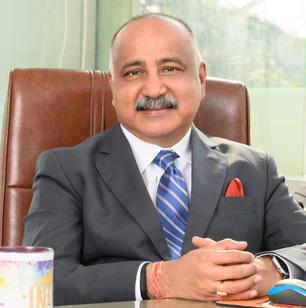
Direct sales has successfully become a vehicle for opportunity and inclusion. Valued at more than Rs. 20,000 crore, the industry grows at a double-digit CAGR every year, says the Indian Direct Selling Association (IDSA). Its growth is rooted in India's growing middle class, rising purchasing power, and high demand for wellness and lifestyle products. In addition to this, the industry contributes significantly to the exchequer through revenue streams, GST, and other taxes, further strengthening its economic importance.
But its real impact transcends the economic; it's social in nature since direct sales gives a platform to over 7.4 million Indians to earn independently of the family income, out of whom over half are female. At the small-town and rural level, it has also become an easy and flexible route to entrepreneurship, allowing individuals to juggle family responsibilities while seeking financial independence.
Government recognition has been pivotal in building trust. For years, regulatory ambiguity created challenges for companies and sellers, often leading to confusion between legitimate direct selling and fraudulent pyramid schemes. The introduction of the Consumer Protection (Direct Selling) Rules in 2021 marked a turning point. These rules provide clear definitions, operational guidelines, and stringent compliance requirements, signaling that India is serious about creating a robust and ethical direct selling framework. With this clarity, companies that follow ethical business practices have a stronger platform to grow, while consumers benefit from greater transparency and security. Regulatory reforms have also created a level playing field, attracting investment and helping direct selling integrate into India's larger vision of becoming a $5 trillion economy.


Diese Geschichte stammt aus der December 2025-Ausgabe von CEO Insights.
Abonnieren Sie Magzter GOLD, um auf Tausende kuratierter Premium-Geschichten und über 9.000 Zeitschriften und Zeitungen zuzugreifen.
Sie sind bereits Abonnent? Anmelden
WEITERE GESCHICHTEN VON CEO Insights

CEO Insights
ANDHRA AIMS TO ATTAIN $3.4 TRILLION ECONOMY BY 2047
The government of Andhra Pradesh has decided to attain its continuous high growth to create a Rs 308 lakh crore (USD 3.4 trillion) economy with a per capita income of Rs 55 lakh by the year 2047, stated Governor S Abdul Nazeer in the Assembly.

1 min
February 2026
CEO Insights
TOP 10 LEADERS IN RENEWABLE ENERGY - 2026
The renewable energy industry leaders are currently executing an economic transition that requires high levels of financial investment and strategic operational planning. Through their work in solar, wind, hydro, green hydrogen and energy storage projects, they create new ways to operate national power systems, direct financial investments, and manage industrial product distribution networks. Their work extends to multiple areas, which include developing assets, supporting policy initiatives, designing climate finance systems, facilitating international electricity trading and constructing major power infrastructure projects.
1 mins
February 2026

CEO Insights
LOCAL APPLICATIONS LEADERS CAN USE TO MEET MODERN WORKPLACE DEMANDS
In a rapidly evolving business landscape, Facilities Management (FM) stands at the intersection of technology, data, and sustainability. Global trends are reshaping how facilities operate, and organizations must adapt these innovations to local contexts. In this article Sathish Rajendren, Senior Executive Director - Facilities & Asset Management Services, Knight Frank India explores key global trends in FM and how they can be effectively applied locally to improve operational efficiency, enhance sustainability, and meet the demands of modern workspaces.
2 mins
February 2026
CEO Insights
ALGORITHMS WITH A HEART: THE FUTURE OF HOSPITALITY EDUCATION
The future of hospitality will not be written only in hotels but in algorithms that understand emotion. Our mission at IIHM is to make India the world's classroom for compassionate intelligence proving that innovation and empathy can grow together, and that technology can be both efficient and kind.
4 mins
February 2026

CEO Insights
ANALYSING PROFITABILITY IN THE BUILDING MATERIALS INDUSTRY IN INDIA: KEY INSIGHTS FOR GROWTH
Abinash Mishra possesses over 24 years of rich professional experience in the building materials industry, driving transformative growth and market expansion. His industry insights and commitment to excellence drive customer-focused innovations.
2 mins
February 2026

CEO Insights
HARIKISHAN. V. R CRAFTING A SUSTAINABLE FUTURE WITH COST-EFFECTIVE & RELIABLE GREEN RENEWABLE ENERGY SOLUTIONS
The Indian renewable energy sector is the fourth most attractive renewable energy market in the world.
3 mins
February 2026
CEO Insights
BREAKING DOWN KEY TRENDS: CORPORATE FINANCE CONSULTING SERVICES
The realm of corporate finance is constantly changing, influenced by advancements in technology, changing economic conditions, and evolving investor preferences.
5 mins
February 2026
CEO Insights
PIYUSH GOYAL URGES EXPORTERS TO UTILIZE FREE TRADE AGREEMENTS
Commerce and Industry Minister Piyush Goyal encouraged exporters to fully utilize the various Free Trade Agreements established with developed nations to enhance the export of both goods and services.
1 mins
February 2026

CEO Insights
LEADING INDIA'S PHARMA SUPPLY CHAIN WITH TECHNOLOGY, TRUST AND TRACEABILITY
India's pharmaceutical industry is globally renowned for its remarkable capacity, cutting-edge innovation, and affordability, making it a cornerstone of healthcare both domestically and internationally. As the sector evolves, its expansion into Tier II and III cities marks a crucial step towards inclusive healthcare access for millions across the country. However, this growth has exposed critical vulnerabilities in supply chain infrastructure, traceability mechanisms, and regulatory oversight. These weaknesses threaten not just commercial interests but also patient safety and public trust pillars upon which the industry's credibility is built. Addressing these challenges is essential to ensure that quality medicines reach every corner of India securely and efficiently.
5 mins
February 2026

CEO Insights
ALOK NIGAM
POWERING THE FUTURE WITH SUSTAINABLE INNOVATION
5 mins
February 2026
Listen
Translate
Change font size