
Mit Magzter GOLD unbegrenztes Potenzial nutzen
Erhalten Sie unbegrenzten Zugriff auf über 9.000 Zeitschriften, Zeitungen und Premium-Artikel für nur
Versuchen GOLD - Frei
What's dampening the GLOBAL AMR BATTLE?
BioSpectrum Asia
|December 2024
Although there have been significant national and worldwide efforts to provide financial incentives for antibiotic research and development, it is still unclear how best to fortify the existing programmes to further spur antibiotic innovation. The incentive programmes in place now are a crucial first step in enhancing the economic viability of antibiotic development. However, it seems like there isn't enough global coordination among all the programmes, which could lead to duplication of effort, funding gaps in the value chain, and the failure to include crucial AMR objectives. Let's dig deeper.

Antimicrobial resistance (AMR) is a growing global concern, with the situation worsening year by year. The speed of developing resistance is at par or, in fact, more than the speed of novel antibiotic development. Most of the big pharmaceutical companies have left antibiotic research due to the high risk of failure and poor return on investment. Antibiotic research is mostly carried out by academic institutes and small- and medium-sized enterprises. However, they lack sufficient funds to take the compounds from early and mid-stage to clinical trials and market.
Insufficient funding remains a major challenge in advancing research on AMR, both in India and globally. The funding landscape for AMR research is characterised by a lack of sustained investment and inadequate financial support from both the public and private sectors. This lack of resources significantly hampers the development of new antibiotics, diagnostic tools, and treatment approaches. In a scenario where countries fail to contain drug resistance, we could face a staggering $1.7 trillion annual reduction in global economic output by 2050, amounting to a 0.88 per cent decrease in GDP. This would not only escalate hospital treatment costs but also adversely affect tourism and domestic hospitality.
An annual investment of $63 billion spent improving access to, and developing new antimicrobials, could generate more than $1.7 trillion in benefits a year by 2050. While $63 billion may sound like a lot of money-in reality, it's less than the world spends on cosmetic surgery, less than video gamers spend on in-game purchases, each year-and it's about an eighth of what the world spends on takeout coffee. These findings are from the recent report from Center for Global Development, based at Washington DC and London, a think tank that uses economic research to reduce global poverty and inequality.
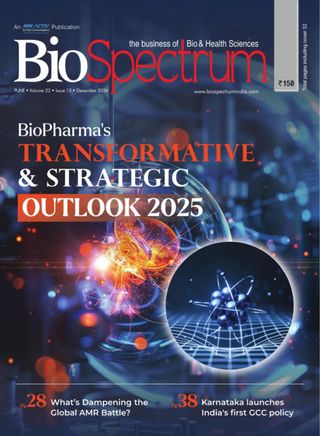

Diese Geschichte stammt aus der December 2024-Ausgabe von BioSpectrum Asia.
Abonnieren Sie Magzter GOLD, um auf Tausende kuratierter Premium-Geschichten und über 9.000 Zeitschriften und Zeitungen zuzugreifen.
Sie sind bereits Abonnent? Anmelden
WEITERE GESCHICHTEN VON BioSpectrum Asia
BioSpectrum Asia
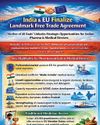
India–EU FTA Paves Way for Expanded Healthcare Trade
On January 27, 2026, after years of negotiations, India and the European Union announced a landmark Free Trade Agreement.

4 mins
BioSpectrum Asia March 2026
BioSpectrum Asia
PreferCo and Glatt to open CoE for precision fermentation bioprocess scale-up in India
In a major boost to Government of India's BioE3 push, German major Glatt and India-based startup PreferCo have announced the launch of \"PreferCo-Glatt Centre of Excellence (CoE) for Bioprocess Scale-Up\" in Hyderabad's Genome Valley.
1 min
BioSpectrum Asia March 2026

BioSpectrum Asia
Women's Health Surge in APAC
The rising burden of diseases such as ovarian cancer, breast cancer, cervical cancer, infertility, etc. is emerging as the key driver of the women's healthcare market across the globe. While North America led the women healthcare market in 2025, Asia Pacific (APAC) is expected to witness the fastest growth this year onwards. As a result, governments across the APAC region, are recognising the importance of women's health and are launching initiatives, particularly under female leaders, to improve access to healthcare services. Moreover, a number of women-led startups are now developing new solutions to address this growing burden of women-associated diseases in the APAC region. Let's take a closer look.
6 mins
BioSpectrum Asia March 2026

BioSpectrum Asia
Hanchor Bio receives US FDA Orphan Drug Designation for HCB101 in gastric cancer
Taiwan-based biotech startup HanchorBio, Inc. has announced that the US Food and Drug Administration (FDA) has granted Orphan Drug Designation (ODD) to HCB101 for the treatment of gastric cancer.
1 min
BioSpectrum Asia March 2026

BioSpectrum Asia
Daiichi Sankyo names Dr John Tsai as Global Head of R&D
Japan-based Daiichi Sankyo Company has appointed Dr John Tsai to succeed Dr Ken Takeshita, who is stepping down as Global Head of R&D, effective April 1, 2026.
1 min
BioSpectrum Asia March 2026

BioSpectrum Asia
"The global trend is moving beyond centralised hubs toward distributed networks and domestic capability"
King Faisal Specialist Hospital & Research Centre (KFSHRC) and US-based Germfree Laboratories have announced a strategic partnership to develop Saudi Arabia's first fully integrated, modular Advanced Therapy Medicinal Product (ATMP) Manufacturing Campus.
4 mins
BioSpectrum Asia March 2026

BioSpectrum Asia
SEOUL'S RISKY DRUG PRICING RESET
Drug pricing has once again moved to the centre of policy debate in South Korea, with the government recently stepping back from its proposed generic drug pricing reform.
2 mins
BioSpectrum Asia March 2026

BioSpectrum Asia
Takeda and Iambic sign $1.7 B deal to advance AI driven design of small molecules
Iambic, a US-based clinical-stage life science and technology company developing novel medicines using its artificial intelligence (AI)-driven discovery and development platform, has announced a multi-year technology and discovery collaboration agreement with Japan-based Takeda Pharma that will use Iambic's industry leading AI drug discovery models to advance a select set of high-priority small molecule programmes, initially in Takeda's Oncology and Gastrointestinal and Inflammation therapeutic areas.
1 min
BioSpectrum Asia March 2026

BioSpectrum Asia
S.Biomedics announces partnership with Catalent to develop and manufacture TED-A9
US-based Catalent and South Korea-based S.Biomedics have announced a strategic partnership to support the development and manufacturing of TED-A9, S.Biomedics' allogeneic pluripotent stem-cell-derived ventral midbrain-specific dopaminergic precursor cell therapy being developed for the treatment of Parkinson's disease.
1 min
BioSpectrum Asia March 2026
BioSpectrum Asia
China revises drug administration regulations to spur innovation
China has revised regulations concerning drug administration in a bid to promote drug innovation, strengthen management of online sales of medicines and reinforce drug safety supervision.
1 min
BioSpectrum Asia March 2026
Listen
Translate
Change font size