Versuchen GOLD - Frei
Primal SCREAMERS
Classic & Sports Car
|April 2023
Paying tribute to the naturally aspirated V10, soundtrack to F1's greatest modern era and one of the finest units the sport has produced

Formula One's banning from 1989 of forced induction in favour of 3.5-litre naturally aspirated engines was expected to reignite the V8 versus V12 (up to 180°) firefight that had raged long before and for some time after - the turbos whistled in at the end of the 1970s. Honda and Renault, however, chose the relatively unexplored V10 route, seeking a better compromise between fuel economy and revs, punch and packaging. They would sweep the board in qualifying - it helped that Ayrton Senna was on board - and win 12 of that season's 16 Grands Prix.
Others followed: prescient independents Ilmor and John Judd's Engineering Developments were picked up by Mercedes-Benz and Yamaha; Peugeot joined in 1994, having twice won at Le Mans using a V10. The trickle became a flood. Though Honda, after 1992 and two seasons with a V12, and Renault (1997) departed the scene but kept their hands in via offshoots Mugen and Mecachrome - the 1998 F1 grid was chocka with V10 blocks, and the fact was made regulatory from 2000. BMW, in 2001, and Toyota, in 2002, having planned a V12, then mixed in.
Ford and Ferrari had stuck to their V8s and V12s - nomenclatures and noises that had forged their brands - until after the post-Ayrton concept for the new regulations. How best to package car and engine: total chassis stiffness, aerodynamics and agility. Before turbos, teams had mainly been private, without the resources of a major manufacturer, so they used a well developed V8 by Cosworth. They were used to it. But we had more freedoms.
"At the first V10 test at Silverstone, Ayrton was unhappy: 'Acceleration too sharp! Deceleration too sharp!' The difference in engine braking compared with a 1.5-litre turbo was huge: the car pitched in corners, balance changed and the driver was uncomfortable. We tried to make the delivery more progressive.
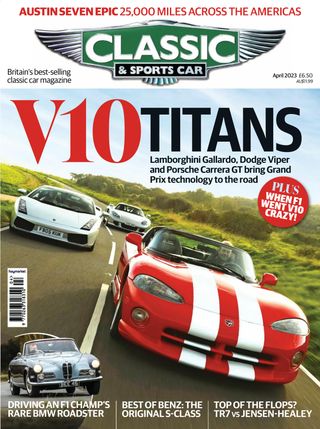

Diese Geschichte stammt aus der April 2023-Ausgabe von Classic & Sports Car.
Abonnieren Sie Magzter GOLD, um auf Tausende kuratierter Premium-Geschichten und über 9.000 Zeitschriften und Zeitungen zuzugreifen.
Sie sind bereits Abonnent? Anmelden
WEITERE GESCHICHTEN VON Classic & Sports Car
Classic & Sports Car
Genetic engineering
Shared technology led to four distinct executive expresses being spun from the same raw materials by Lancia, Saab, Fiat and Alfa Romeo

12 mins
January 2026
Classic & Sports Car
AUDI RS3
Ingolstadt mates its Dr Jekyll grip and practicality with Mr Hyde performance
2 mins
January 2026
Classic & Sports Car
STRENGTH IN NUMBERS
Early 911S takes a laser focus on originality to impressive volumes of Porsche restorations
3 mins
January 2026
Classic & Sports Car
TOYOTA MR2 (Mk1)
Japan's first mid-engined sports car was a brilliant package that is becoming increasingly collectible
2 mins
January 2026

Classic & Sports Car
An unexpected journey
This glorious 250 Europa GT was conceived for touring, but has spent much of its iire in competition - and it's hungry for more
8 mins
January 2026
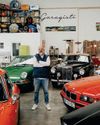
Classic & Sports Car
BRUNO PINHA
This Portugese car dealer felt so at home in his garage that he now lives in it
2 mins
January 2026
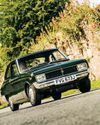
Classic & Sports Car
WHAT GOES AROUND...
...comes around. Mazda popularised rotary power with cars such as the R100 Coupé. This tastefully uprated example brings the technology full circle
8 mins
January 2026

Classic & Sports Car
Simon TAYLOR
'Most of us consumed children's fiction, from Enid Blyton to Biggles. But we had car books as well'
3 mins
January 2026
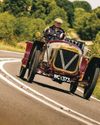
Classic & Sports Car
CONQUEST SELLER
Vauxhall's competition ambitions forged the template for the A-type that became the bedrock of its early sales success
8 mins
January 2026
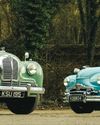
Classic & Sports Car
A LIFE MORE ORDINARY
The Standard Vanguard and Austin Hereford were the sensible shoes of 1950s motoring, but today they ooze nostalgic charm
9 mins
January 2026
Translate
Change font size