Versuchen GOLD - Frei
RETRO
BBC Top Gear UK
|March 2025
BECAUSE THEY DON'T MAKE M LIKE THEY USED TO
R.U.O.T.B.
Five letters that mean nothing more than seven potential points in a game of Scrabble. But if you mix them up, you get... TURBO. And that's not just a word. It's the fastest word in the world - the superlative for speed and performance.
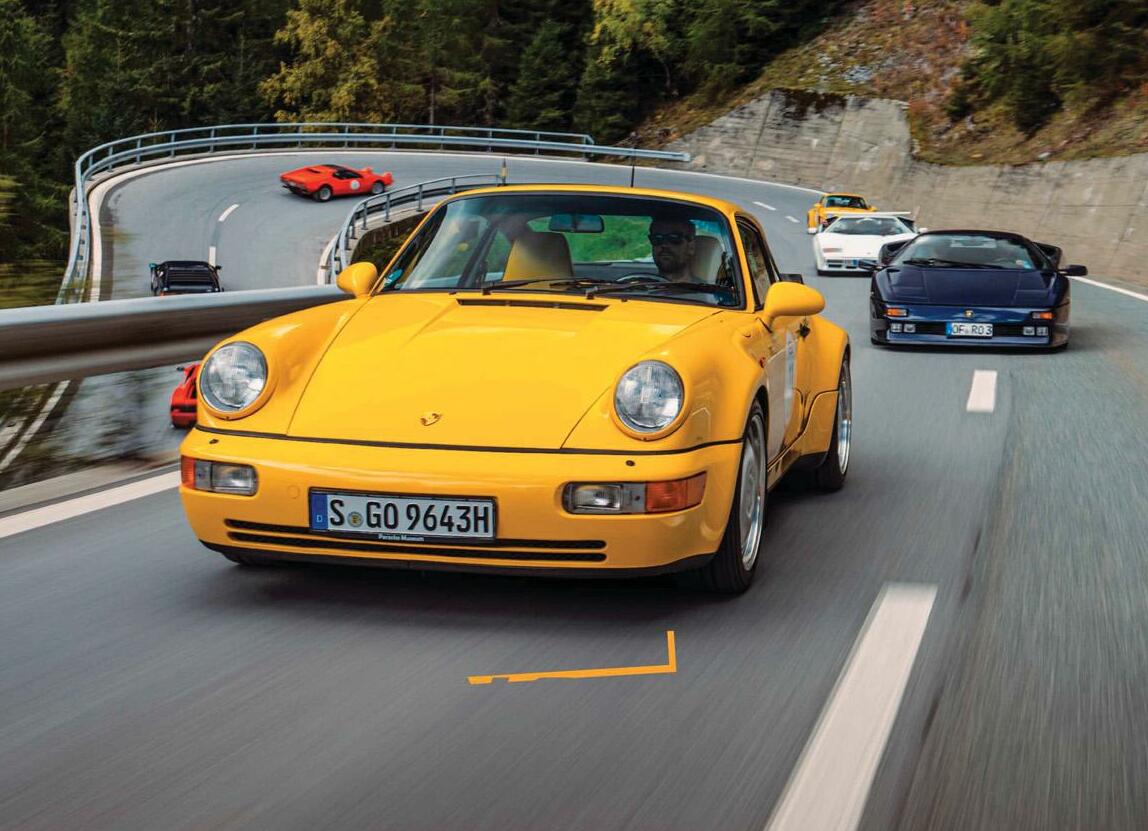
Over the years, 'Turbo' has been slapped on everything from hairdryers to counter culture movements. But for Porsche, it's a legacy, a legend and a brand of its own. It's also just turned 50. So, I thought we'd better have a birthday party and celebrate half a century of Porsche bolting mechanical snails onto engines in the name of speed. Lovely, juicy, usable and sometimes scary speed. And what better way to do that than by driving one of the most under the radar, rarest turbocharged 911s to one of the coolest events you've never heard of the Super Stick Shift.
For those of you at the back, turbocharging works by using high energy exhaust gases to spin a turbine, which in turn drives a compressor that forces more air into the engine's combustion chambers. It creates a rather intoxicating and simple equation: more fuel equals more power.
It was aviation technology, but the Americans were the first to have the nerve to try it out in cars. In 1962, GM bolted a Garrett AiResearch turbo onto an Oldsmobile F-85 Cutlass to create the excellently named 'Jetfire'. It was complex and provided a 40 per cent power increase, which also meant it was horrendously unreliable.
The first European marque to hop on the turbo train was BMW, which released the 2002 Turbo in 1973. But Porsche had been experimenting with the technology before that in motorsport. The wildly successful 917/10 and 917/30 race cars were proof of the potential, but the company needed time to tame turbocharging's tumultuous traits before handing it over to hamfisted buyers.

Diese Geschichte stammt aus der March 2025-Ausgabe von BBC Top Gear UK.
Abonnieren Sie Magzter GOLD, um auf Tausende kuratierter Premium-Geschichten und über 9.000 Zeitschriften und Zeitungen zuzugreifen.
Sie sind bereits Abonnent? Anmelden
WEITERE GESCHICHTEN VON BBC Top Gear UK
BBC Top Gear UK
MAN VS FOOD
The Clio is back to save the petrol powered supermini from extinction... can it handle a pastry run in one of Europe's most stressful cities?

5 mins
February 2026
BBC Top Gear UK
Porsche 911 GT3 RS
Stuttgart's steadily working through the 911 facelifts: we've seen the upgraded Carreras and Targas, the new electrified-boost Turbo and the fettled GT3, now with back seats. Next on the to do list is the RS.
1 min
February 2026
BBC Top Gear UK
Porsche Cayman/ Boxster EVs
Ah yes, 2024 and 2025's most controversial new duo returns to actually see the light of day at last in 2026... maybe.
1 min
February 2026

BBC Top Gear UK
GUESS WHO'S BACK?
No classic is safe from the clutches of the restomod movement... now its the Lotus Esprit's turn for an Encor
5 mins
February 2026
BBC Top Gear UK
Cupra Raval
The Cupra Raval is a smaller Born, as the Ibiza is a smaller Leon. Except... not. First, Cupra had design freedom for the Raval, whereas the Born is a VW ID.3 in lipstick. Second, the Raval is FWD, the Born rear. It's first of a posse of VAG small EVs, engineered by Cupra/Seat in Barcelona. We drove a near finished disguised prototype – the visual reveal comes later.
1 min
February 2026
BBC Top Gear UK
BENTLEY CONTINENTAL GT
£254,200/£282,000/£5,077 WHY IT'S HERE: What has a hybrid makeover - and Mulliner buffing - added to the world's best grand tourer? DRIVER: OLLIE KEW
1 min
February 2026
BBC Top Gear UK
VOLVO EX30
£37,260/£39,850/£615 WHY IT'S HERE: Does the EX30 deserve all the accolades? DRIVER: VIJAY PATTNI
1 min
February 2026
BBC Top Gear UK
GMA T.33
Can it really be four whole years since Gordon Murray revealed - shock - his first road car without a central driving position? GMA’s been occupied stamping out a century of T.
1 min
February 2026
BBC Top Gear UK
TOYOTA LAND CRUISER
£82,845 OTR/£82,845 as tested/£1,049 pcm WHY IT'S HERE: It'll conquer the wilderness, but is this £83k Toyota everyday overkill? DRIVER: ANDY FRANKLIN
2 mins
February 2026
BBC Top Gear UK
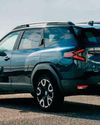
DACIA BIGSTER
£24,995 OTR/£26,700 as tested/£114 pcm WHY IT'S HERE: Value motoring for a decently sized SUV. But is the Bigster bigster value or just cheap? DRIVER: TOM FORD
2 mins
February 2026
Listen
Translate
Change font size