Versuchen GOLD - Frei
REWIGGLING A RIVER
BBC Wildlife
|July 2025
Restoring rivers to more natural shapes has huge benefits for wildlife - as one project in the Cairngorms demonstrates

OVER CENTURIES, WE'VE PROFOUNDLY CHANGED Scotland's rivers - pacifying them and bringing them under our control. We've felled native woodlands to 'tidy' riverbanks, disconnected watercourses from their floodplains, and dredged and straightened river channels. For most people today, these simplified riverscapes are normal, and reflect their expectations of nature. As a society, we are blind to ecological loss and celebrate neat, orderly landscapes, where nature's inherent dynamism is put in a box.
But things are changing. Responding to a free fall in wild salmon numbers, coupled with the growing frequency of major flood events, river scientists and land managers are increasingly embracing natural river processes. ‘Stage zero’ is a concept being applied to rivers and watercourses that have been straightened or otherwise modified. It recognises that rivers don’t naturally follow the linear channels we have allocated to them but, instead, want to weave across a loosely defined river-wetland corridor that features ever-shifting channels, wooded islands, backwaters and ponds. In time, a more dynamic and diverse mosaic of habitats develops, boosting biodiversity and retaining water at times of extreme high and low flows.
My first experience of this approach was at the Rottal Burn in Angus, one of the primary salmon spawning tributaries of the River South Esk, which flows through Glen Clova on its way to the Montrose Basin.
“The Rottal was straightened for drainage in the 1840s,” says Dee Ward, the landowner. Dee was a pioneer in restoring natural processes to a river for the benefit of the now-endangered Atlantic salmon. “Every time the burn flooded, young fish, eggs and gravel were just washed away,” he recalls.
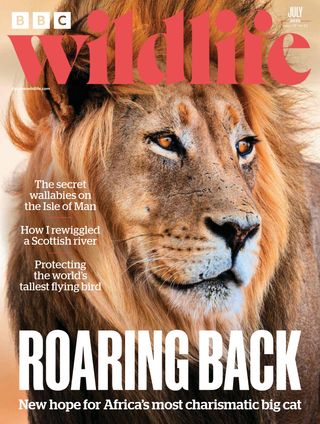

Diese Geschichte stammt aus der July 2025-Ausgabe von BBC Wildlife.
Abonnieren Sie Magzter GOLD, um auf Tausende kuratierter Premium-Geschichten und über 9.000 Zeitschriften und Zeitungen zuzugreifen.
Sie sind bereits Abonnent? Anmelden
WEITERE GESCHICHTEN VON BBC Wildlife
BBC Wildlife
Animal welfare
FURTHER TO EM GENOVESE'S LETTER (Your Letters, Spring 2026), I would like to signpost the charity Wild Welfare to readers.

2 mins
May 2026
BBC Wildlife
"The hooves pounded up the trail behind us"
Moose in Colorado
3 mins
May 2026
BBC Wildlife
SEAGRASS SAVIOURS
Sometimes, saving the planet requires a bright idea, some practical know-how and a bit of tinkering
6 mins
May 2026
BBC Wildlife
WALL TO WILD
After the fall of the Berlin Wall, reunified Germany became a new landscape not only for people, but for wildlife too 'M SITTING IN A FOREST IN Brandenburg, northeast Germany, looking over a large clearing.
7 mins
May 2026
BBC Wildlife
SNAP-CHAT
Samuel Bloch on wild horses, crazy capercaillies and sleeping on the job
2 mins
May 2026
BBC Wildlife
Old trees key to resilience
Study finds mature trees trump youthful ones
1 min
May 2026
BBC Wildlife
ONE STEP BEYOND
There's a lot more to these quirky seabirds than their eye-catching limbs
2 mins
May 2026
BBC Wildlife
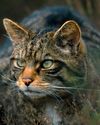
RETURN OF A LEGEND
Once teetering on the very brink of extinction, the elusive Scottish wildcat is prowling the Highlands once more, thanks to a bit of help
7 mins
May 2026
BBC Wildlife
Urban scavengers help curb carbon
New study reveals the extent of emissions saved as city animals feast on food waste
2 mins
May 2026
BBC Wildlife
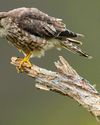
Merlin on the brink
The diminutive raptor is one of many species facing extinction in Britain, suggests new report
1 mins
May 2026
Listen
Translate
Change font size