Versuchen GOLD - Frei
LIFTING CRANES
BBC Wildlife
|July 2025
The tallest flying bird in the world owes its survival to a special relationship with small farmers in the most populated part of India
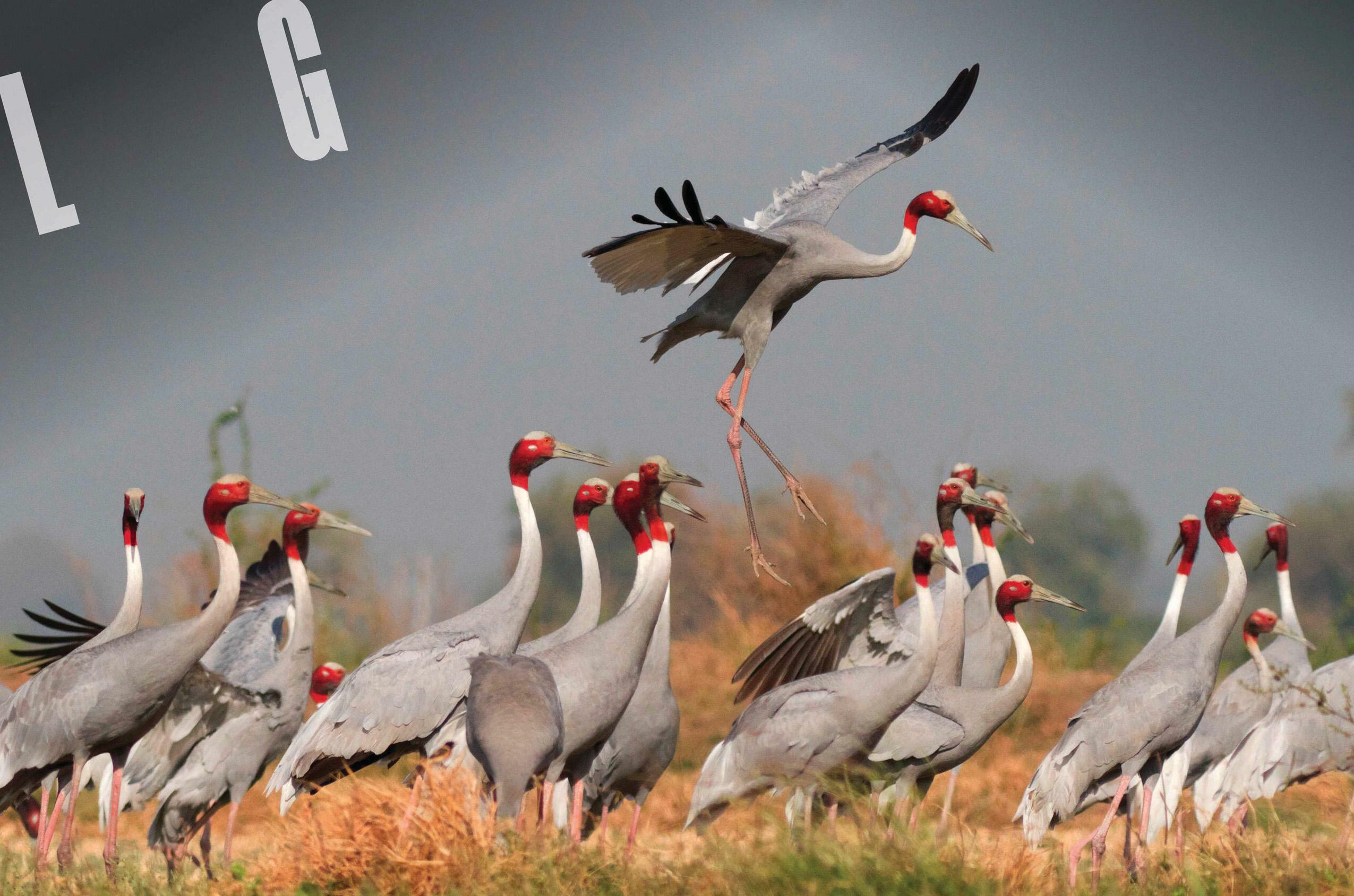
NASEERUDDIN ALI TAKES great pride in his home village of Madanpura, nestled in the northern reaches of the state of Uttar Pradesh in India, as it is one of the few locations where the world's tallest flying bird, the sarus crane, has chosen to settle and the only place where it is thriving.
Ali, a traditional farmer who sells his produce in the nearby town, often sees sarus cranes. He is excited when a pair suddenly appears. Flying with their necks outstretched and long legs trailing behind, these non-migratory waders cut a dramatic figure. Their heads, throats and upper necks are conspicuously crimson, set against white neck bands and dusky-grey breast and wing plumage. The duo gracefully descends on to Ali's half-a-hectare plot, flapping their mighty 2.5m-long wings and settling on to delicate pink legs to stand nearly 2m tall.
Many farmers in Uttar Pradesh believe these birds are indicators of a healthy agricultural ecosystem, and that their presence heralds a good harvest. "When they sweep past our fields, swaying the crops beneath them, they bestow fecundity and abundance to the land," says Ali, expressing his gratitude.
The term 'sarus' comes from the Sanskrit word sarusa, which translates as 'lake-dwelling bird' and, sure enough, the sarus crane loves water. A resident of flooded paddy fields, wetlands and ponds, it can often be seen ducking its head in the shallows and mud, foraging for tubers with its long, pointed bill, or probing for prey such as crabs, lobsters, fish and snails. On dry land, it also uses its beak to forage for seeds and grains, insects such as grasshoppers, and frogs.

Diese Geschichte stammt aus der July 2025-Ausgabe von BBC Wildlife.
Abonnieren Sie Magzter GOLD, um auf Tausende kuratierter Premium-Geschichten und über 9.000 Zeitschriften und Zeitungen zuzugreifen.
Sie sind bereits Abonnent? Anmelden
WEITERE GESCHICHTEN VON BBC Wildlife
BBC Wildlife
"I was terrified the elephant would ram us"
African elephant in Kenya

2 mins
January 2026
BBC Wildlife
ALL YOU EVER NEEDED TO KNOW ABOUT THE Fennec fox
THE FENNEC FOX IS THE SMALLEST fox in the world, with a body length that can be as little as 24cm.
3 mins
January 2026

BBC Wildlife
INTO THE PLASTISPHERE
A unique synthetic ecosystem is evolving in our oceans – welcome to the plastisphere
7 mins
January 2026

BBC Wildlife
“More than half of all animal life exists in a parasitic relationship, and all life lives in symbiosis”
Our survival depends on species evolving to live together - but some relationships take dark turns
7 mins
January 2026
BBC Wildlife
Are animals able to dream?
SLEEP IS A MYSTERIOUS THING. FOR A long time, we weren't sure why we do it.
1 mins
January 2026
BBC Wildlife
Does a cuckoo know it's a cuckoo?
ABSURD LITTLE BIRDS ACROSS THE world lay their eggs in the nests of other species, leaving the hapless parents to raise a changeling at the expense of their own offspring.
2 mins
January 2026
BBC Wildlife
Orcas killing young sharks
Juvenile great whites are easy prey for orca pod
1 mins
January 2026
BBC Wildlife
Ocean goes on tour
Acclaimed film touring the UK, backed by live orchestra and choir
1 min
January 2026
BBC Wildlife
Feisty bats hunt like lions
Winged mammals use a 'hang and wait' strategy to take down large prey
1 mins
January 2026

BBC Wildlife
SNAP-CHAT
Richard Birchett on magical merlins, wily coyotes and charging deer
2 mins
January 2026
Listen
Translate
Change font size