Versuchen GOLD - Frei
ANTS IN ACTION
BBC Wildlife
|October 2025
Red wood ants are tiny ecosystem engineers that live a secret life in the forest – but one colony has been documented in mesmerising detail
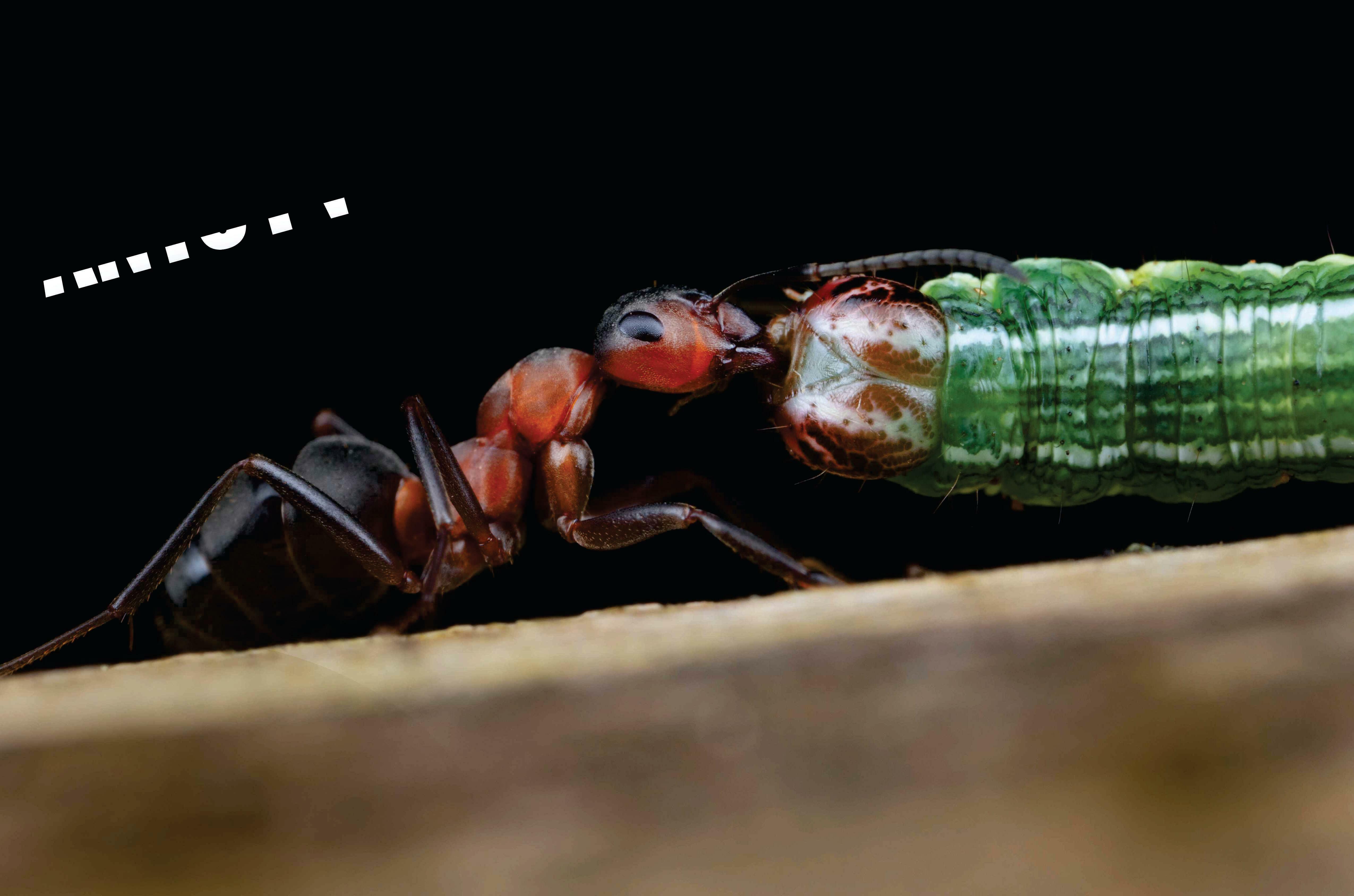
Ant attack
One of eight wood ant species found in Europe, the European red wood ant (Formica polyctena) leads a remarkable yet largely unseen life. Living in vast social colonies that can number in the millions, it builds towering, mound-like nests and is a voracious predator (this worker has snared a caterpillar far bigger than itself).
Ingo Arndt spent two years photographing a colony in the pine forest near his home of Hessen, Germany, and his unprecedented images reveal the species’ complex life in extraordinary detail. “Wood ants play a vital role in the forest ecosystem, preserving the habitat,” he says. “Not all keystone species are large mammals.”
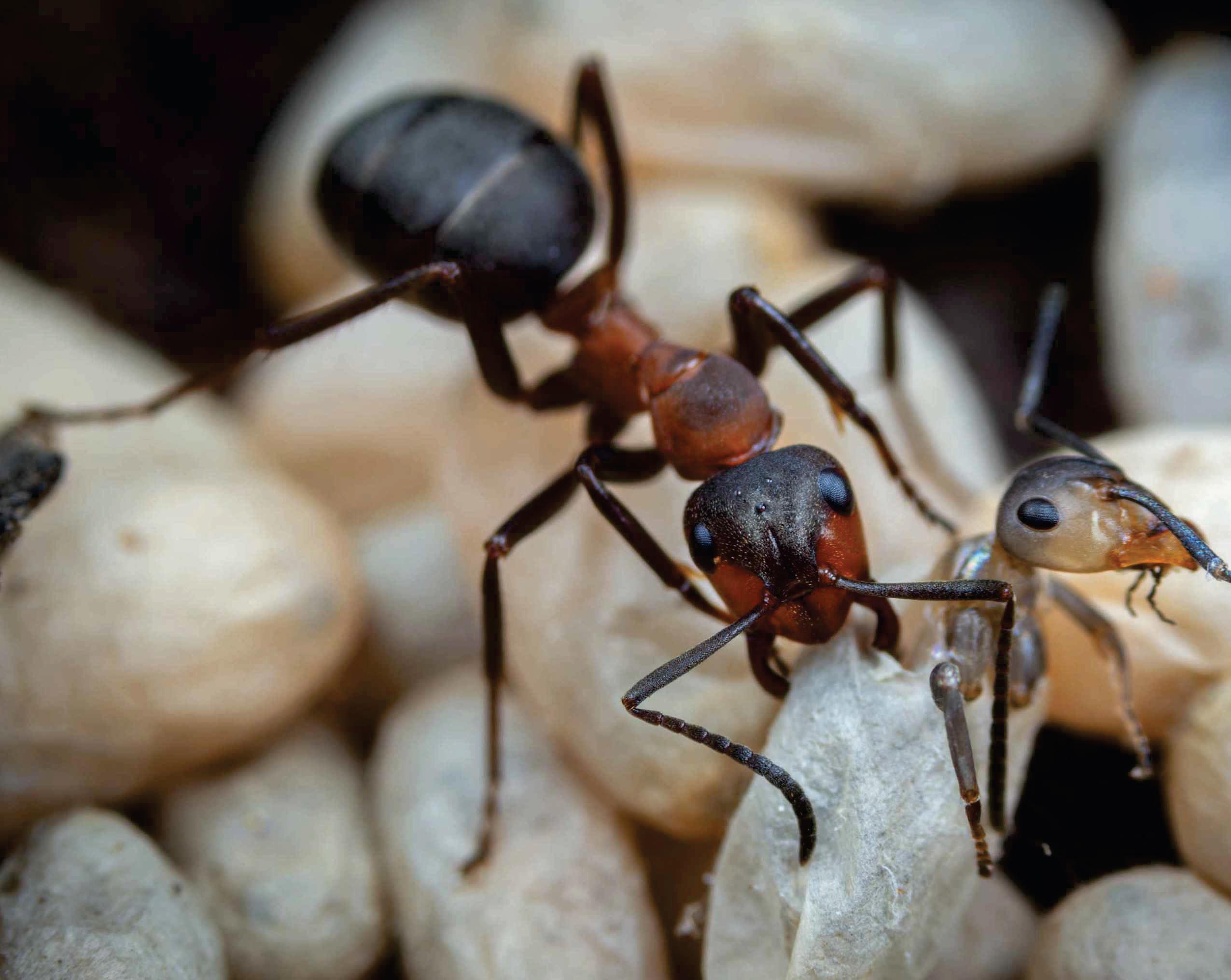 Hatching a plan
As with all ant species, the life-cycle of the European red wood ant starts with an egg, laid by the queen. This hatches into a larva, which pupates inside a cocoon and develops into an adult. When ready to emerge, the ant gnaws an exit hole – but because its body is so tightly folded, it cannot use its legs to push itself out. As seen here, a worker helps to free its new sibling, grooming and feeding it, and transferring a chemical message from the queen that ensures it won't lay eggs. Most new adults are workers, all of which are female and wingless.
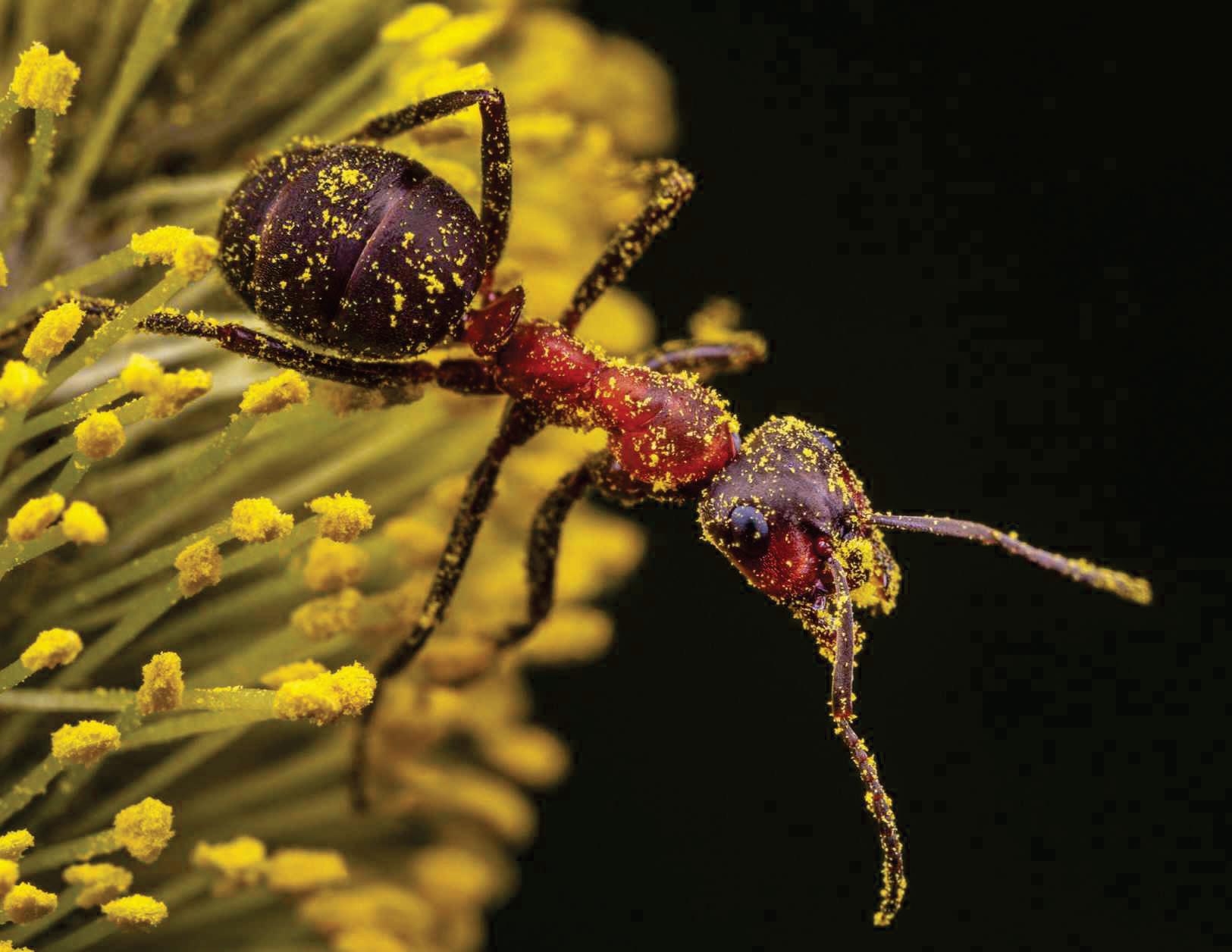 Pretty in pollen
While hunting in early spring, a red wood ant clambers over willow blossom, festooning itself in pollen grains. In this way, the species can act as a pollinator.
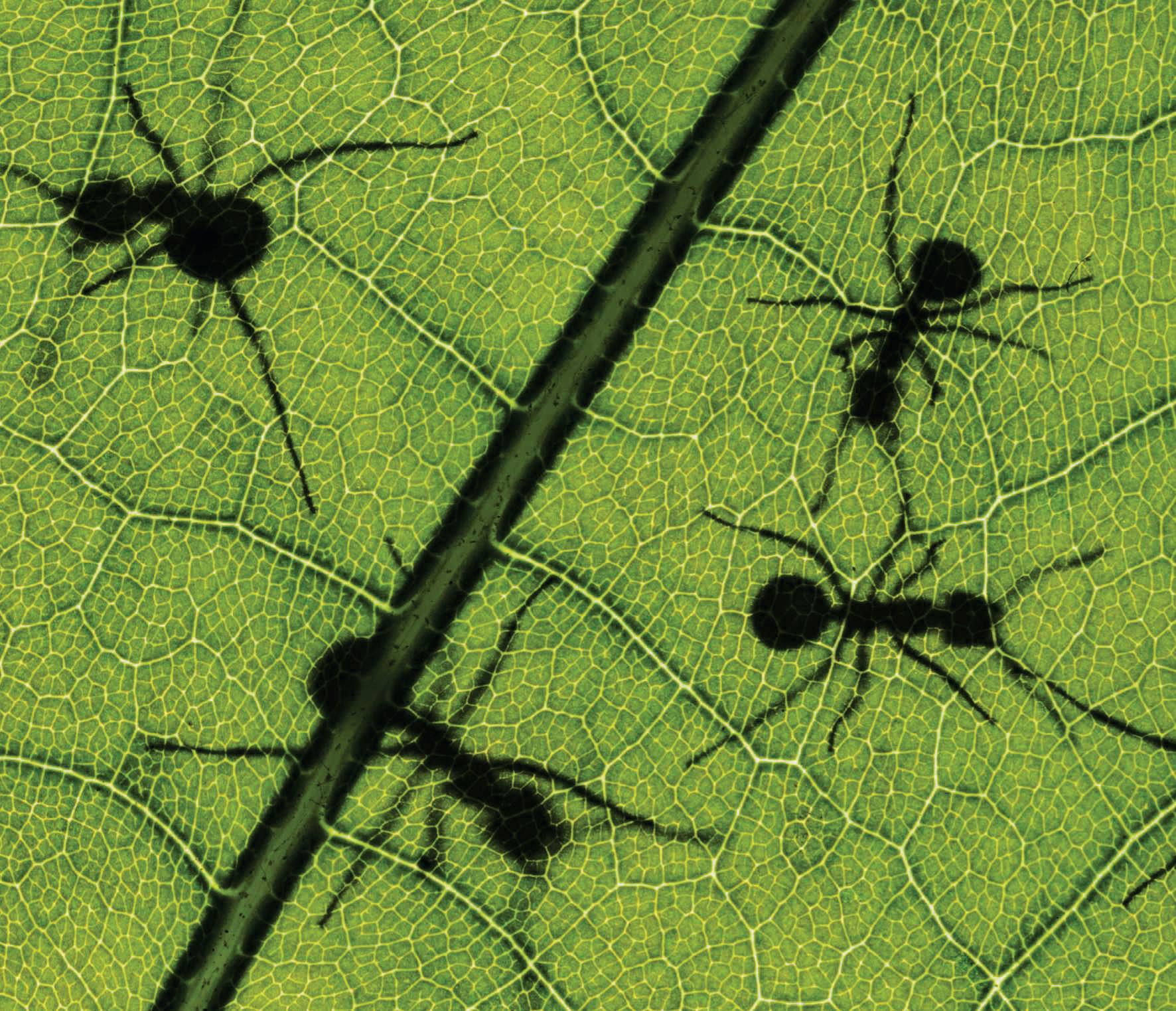 Shape shifters

Diese Geschichte stammt aus der October 2025-Ausgabe von BBC Wildlife.
Abonnieren Sie Magzter GOLD, um auf Tausende kuratierter Premium-Geschichten und über 9.000 Zeitschriften und Zeitungen zuzugreifen.
Sie sind bereits Abonnent? Anmelden
WEITERE GESCHICHTEN VON BBC Wildlife
BBC Wildlife
"I was terrified the elephant would ram us"
African elephant in Kenya

2 mins
January 2026
BBC Wildlife
ALL YOU EVER NEEDED TO KNOW ABOUT THE Fennec fox
THE FENNEC FOX IS THE SMALLEST fox in the world, with a body length that can be as little as 24cm.
3 mins
January 2026
BBC Wildlife
INTO THE PLASTISPHERE
A unique synthetic ecosystem is evolving in our oceans – welcome to the plastisphere
7 mins
January 2026
BBC Wildlife
“More than half of all animal life exists in a parasitic relationship, and all life lives in symbiosis”
Our survival depends on species evolving to live together - but some relationships take dark turns
7 mins
January 2026
BBC Wildlife
Are animals able to dream?
SLEEP IS A MYSTERIOUS THING. FOR A long time, we weren't sure why we do it.
1 mins
January 2026
BBC Wildlife
Does a cuckoo know it's a cuckoo?
ABSURD LITTLE BIRDS ACROSS THE world lay their eggs in the nests of other species, leaving the hapless parents to raise a changeling at the expense of their own offspring.
2 mins
January 2026
BBC Wildlife
Orcas killing young sharks
Juvenile great whites are easy prey for orca pod
1 mins
January 2026

BBC Wildlife
Ocean goes on tour
Acclaimed film touring the UK, backed by live orchestra and choir
1 min
January 2026
BBC Wildlife
Feisty bats hunt like lions
Winged mammals use a 'hang and wait' strategy to take down large prey
1 mins
January 2026

BBC Wildlife
SNAP-CHAT
Richard Birchett on magical merlins, wily coyotes and charging deer
2 mins
January 2026
Listen
Translate
Change font size