Versuchen GOLD - Frei
MOUNTAIN MISSION
BBC Wildlife
|December 2023
Canada lynx and wolverines are secretive creatures, but dedicated scientists in Montana are tracking them to inform conservation

THE SOUND OF COLD STEEL against cold steel breaks the silence that typically accompanies winter this high up in the Mission Mountains. Luke Lamar readjusts the hammer in his hand, looks around as if he'll somehow spot the echo he's created, and then takes another swing at the nail that's pinning the deer leg against the tree trunk. It's -17°C, and he grunts as he drives the nail through frozen muscle until he's convinced it's secure.
It has to be. If he's going to collect DNA samples from the Canada lynx and wolverines he's studying, he has to make sure they'll struggle with the bait long enough to leave a trace.
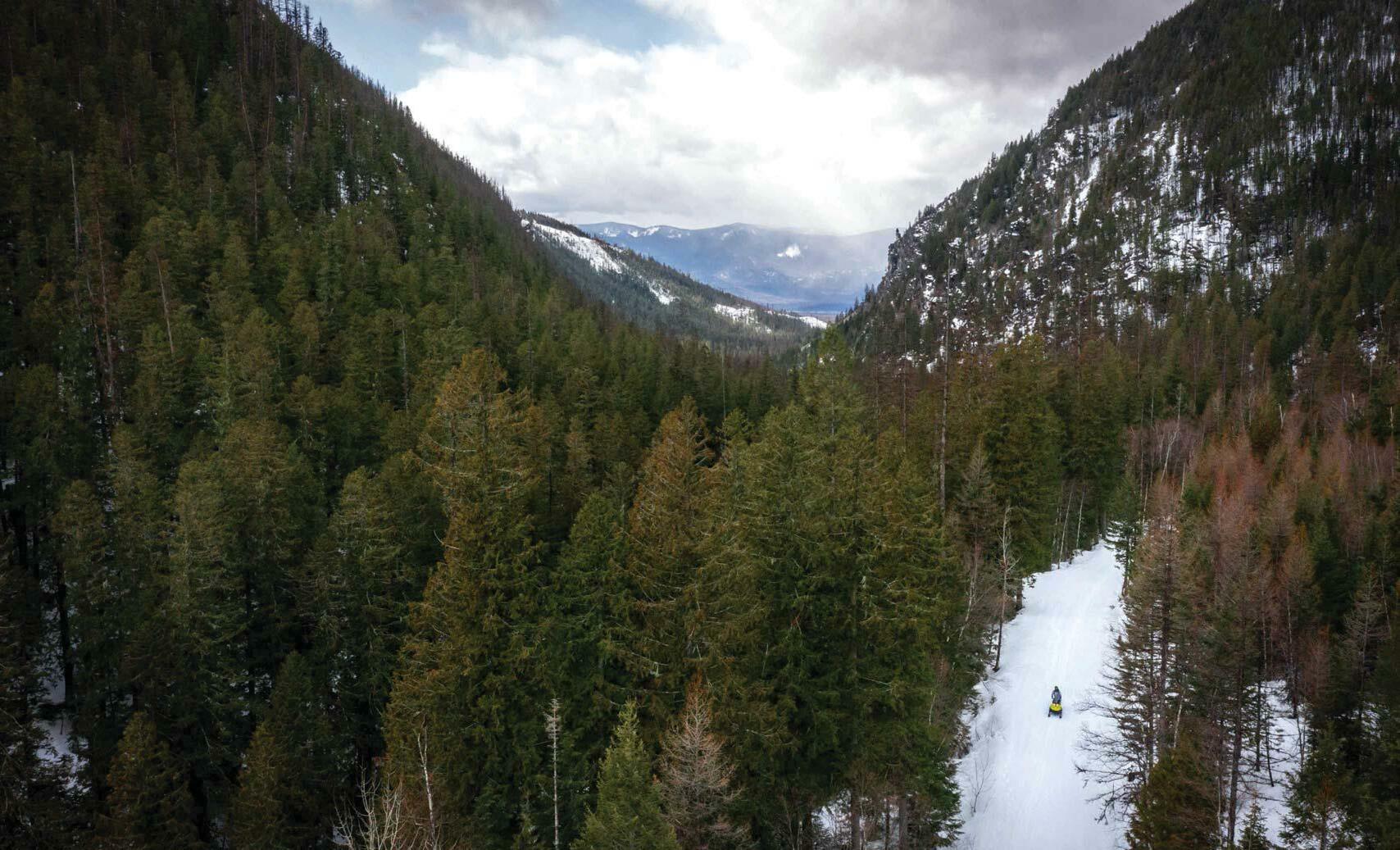
As conservation director for the Montana-based organisation Swan Valley Connections (SVC), part of Luke's job is to organise efforts to learn more about two of the most elusive species on the planet. He's responsible for planning and implementing a Rare Carnivore Monitoring Project that looks to collect lynx and wolverine data in an area of North America known as the Crown of the Continent, a Switzerland-sized expanse of national parks, ranches, forests, mountain ranges and communities that contains some of the most intact wildlife habitat on Earth.
Working specifically in the south-west portion of the Crown, Luke and his fellow researchers have spent the past 10 years collecting lynx and wolverine data across the roughly 600,000ha they survey. The data has given researchers a better idea of how many individuals are in the region, whether they're male or female, their movement patterns and even family genetics. This wealth of information can then be used to determine trends and activity hotspots, and in turn guide conservation efforts and forest management plans.


Diese Geschichte stammt aus der December 2023-Ausgabe von BBC Wildlife.
Abonnieren Sie Magzter GOLD, um auf Tausende kuratierter Premium-Geschichten und über 9.000 Zeitschriften und Zeitungen zuzugreifen.
Sie sind bereits Abonnent? Anmelden
WEITERE GESCHICHTEN VON BBC Wildlife
BBC Wildlife
"I was terrified the elephant would ram us"
African elephant in Kenya

2 mins
January 2026
BBC Wildlife
ALL YOU EVER NEEDED TO KNOW ABOUT THE Fennec fox
THE FENNEC FOX IS THE SMALLEST fox in the world, with a body length that can be as little as 24cm.
3 mins
January 2026

BBC Wildlife
INTO THE PLASTISPHERE
A unique synthetic ecosystem is evolving in our oceans – welcome to the plastisphere
7 mins
January 2026
BBC Wildlife
“More than half of all animal life exists in a parasitic relationship, and all life lives in symbiosis”
Our survival depends on species evolving to live together - but some relationships take dark turns
7 mins
January 2026
BBC Wildlife
Are animals able to dream?
SLEEP IS A MYSTERIOUS THING. FOR A long time, we weren't sure why we do it.
1 mins
January 2026
BBC Wildlife
Does a cuckoo know it's a cuckoo?
ABSURD LITTLE BIRDS ACROSS THE world lay their eggs in the nests of other species, leaving the hapless parents to raise a changeling at the expense of their own offspring.
2 mins
January 2026
BBC Wildlife
Orcas killing young sharks
Juvenile great whites are easy prey for orca pod
1 mins
January 2026
BBC Wildlife
Ocean goes on tour
Acclaimed film touring the UK, backed by live orchestra and choir
1 min
January 2026
BBC Wildlife
Feisty bats hunt like lions
Winged mammals use a 'hang and wait' strategy to take down large prey
1 mins
January 2026
BBC Wildlife
SNAP-CHAT
Richard Birchett on magical merlins, wily coyotes and charging deer
2 mins
January 2026
Translate
Change font size