
Mit Magzter GOLD unbegrenztes Potenzial nutzen
Erhalten Sie unbegrenzten Zugriff auf über 9.000 Zeitschriften, Zeitungen und Premium-Artikel für nur
Versuchen GOLD - Frei
What Happens When Robots Take Our Jobs?
The Atlantic
|July - August 2015
For centuries, experts have predicated that machines would soon make workers obsolete. What if they weren't wrong, but only premature? An exploration of what society without jobs look like - and how we can prepare.

1. Youngstown, U.S.A.
The end of work is still just a futuristic concept for most of the United States, but it is something like a moment in history for Youngstown, Ohio, one its residents can cite with precision: September 19, 1977.
For much of the 20th century, Youngstown’s steel mills delivered such great prosperity that the city was a model of the American dream, boasting a median income and a homeownership rate that were among the nation’s highest. But as manufacturing shifted abroad after World War II, Youngstown steel suffered, and on that gray September afternoon in 1977, Youngstown Sheet and Tube announced the shuttering of its Campbell Works mill. Within five years, the city lost 50,000 jobs and $1.3billion in manufacturing wages. The effect was so severe that a term was coined to describe the fallout: regional depression.
Youngstown was transformed not only by an economic disruption but also by a psychological and cultural breakdown. Depression, spousal abuse, and suicide all became much more prevalent; the caseload of the area’s mental-health center tripled within a decade. The city built four prisons in the mid-1990s—a rare growth industry. One of the few downtown construction projects of that period was a museum dedicated to the defunct steel industry.
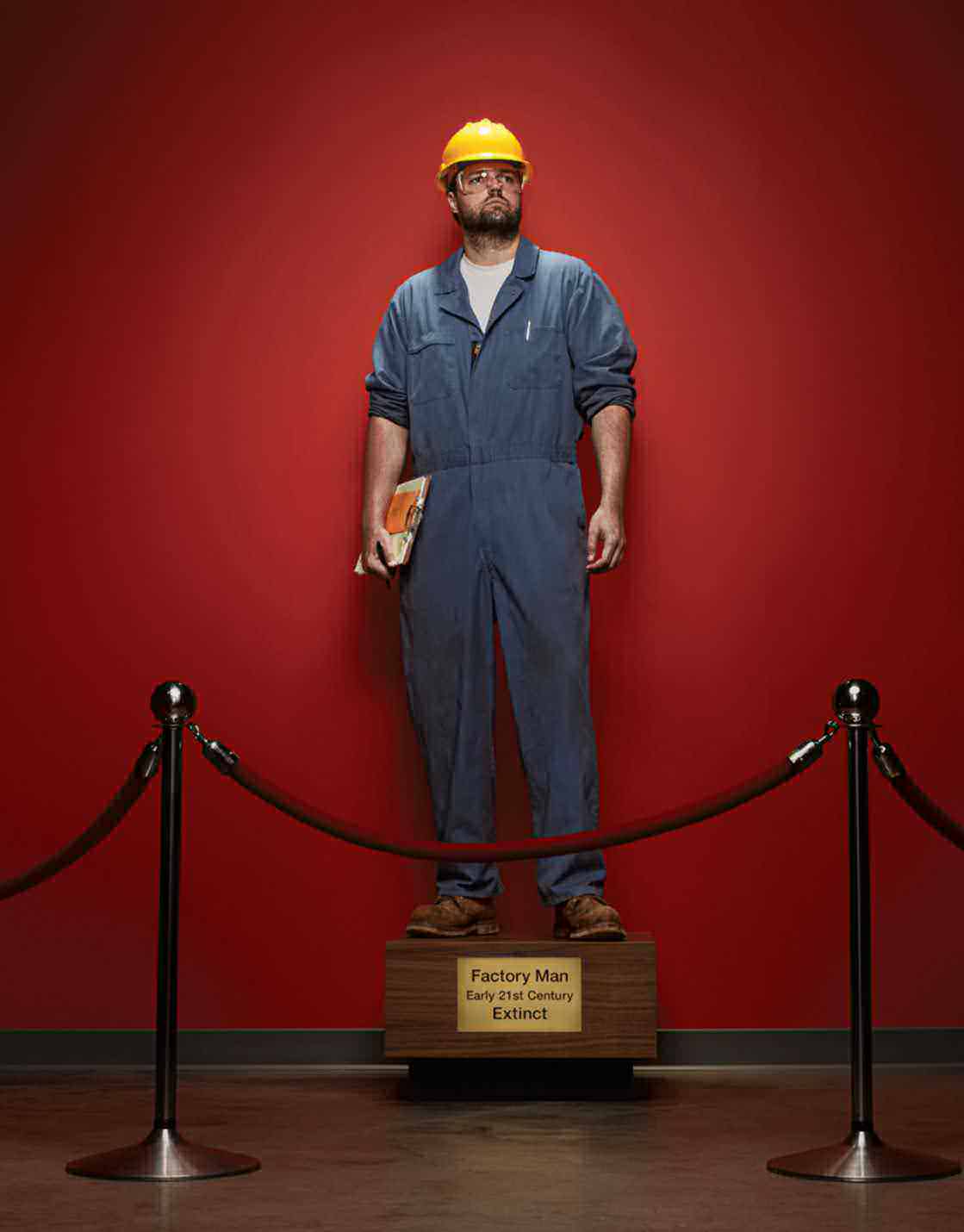
This winter, I traveled to Ohio to consider what would happen if technology permanently replaced a great deal of human work. I wasn’t seeking a tour of our automated future. I went because Youngstown has become a national metaphor for the decline of labor, a place where the middle class of the 20th century has become a museum exhibit.
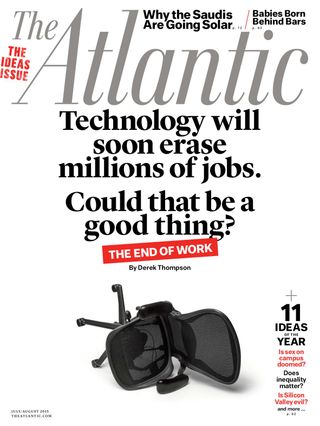

Diese Geschichte stammt aus der July - August 2015-Ausgabe von The Atlantic.
Abonnieren Sie Magzter GOLD, um auf Tausende kuratierter Premium-Geschichten und über 9.000 Zeitschriften und Zeitungen zuzugreifen.
Sie sind bereits Abonnent? Anmelden
WEITERE GESCHICHTEN VON The Atlantic
The Atlantic
Deadlier Than Gettysburg
How the cruelty of the Confederacy's prison camps gave rise to the rules of war

10 mins
March 2026

The Atlantic
THE MAN WHO BROKE PHYSICS
One of the pleasures of watching Ilia Malinin, apart from his indifference to gravity, is to witness him becoming.
16 mins
March 2026

The Atlantic
How Toni Morrison Saw History
In her novels, she located the missing story of Black America.
12 mins
March 2026

The Atlantic
The Madness of Lord Tennyson
The Victorian poet was startlingly modern.
5 mins
March 2026

The Atlantic
THE PLOT AGAINST THE HUMANITIES
What is the Andrew W. Mellon Foundation doing to higher education?
22 mins
March 2026

The Atlantic
Why Do Democrats Hate Winning?
Ken Martin has one of those resting dread faces, as if he's bracing for someone to dump a bucket of rocks on his head.
37 mins
March 2026

The Atlantic
ROD DREHER'S DEMONS
HE DERIDES THE ENLIGHTENMENT, SECULARISM, AND THE MODERN WORLD. CONSERVATIVES-INCLUDING THE VICE PRESIDENT-ARE JOINING HIM ON A MARCH BACK TO THE MIDDLE AGES.
20 mins
March 2026

The Atlantic
Every Nation for Itself
President Trump wants to return to the 19th century's international order. He will leave America less prosperous—and the whole world less secure.
19 mins
March 2026

The Atlantic
The Secrets of Indigenous Art
Major exhibits are upending the way people understand Native American and Aboriginal artists.
14 mins
March 2026

The Atlantic
The Novel as Extended Op-Ed
If anyone could write good fiction about immigration, it would probably be Lionel Shriver. Instead, her latest book goes off the rails.
10 mins
March 2026
Translate
Change font size