Versuchen GOLD - Frei
Vanishing Oases
Down To Earth
|January 01, 2018
Sacred groves are losing patronage in Rajasthan.

Standing on the land where Amrita Devi and 362 others from the Bishnoi community sacrificed their lives some 300 years ago while protecting khejri (Prosopis cineraria) trees, I wonder what could have prompted them to do so. Then I am told that the thorny tree, one of the few evergreens in the middle of the Thar desert, supports rural economy like no other wild vegetation does. Its protein-rich fruit is relished as a vegetable, sangria, and sold as a cash crop. Its dead leaves act as natural feritliser and are fed to the cattle to improve milk yield. The tree is also valued for timber and firewood. Traditionally it remained protected in the sacred groves, or orans, of the Bishnois—a sect founded in the 15th century by Guru Jambeshwar whose tenets provide protection to plants as well as animals. So in 1730, when the King of Jodhpur Abhay Singh sent his men to the orans of Khejarli village, now in Luni block of Jodhpur, to get khejri wood for burning lime required for the construction of his new palace, Amrita Devi stood between the axe and the tree, saying: “Sar Santeria rage to bhi sasto jaan (If a tree is saved at the cost of one’s head, it’s worth it).”
Today, the area bears no semblance to an oran. “There is absolutely no restriction on felling the tree for firewood and timber,” says a study by the World Wide Fund for Nature (wwf)-India in 1998. Worse, 80 per cent of Khejarali residents do not know what an oran is. With practically no oran land, the concept is almost lost in Khejarli, notes the study published in the book Conserving the sacred: for biodiversity management.


Diese Geschichte stammt aus der January 01, 2018-Ausgabe von Down To Earth.
Abonnieren Sie Magzter GOLD, um auf Tausende kuratierter Premium-Geschichten und über 9.000 Zeitschriften und Zeitungen zuzugreifen.
Sie sind bereits Abonnent? Anmelden
WEITERE GESCHICHTEN VON Down To Earth

Down To Earth
THE GREAT PIVOT
China's moves to transition to clean energy offer critical lessons to India

4 mins
March 01, 2026
Down To Earth
COAL V CORRIDOR
A proposal to mine coal along a corridor that links two tiger reserves in central India is a step away from getting final clearance. The move could affect movement and genetic diversity of tiger populations in the region
8 mins
March 01, 2026

Down To Earth
India's challenging AI predicament
Hobbled by lack of innovation and AI skills in its crucial technology sector, India is focusing on a ruinous plan to host data centres
4 mins
March 01, 2026
Down To Earth
China to implement zero tariffs across Africa
CHINA ON February 14 announced that it will implement zero tariffs for imports from all the 53 African nations it has diplomatic relations with, starting from May 1.
1 min
March 01, 2026
Down To Earth
Poverty, sans the threshold
MEASUREMENT OF poverty is a fundamental exercise, needed to direct development programmes.
2 mins
March 01, 2026
Down To Earth
A bridge across forever
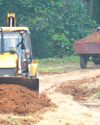
For two decades, a Chhattisgarh village remains stuck in a loop of building temporary river crossings to access markets and sell forest produce
4 mins
March 01, 2026
Down To Earth
Liveable cities need a new model
CRY FOR my Delhi. This is my city—my family records many generations who have lived here.
3 mins
March 01, 2026
Down To Earth
Real impacts of the changing seasons
This refers to the article \"1,500 days, and an alarm for new climate\" (1-15 December, 2025).
1 mins
March 01, 2026

Down To Earth
‘It’s a systematic effort by US to dismantle climate policy’
The US, the world's largest historical emitter of greenhouse gases, has overturned its “endangerment finding”, the legal foundation for regulating emissions under the Clean Air Act since 2009.
4 mins
March 01, 2026
Down To Earth
Amazon turned carbon source in 2023 drought
EXTREME DROUGHT and a prolonged heatwave in 2023 pushed parts of the Amazon rainforest from acting as a carbon sink to becoming a carbon source for three months, according to a February 13 study published in the journal AGU Advances of the American Geophysical Union.
1 min
March 01, 2026
Translate
Change font size