
Mit Magzter GOLD unbegrenztes Potenzial nutzen
Erhalten Sie unbegrenzten Zugriff auf über 9.000 Zeitschriften, Zeitungen und Premium-Artikel für nur
Versuchen GOLD - Frei
Trade In Extralegal Currency
Down To Earth
|February 01, 2018
Energy guzzling cryptocurrencies could make commodity markets volatile.

BITCOINS AND cryptocurrencies that were a little known phenomenon in early 2017 became larger than life by end of the year. The value of a bitcoin jumped from $900 to $19,000 in the year before, and has now plunged by 40 per cent—it was worth US $10,000 on the Luxembourg-based Bitstamp exchange on January 17—showing intense volatility. Though not recognised by any nation, cryptocurrencies have attained a stature of the inevitable and forced their way into the world commodity markets. You can buy anything, from cinema tickets to gadgets to petrol, with them.
They have made Jamie Dimon, CEO of the world’s biggest banking group JP Morgan, eat his words. In September 2016 he had called bitcoins a fraud and a massive Ponzi scheme. Four months later, in an interview to Fox TV on January 9, he regretted his remark and said, “Blockchain is real. You can have crypto yen and dollars and stuff like that.”
Blockchain technology, which forms the basis of cryptocurrencies, is a new way to manage data. It is a software to write a digital ledger to manage digital assets. It is nothing that the world cannot live without. But it is a novelty that would help corporations to build bigger and scalable businesses in the future. It aims to create records that cannot be hacked, databases that cannot be corrupted or extinguished. Paradoxically, over 0.9 million bitcoins have been lost or hacked till date in four separate incidents, the most famous being the Mt Gox exchange scam that came to light in 2014.
So nothing is invincible or will be hackproof. Still, according to a Juniper Research report published in September 2017 in
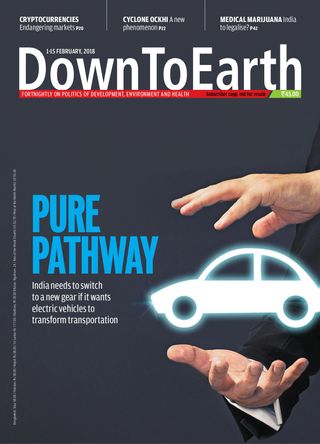

Diese Geschichte stammt aus der February 01, 2018-Ausgabe von Down To Earth.
Abonnieren Sie Magzter GOLD, um auf Tausende kuratierter Premium-Geschichten und über 9.000 Zeitschriften und Zeitungen zuzugreifen.
Sie sind bereits Abonnent? Anmelden
WEITERE GESCHICHTEN VON Down To Earth

Down To Earth
THINK TWICE BEFORE FELLING SAL TREES
Many trees considered to be affected by sal borer in the 1990s are still alive today

1 mins
February 16, 2026

Down To Earth
EDGE OF SURVIVAL
Caste divides deny marginalised communities land, resources and essential aid, leaving them more vulnerable to climate disasters
6 mins
February 16, 2026

Down To Earth
A WISH LIST?
Union Budget for 2026-27 conveys the impression of a roll-call of intentions and ambitious proposals, with little detail on their formulation
6 mins
February 16, 2026
Down To Earth
Break down the gender wall
THE RULING National Democratic Alliance (NDA) government has been heavily invested in the goal to make India a developed economy by 2047.
2 mins
February 16, 2026

Down To Earth
MENSTRUAL HEALTH, NOW A FUNDAMENTAL RIGHT
In a landmark judgement, the Supreme Court has recognised menstrual health and hygiene as a fundamental right under Article 21 of the Constitution of India, which guarantees the right to life and dignity.
8 mins
February 16, 2026

Down To Earth
Of devolution and new disasters
The 16th Finance Commission pushes for changes in view of new fiscal and climatic conditions
11 mins
February 16, 2026
Down To Earth
Rising risks of plastics
NEGATIVE IMPACTS on human health due to emissions linked to the plastic lifecycle could double by 2040, according to a study published in The Lancet Planetary Health in January.
1 min
February 16, 2026

Down To Earth
GAP BETWEEN EPIDEMICS NARROWING
A watershed-based and landscape-level approach is needed to address forest degradation
2 mins
February 16, 2026
Down To Earth
WAITING TO STRIKE
Sal heartwood borer is considered the biggest threat to forestry in India, especially to the sal tree, where it lives and breeds.
11 mins
February 16, 2026
Down To Earth
A SPRING DELIGHT
Mustard flowers are not meant only for the eyes. Invite them to your plate once in a while
3 mins
February 16, 2026
Translate
Change font size