Versuchen GOLD - Frei
This Is Why We Dance
BBC Focus - Science & Technology
|Christmas 2016
As Strictly reaches its climax, millions of people will be tuning in to watch. But why are we such dance-lovers? Science might just have the answers…

Dancing is in our DNA. It is found in every culture around the world throughout history, and is enjoyed by people of every age, from toddlers to the elderly.
From a scientific perspective, dance is an important human activity. Actually, from any perspective dance is an important human activity. It’s important for enjoyment, for interpersonal communication, for social bonding and for our general health and wellbeing as well.
Scientists have long been interested in dance because it can tell us about our innate responses to music, about why some people get dizzy and others don’t, about how we find a mate and about the very essence of being human. Dance is something that only we can do (no other animals on the planet can dance creatively like us), and which every human being is equipped for. If you love to dance, welcome to the club. Now let’s find out why we dance…
BOOGIE BRAINS
It all begins in our brains. The human brain is specialised for the control of movement – it needs to be, in order to manipulate our 600-plus muscles. The motor cortex, located at the rear of the frontal lobe, is involved in the planning, control and execution of voluntary movements. Meanwhile, the basal ganglia, a set of structures deep within the brain, works with the motor cortex to trigger well-coordinated movements, and may also act as a filter by blocking out unsuitable movements, such as that ill-advised funky chicken. The cerebellum, at the back of the skull, also performs several roles, including integrating information from our senses so that our movements are perfectly fluid and precise.
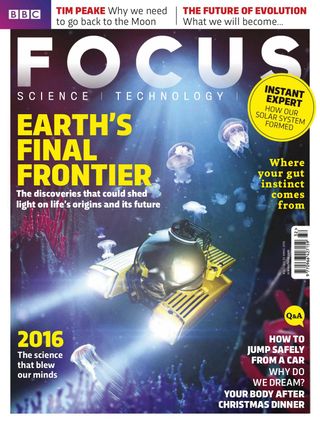

Diese Geschichte stammt aus der Christmas 2016-Ausgabe von BBC Focus - Science & Technology.
Abonnieren Sie Magzter GOLD, um auf Tausende kuratierter Premium-Geschichten und über 9.000 Zeitschriften und Zeitungen zuzugreifen.
Sie sind bereits Abonnent? Anmelden
WEITERE GESCHICHTEN VON BBC Focus - Science & Technology

BBC Science Focus
DOES MY DOG HAVE ADHD?
Officially, Attention-Deficit Hyperactivity Disorder (ADHD) is a human condition. People are diagnosed with it. Dogs are not. Yet many of its core features, including hyperactivity, impulsivity and distractibility, can be found in dogs.

1 min
March 2026

BBC Science Focus
DOES MY BRAIN LIVE A LITTLE IN THE PAST?
Yes, your brain does live a little in the past. It can't help it. The information it receives via your senses is always a little out of date. Whether it's light entering the retinas in your eyes, or sounds vibrating the hairs in your ears, it not only takes time for the data to arrive, but your brain then has to process it.
2 mins
March 2026

BBC Science Focus
ASTRONOMY FOR BEGINNERS
RETURN OF THE EVENING STAR (VENUS)
1 mins
March 2026

BBC Science Focus
CAN YOU STOP YOUR SENSE OF TASTE DULLING AS YOU AGE?
Sometimes I hear people say that food just doesn't taste the same as they get older. It's tempting to blame this on age, but there are other factors at play, too.
1 mins
March 2026
BBC Science Focus
MICROBIOMES OF THE SUPERAGERS
BY STUDYING THE INCREASING NUMBER OF PEOPLE WHO ARE LIVING BEYOND THEIR 100TH BIRTHDAYS, SCIENTISTS ARE DISCOVERING THAT THE SECRET TO REACHING A RIPE OLD AGE IN RUDE HEALTH MIGHT LIE IN OUR GUTS
8 mins
March 2026

BBC Science Focus
HOW BIG WERE MEDIEVAL WAR HORSES?
You might picture knights charging into battle on towering steeds, but medieval horses were typically no bigger than modern-day ponies.
1 min
March 2026

BBC Science Focus
FORCES OF HABIT
Could new research on setting up healthy habits resuscitate those stuttering New Year resolutions?
3 mins
March 2026

BBC Science Focus
5 DANGERS HIDING IN YOUR PROCESSED FOOD
We all know that ultra-processed foods are bad for us, but what ingredients should we particularly try to avoid? And what are they doing to our bodies?
9 mins
March 2026

BBC Science Focus
Mosquitoes are becoming thirstier for human blood
Habitat loss may be pushing mosquitoes towards human hosts with deadly consequences
1 mins
March 2026

BBC Science Focus
HOW CAN I GET OVER MY EX?
Relationship breakups can be brutal, just look at the popularity of songs like 'Someone Like You' by Adele, or all the covers of 'Cry Me a River' by Julie London.
1 mins
March 2026
Translate
Change font size