Versuchen GOLD - Frei
How Do We Know... How Our Solar System Formed?
BBC Focus - Science & Technology
|Christmas 2016
From our prime position on the third planet out from the Sun, we're finally understanding how our solar neighbourhood came to be.

Asking questions about where we come from is one of the traits that marks us out as distinctly human. Yet this inquisitive streak hasn’t always led us in the right direction, particularly when we think we are more important than we ultimately are. The story of our quest to discover how our Solar System formed is littered with false starts, and one that astronomers are still refining.
The world’s greatest thinkers originally had the Earth at the centre of creation, with the Sun, Moon, planets and stars circling around us. It’s an idea that lasted for more than 1,000 years, dating back to the days of Aristotle and Ancient Greece. It wasn’t until the Polish astronomer and mathematician Nicolaus Copernicus challenged this idea in the 16th Century that the tide of opinion started to shift. He said that the planets – including Earth – orbit around the central Sun. Copernicus was so fearful of the inevitable backlash from religious quarters that he delayed publication of his work until after his death. Legend has it that he only saw a copy on his deathbed.
Galileo! Galileo!
It would take many decades for experimental evidence to confirm that we do indeed live in a ‘solar system’. It was mostly the work of the Italian astronomer Galileo Galilei in the early 1600s that cemented the idea. It wasn’t all plain sailing, of course. Galileo famously had his own run-ins with the Church, and he was only officially pardoned in 1992. But as far as the science was concerned, the clincher came when he observed the planet Venus waxing and waning through phases, much like the Moon. This isn’t possible if both Venus and the Sun orbit around the Earth – only if both planets circle a central source of illumination. So we took our place as just another one of the Sun’s family of planets.
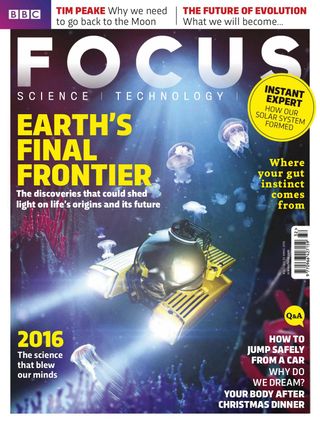

Diese Geschichte stammt aus der Christmas 2016-Ausgabe von BBC Focus - Science & Technology.
Abonnieren Sie Magzter GOLD, um auf Tausende kuratierter Premium-Geschichten und über 9.000 Zeitschriften und Zeitungen zuzugreifen.
Sie sind bereits Abonnent? Anmelden
WEITERE GESCHICHTEN VON BBC Focus - Science & Technology

BBC Science Focus
DOES MY DOG HAVE ADHD?
Officially, Attention-Deficit Hyperactivity Disorder (ADHD) is a human condition. People are diagnosed with it. Dogs are not. Yet many of its core features, including hyperactivity, impulsivity and distractibility, can be found in dogs.

1 min
March 2026
BBC Science Focus
DOES MY BRAIN LIVE A LITTLE IN THE PAST?
Yes, your brain does live a little in the past. It can't help it. The information it receives via your senses is always a little out of date. Whether it's light entering the retinas in your eyes, or sounds vibrating the hairs in your ears, it not only takes time for the data to arrive, but your brain then has to process it.
2 mins
March 2026
BBC Science Focus
ASTRONOMY FOR BEGINNERS
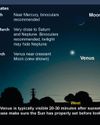
RETURN OF THE EVENING STAR (VENUS)
1 mins
March 2026

BBC Science Focus
CAN YOU STOP YOUR SENSE OF TASTE DULLING AS YOU AGE?
Sometimes I hear people say that food just doesn't taste the same as they get older. It's tempting to blame this on age, but there are other factors at play, too.
1 mins
March 2026
BBC Science Focus
MICROBIOMES OF THE SUPERAGERS
BY STUDYING THE INCREASING NUMBER OF PEOPLE WHO ARE LIVING BEYOND THEIR 100TH BIRTHDAYS, SCIENTISTS ARE DISCOVERING THAT THE SECRET TO REACHING A RIPE OLD AGE IN RUDE HEALTH MIGHT LIE IN OUR GUTS
8 mins
March 2026

BBC Science Focus
HOW BIG WERE MEDIEVAL WAR HORSES?
You might picture knights charging into battle on towering steeds, but medieval horses were typically no bigger than modern-day ponies.
1 min
March 2026
BBC Science Focus
FORCES OF HABIT
Could new research on setting up healthy habits resuscitate those stuttering New Year resolutions?
3 mins
March 2026

BBC Science Focus
5 DANGERS HIDING IN YOUR PROCESSED FOOD
We all know that ultra-processed foods are bad for us, but what ingredients should we particularly try to avoid? And what are they doing to our bodies?
9 mins
March 2026
BBC Science Focus
Mosquitoes are becoming thirstier for human blood
Habitat loss may be pushing mosquitoes towards human hosts with deadly consequences
1 mins
March 2026

BBC Science Focus
HOW CAN I GET OVER MY EX?
Relationship breakups can be brutal, just look at the popularity of songs like 'Someone Like You' by Adele, or all the covers of 'Cry Me a River' by Julie London.
1 mins
March 2026
Translate
Change font size