
Mit Magzter GOLD unbegrenztes Potenzial nutzen
Erhalten Sie unbegrenzten Zugriff auf über 9.000 Zeitschriften, Zeitungen und Premium-Artikel für nur
SHOOTING HANDHELD IN LOW LIGHT
Smart Photography
|May 2021
Ashok Kandimalla has been in the photographic field for over three decades and has extensive experience in both film and digital photography. Being an electronics engineer by profession and a photographer, he possesses a unique and deep insight into the technical aspects of digital photography and equipment. He has published more than a 100 articles on photography and some of his writings have also been published in the well-known international magazine Popular Photography. An avid collector of photographic books and vintage cameras, Ashok has a keen interest in the history of photography and a passion for sharing his knowledge on photography through teaching and writing. He is the only Indian photographer to be featured on the Nikon Centenary website. He is presently working as a Management and Engineering consutant. He can be reached at kashokk@gmail.com.

During the film era, it was impossible to take a photograph in low light, without a tripod or a flash. That was because the ISO (or its equivalent predecessor, the ASA) rating of 99% of the films being used was just 100 and sometimes, even lower. Images from faster films were of low quality and in any case, the ISO maxed out at about 3200, unless you did push processing, which made the quality even worse!
Even after digital cameras were introduced, the low light capability was nothing great till larger sensors and CMOS technology brought a sea of changes. Now, it is quite common to see cameras offering ISO values in six digits and some even going over a million.
Whatever may be the case, you will sooner or later encounter a situation where you feel that the light is not enough to take a picture with your camera handheld, and you do not have a tripod or a flash (or even if you have the latter, it is of no use – for example, if you are photographing a monument or a landscape). Under such circumstances, you would do the following. Crank up the ISO to the maximum level, switch on image stabilisation and set the lens at the widest aperture (smallest f/ number). If possible, you will try and use a shorter focal length to get a slower handholdable shutter speed to satisfy the standard thumb rule. That’s about it. Let us say you have done all that and you look at the shutter speed on your camera only to find that it is ½ second or slower. Not enough to handhold!
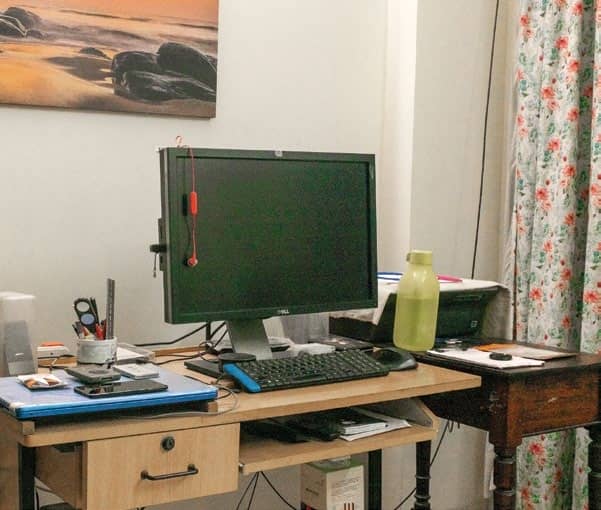
So, what next? Pack your bag and leave? No, not necessarily. Here is a technique that the author has been using with good results and this article describes just that.
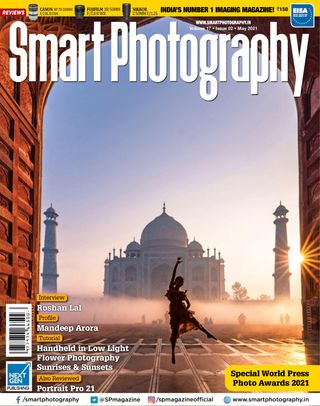

Diese Geschichte stammt aus der May 2021-Ausgabe von Smart Photography.
Abonnieren Sie Magzter GOLD, um auf Tausende kuratierter Premium-Geschichten und über 9.000 Zeitschriften und Zeitungen zuzugreifen.
Sie sind bereits Abonnent? Anmelden
WEITERE GESCHICHTEN VON Smart Photography
Smart Photography
Nikon Zf gains film look
Nikon ikon's firmware version 3.00 turns the Zf into an unusually faithful digital-film bridge.

1 min
December 2025

Smart Photography
Pro. Powerful. Solid. A delightful all round package
The newly launched Oppo Find X9 Pro is a true flagship powerhouse that's already creating serious buzz in India and globally. With its Hasselblad-tuned imaging system, the largest battery Oppo has ever put in a phone, and relentless focus on computational photography, it's clearly aimed at photography enthusiasts, travellers, content creators, and anyone who needs all-day (or multi-day) power without compromise.
2 mins
December 2025
Smart Photography
Viltrox 85mm f/2 EVO expands options
Viltrox's AF 85mm f/2 EVO arrives to stabilise mid-range Z-mount portrait economics.
1 min
December 2025
Smart Photography
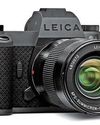
Leica SL3 Reporter reinforced
The Leica SL3 Reporter edition refines the SL3 chassis into a field-survival instrument for conflict journalists, nature correspondents and border-region documentarians.
1 min
December 2025
Smart Photography
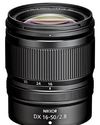
Nikon DX 16-50mm f/2.8 VR reaches shelves
The Nikkor Z DX 16-50mm f/2.8 VR is set to lift APS-C credibility for Nikon by offering a 24-75mm equivalent focal length in a 200g footprint.
1 min
December 2025
Smart Photography
Nikon ZR cinema body reaches studios
The Nikon ZR introduces 6K RAW and internal ND filtration in a ventilated, modular frame engineered to last multi-hour documentary cycles and binge-shoot streaming series.
1 min
December 2025

Smart Photography
Canon R6 Mark III arrives
Canon's EOS R6 Mark III has made it its India entry, positioning itself as a serious hybrid upgrade for working photographers and ambitious creators.
1 min
December 2025

Smart Photography
Nikon Z9 II timeline shifts
Nikon’s Z9 II slipping to 2026 is less delay and more architecture pacing.
1 min
December 2025
Smart Photography
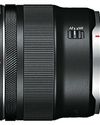
Canon RF 45mm f/1.2 STM arrives
Canon's RF 45mm f/1.2 STM threads ultra-fast optics into a 346g frame designed to serve street, ceremony and campaign studios without L-series heft.
1 min
December 2025

Smart Photography
A creator's delight
The Samsung Galaxy Z Fold 7 isn’t just another foldable—it’s the most refined, ultra-slim, productivity-driven multitasking machine on the market today. At just 8.9 mm folded and 215 grams, it slips into a pocket like a premium notebook, yet unfolds into an 8-inch tablet that redefines mobile workflow. With its armored aluminum frame, IPX8 water resistance, and a hinge engineered for 200,000 folds, this is a device built for professionals who demand durability and elegance in equal measure. For creators, it's more than a phone—it’s a portable studio, editing suite, and client presentation tool in one. And when it comes to photography and video, the Z Fold 7 doesn't just keep up with flagships; in many real-world scenarios, it leads.
4 mins
December 2025
Translate
Change font size