Versuchen GOLD - Frei
Algebra delivers the goods
The Guardian Weekly
|September 17, 2021
The calculations behind fi lling our supermarket shelves are dizzyingly complex – but it all starts with the x and y problems you remember from school

Nando’s put it succinctly on its Twitter feed last month: “The UK supply chain is having a bit of a mare right now.” Getting things onto supermarket shelves, through your letterbox or into a restaurant kitchen has certainly become problematic of late. It’s hard to know exactly where to pin the blame, though Covid and Brexit have surely played a part. What we can do is give thanks for algebra, because things would be so much worse without it.
It’s likely that you have mixed feelings about algebra. Even if you could manage it in school, you probably wondered why it was important. You might even feel that your scepticism has been vindicated: chances are you have never used algebra in your post-school life. But that doesn’t mean algebra is useless. Whether it’s supermarket groceries, a new TV or a parcel, they all reach your home through some attempt to solve an equation. Algebra is the maths that delivers.
Algebra has been around for millennia. The word comes from the Arabic word al-jabr in the title of a ninth-century book on calculation. It is, essentially, the art of finding unknown numbers, given certain others. The hidden factor was usually referred to in Latin as the cossa, or “ thing ”, and so algebra was often known as the “ cossick art”: the art of the thing.
Until the 16th century, everything was written out in words. An early student of the cossick art might find themselves face to face with something like the following: two men are leading oxen along a road and one says to the other: “Give me two oxen and I’ll have as many as you have.” Then the other said: “Now you give me two oxen and I’ll have double the number you have.” How many oxen were there and how many did each have?
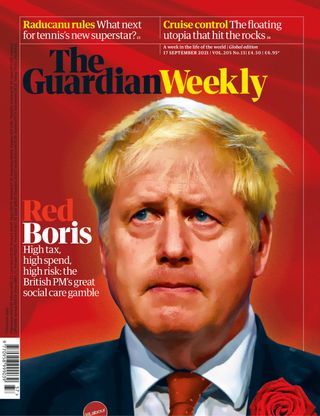

Diese Geschichte stammt aus der September 17, 2021-Ausgabe von The Guardian Weekly.
Abonnieren Sie Magzter GOLD, um auf Tausende kuratierter Premium-Geschichten und über 9.000 Zeitschriften und Zeitungen zuzugreifen.
Sie sind bereits Abonnent? Anmelden
WEITERE GESCHICHTEN VON The Guardian Weekly

The Guardian Weekly
Help at hand: A wave of support after school shooting
When Jim Caruso heard the news of the school shooting in Tumbler Ridge, he knew immediately he needed to be there. He packed his bags and boarded a plane for the community 1,100km away. \"I wanted to be here to bring some level of comfort,\" he said. \"I wanted to hug people, pray for them and, most importantly, to cry with them.\"

3 mins
February 20, 2026

The Guardian Weekly
From rickshaws to running shoes in pursuit of trail glory
Members of a local athletics club who transport passengers for a living are now beating elite athletes in international endurance events
3 mins
February 20, 2026

The Guardian Weekly
AI therapy Patients turn to chatbots for treatment
On a quiet evening in her Abuja hotel, Joy Adeboye, 23, sits on her bed clutching her phone, her mind racing.
2 mins
February 20, 2026
The Guardian Weekly
In these dark times, the World Service must not be allowed to fall silent
“The programmes will neither be very interesting nor very good,” said the then BBC director general John Reith when he launched its Empire Service in December 1932.
2 mins
February 20, 2026

The Guardian Weekly
Everybody wants to be a cat
Genre-hopping bass virtuoso Thundercat discusses Snoop Dogg and Star Wars ahead of the release of his fifth album
7 mins
February 20, 2026

The Guardian Weekly
'Just say no' US politicians offer advice on how to repel Trump
In Munich, Democrats put an end to tradition of the united front to stand among the president's fiercest critics
3 mins
February 20, 2026
The Guardian Weekly
Bird is the word: the secret to serving up perfect roast chicken
What’s the best way to roast a chicken?
2 mins
February 20, 2026

The Guardian Weekly
Sphere we go!
How did an industrial estate in Leipzig end up home to the great Brazilian architect Oscar Niemeyer's final project? Take a seat in his eye-popping restaurant
4 mins
February 20, 2026

The Guardian Weekly
What the repeal of a key climate rule means for America
The Trump administration has dismantled the basis for all US climate regulations, in its most confrontational anti-environment move yet.
2 mins
February 20, 2026

The Guardian Weekly
I could look out the window all day - so no need for curtains
I've never needed to be convinced of the cognitive benefits of looking out the window.
2 mins
February 20, 2026
Translate
Change font size