Versuchen GOLD - Frei
What Richard Wright Knew
The Atlantic
|June 2021
A previously unpublished novel reveals his bleak prescience about race in America.

Richard Wright, the father figure of African American literature, both nurtured and was rejected by his two most conspicuous heirs, Ralph Ellison and James Baldwin. Wright, who took Ellison under his wing in New York in the late 1930s, told his acolyte to stop copying him, that he was mimicking, not cultivating his own style. Ellison responded that he was trying to learn to write well by imitating his mentor. That was when they were close. Baldwin, too, started out as a pupil and an admirer who saw Wright poised to be the greatest Black writer in the United States.
Though it happened slowly, by 1941, Ellison betrayed signs of feeling that Wright, affiliated off and on with the Communist Party, wrote fiction that was too ideological and not sensitive enough to nuance: Wright wanted to testify to the monstrosities of white supremacy, rather than the power of Black resilience. Ellison grew committed to the poetry of American democracy, despite how badly it was sullied; he swore by the virtues of individualism. Calling Wright “Poor Richard,” Baldwin joined Ellison in lamenting their mentor’s failure to see the beauty of Black people. The two of them never ceased to love Wright’s prose, but they came to reject his perspective.
I admit I’ve been inclined to share their verdict, based on Wright’s first novel, Native Son, published in 1940, which I read again and again in classes before and during college. I’ve parroted the notes I took in lectures, and I’ve taught a version of those lectures myself: Bigger Thomas was a protagonist stripped of any redeeming qualities, so distorted by the conditions of racism that he became an avatar more than a character, and an unsettling representation of Blackness.
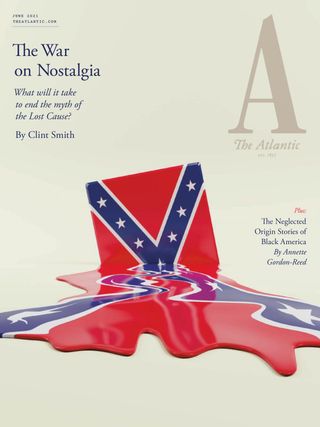

Diese Geschichte stammt aus der June 2021-Ausgabe von The Atlantic.
Abonnieren Sie Magzter GOLD, um auf Tausende kuratierter Premium-Geschichten und über 9.000 Zeitschriften und Zeitungen zuzugreifen.
Sie sind bereits Abonnent? Anmelden
WEITERE GESCHICHTEN VON The Atlantic
The Atlantic
You Had to Be There
An emerging field of history asks if we can ever really understand how our forebears experienced love, anger, fear, and sorrow.

23 mins
January 2026

The Atlantic
By the Horns
The week before the biggest bullfight of her career, in Cádiz, Spain, this past July, 24-year-old Miriam Cabas posted a carefully produced video on Instagram.
1 mins
January 2026

The Atlantic
The New German War Machine
After World War II, Germany embraced pacifism as a form of atonement. Now the country is arming itself again.
18 mins
January 2026
The Atlantic
The Eloquence
The prime minister was watching a disaster movie when we found him.
4 mins
January 2026

The Atlantic
What's for Dinner, Mom?
The women who want to change the way America eats
12 mins
January 2026
The Atlantic
How Terror Works
A 1947 German novel explores the sometimes corrosive, sometimes energizing nature of fear.
8 mins
January 2026

The Atlantic
Yesterday's Idea of a Modern Man
Sam Shepard, a self-made cowboy, was also a poet of masculine angst.
7 mins
January 2026

The Atlantic
ACCOMMODATION NATION
America's colleges have an extra-time-on-tests problem.
11 mins
January 2026

The Atlantic
Respect the Drummer
A new history of rock, told through its overlooked heroes
5 mins
January 2026

The Atlantic
THE MOST POWERFUL MAN IN SCIENCE
WHY IS ROBERT F. KENNEDY JR. SO CONVINCED HE'S RIGHT?
42 mins
January 2026
Translate
Change font size