Versuchen GOLD - Frei
Havana On The Brink
The Atlantic
|September 2015
City officials are striking a difficult balance between preserving the historic district as a residential neighborhood and reviving its tourist industry. What happens when the Americans arrive?

OLD HAVANA, the historic district of Cuba’s capital, was founded by Spanish colonists in 1519. Its churches and fortresses carved from white limestone, Triangle Trade–era mansions, and airy courtyards tell a story of centuries of wealth and its expression by Cuba’s military and mercantile elite. But the district lost prominence in the early 20th century as economic growth shifted away from the city center, and by the time of the Cuban Revolution in the 1950s when the country started to shut out foreign visitors, who once packed its bars and beaches it had fallen into disrepair.
Today, Old Havana is the site of one of the world’s most ambitious urban-revival projects. The force behind this transformation is Eusebio Leal Spengler, the city’s chief historian. In the early 1990s, when the collapse of the Soviet Union pitched Cuba into economic crisis, Leal persuaded President Fidel Castro to approve the establishment of a tourist-management company, called Habaguanex, that would bring foreign investment back to the island. Since then, Leal’s office claims to have steered more than half a billion dollars to the historic district and created more than 13,000 jobs. Habaguanex controls some 20 hotels, 40 restaurants, and 50 bars and cafés, as well as dozens of stores that include a French pastry shop, a florist, and a United Colors of Benetton. Thousands of tourists now arrive each day in Old Havana, an area covering less than a square mile, making it the nation’s most popular destination for foreigners.
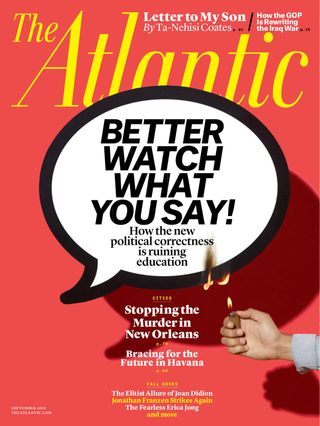

Diese Geschichte stammt aus der September 2015-Ausgabe von The Atlantic.
Abonnieren Sie Magzter GOLD, um auf Tausende kuratierter Premium-Geschichten und über 9.000 Zeitschriften und Zeitungen zuzugreifen.
Sie sind bereits Abonnent? Anmelden
WEITERE GESCHICHTEN VON The Atlantic

The Atlantic
The Eighth Deadly Sin
Humankind has devised a new form of debasement.

5 mins
May 2026
The Atlantic
The Art of the (New) Deal
What the murals of the Wilbur J. Cohen Federal Building can teach us about patriotism, propaganda, and beauty
12 mins
May 2026

The Atlantic
New Chairs
Collaboration, for Robert Rauschenberg and Merce Cunningham, began with the arrangement of chairs.
1 mins
May 2026

The Atlantic
HISTORY IS RUNNING BACKWARDS
Why reactionaries are taking over the world
21 mins
May 2026

The Atlantic
SOMEDAY IN TEHRAN
Like Donald Trump, I, too, once underestimated the Islamic Republic of Iran.
16 mins
May 2026

The Atlantic
On Losing a Daughter
The people we were died at the exact moment our child did.
19 mins
May 2026

The Atlantic
I Found It: The Best Free Restaurant Bread in America
Thirteen thousand miles. Infinite contenders. One beautiful loaf.
15 mins
May 2026

The Atlantic
EVERYTHING IS FREE AND NOTHING MATTERS
What I saw at Jeff Bezos's Campfire retreat
9 mins
May 2026

The Atlantic
Who Is Black Comedy For?
A new book is nostalgic for the '90s. But the era of crossover success was not necessarily the pinnacle of Black comedic achievement.
8 mins
May 2026

The Atlantic
The Feeling of Becoming Less and Less of a Person
In Ben Lerner's new novel, technology divides us further from one another, and ourselves.
9 mins
May 2026
Translate
Change font size