
Mit Magzter GOLD unbegrenztes Potenzial nutzen
Erhalten Sie unbegrenzten Zugriff auf über 9.000 Zeitschriften, Zeitungen und Premium-Artikel für nur
Versuchen GOLD - Frei
Facebookland
The Atlantic
|November 2021
The social giant isn’t just acting like an authoritarian power. It is one.

In 1947, Albert Einstein, writing in this magazine, proposed the creation of a single world government to protect humanity from the threat of the atomic bomb. His utopian idea did not take hold, quite obviously, but today, another visionary is building the simulacrum of a cosmocracy.
Mark Zuckerberg, unlike Einstein, did not dream up Facebook out of a sense of moral duty, or a zeal for world peace. This summer, the population of Zuckerberg’s supranational regime reached 2.9 billion monthly active users, more humans than live in the world’s two most populous nations—China and India—combined.
To Zuckerberg, Facebook’s founder and CEO, they are citizens of Facebookland. Long ago he conspicuously started calling them “people” instead of “users,” but they are still cogs in an immense social matrix, fleshy morsels of data to satisfy the advertisers that poured $54 billion into Facebook in the first half of 2021 alone—a sum that surpasses the gross domestic products of most nations on Earth.
GDP makes for a telling comparison, not just because it gestures at Facebook’s extraordinary power, but because it helps us see Facebook for what it really is. Facebook is not merely a website, or a platform, or a publisher, or a social network, or an online directory, or a corporation, or a utility. It is all of these things. But Facebook is also, effectively, a hostile foreign power.
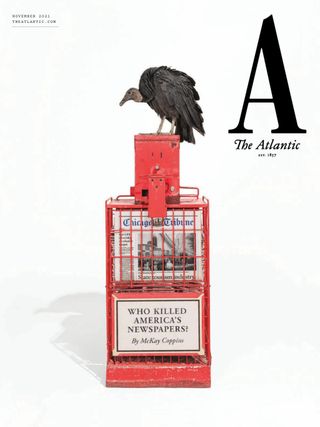

Diese Geschichte stammt aus der November 2021-Ausgabe von The Atlantic.
Abonnieren Sie Magzter GOLD, um auf Tausende kuratierter Premium-Geschichten und über 9.000 Zeitschriften und Zeitungen zuzugreifen.
Sie sind bereits Abonnent? Anmelden
WEITERE GESCHICHTEN VON The Atlantic

The Atlantic
Deadlier Than Gettysburg
How the cruelty of the Confederacy's prison camps gave rise to the rules of war

10 mins
March 2026

The Atlantic
THE MAN WHO BROKE PHYSICS
One of the pleasures of watching Ilia Malinin, apart from his indifference to gravity, is to witness him becoming.
16 mins
March 2026

The Atlantic
How Toni Morrison Saw History
In her novels, she located the missing story of Black America.
12 mins
March 2026

The Atlantic
The Madness of Lord Tennyson
The Victorian poet was startlingly modern.
5 mins
March 2026

The Atlantic
THE PLOT AGAINST THE HUMANITIES
What is the Andrew W. Mellon Foundation doing to higher education?
22 mins
March 2026

The Atlantic
Why Do Democrats Hate Winning?
Ken Martin has one of those resting dread faces, as if he's bracing for someone to dump a bucket of rocks on his head.
37 mins
March 2026

The Atlantic
ROD DREHER'S DEMONS
HE DERIDES THE ENLIGHTENMENT, SECULARISM, AND THE MODERN WORLD. CONSERVATIVES-INCLUDING THE VICE PRESIDENT-ARE JOINING HIM ON A MARCH BACK TO THE MIDDLE AGES.
20 mins
March 2026

The Atlantic
Every Nation for Itself
President Trump wants to return to the 19th century's international order. He will leave America less prosperous—and the whole world less secure.
19 mins
March 2026

The Atlantic
The Secrets of Indigenous Art
Major exhibits are upending the way people understand Native American and Aboriginal artists.
14 mins
March 2026

The Atlantic
The Novel as Extended Op-Ed
If anyone could write good fiction about immigration, it would probably be Lionel Shriver. Instead, her latest book goes off the rails.
10 mins
March 2026
Translate
Change font size