Versuchen GOLD - Frei
Tried Axone With Paneer Yet?
Outlook
|August 24, 2020
BEING a Northeasterner in India is not easy—a shadow of suspicion, that oddballish mistrust, tails each one who ventures west of those river valleys and forested highlands of the tourist brochures.

Ask Nido Tania, lynched in Delhi. Or Richard Loitam, bludgeoned to death in Bangalore. There are more and some are lucky to be alive, spared to live the trauma of being unaccepted by their own countrymen for just being someone from a region with faces or food habits that does not agree with the typical Indian trademark. They suffer the humiliation every day, like dying a thousand deaths. The constant “othering” is a grim reminder of the majority’s contempt for a distinctive minority—the “Chinkies”— that often translates into bullying. That also begets a kind of reverse-racism when a member of the majority checks into the minority’s territory where tables turn in the form of numbers. So, any non-native is a Dkhar in Meghalaya or a Haring/Haliang in Arunachal Pradesh. But these are not words minted recently. They existed from long ago, primarily because most tribes and communities of pre-Independence, pre-British times lived an isolated life content with their remoteness. Anyone outside the immediate cluster was an enemy. Times have changed, as has the context. The shades of “anti-outsider” have paled over the years, but the crumbling stucco on both sides of the chicken’s neck that ties India with the predominantly tribal Northeast continues to reveal the fissures. More pronounced in the “mainland” of the Dkhars than in the land of the “Chinkies”—because more and more of them have come out of their historical self-isolation to study or for jobs in Delhi, Mumbai, Bangalore and the like.
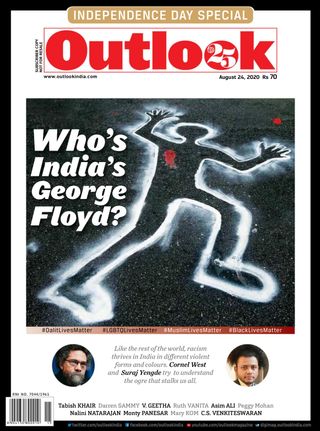

Diese Geschichte stammt aus der August 24, 2020-Ausgabe von Outlook.
Abonnieren Sie Magzter GOLD, um auf Tausende kuratierter Premium-Geschichten und über 9.000 Zeitschriften und Zeitungen zuzugreifen.
Sie sind bereits Abonnent? Anmelden
WEITERE GESCHICHTEN VON Outlook

Outlook
Hating Dating
For many women, dating in their 30s and 40s is defined less by romance than by exhaustion, confusion and a sense of emotional attrition

2 mins
February 21, 2026

Outlook
Rage of Betrayals
THIS is a popular poem often shared when anyone talks of the 4B movement in South Korea. The women in this movement boycott the world of men; boycott heterosexual marriage, relationships, sex, and giving birth.
2 mins
February 21, 2026

Outlook
Class and Caste
Caste hierarchies continue to exist in everyday life and across campuses. Due to the persistence of caste in schools and colleges, long believed to be places for upward mobility and rational thought, these institutions end up becoming spaces where questions of \"merit\", cultural capital, language and access-or the lack of thereof-are highlighted and ridiculed. The discrimination persists from Kashmir to Kerala. From delayed degrees and stalled promotions to verbal abuse, professional isolation, and sometimes death, these case studies underscore not isolated instances but a pattern
18 mins
February 21, 2026

Outlook
The Misuse Myth
A close look at reported cases over the past ten years shows that there is no pattern of rampant misuse of the SC/ST Act in universities or higher education institutions
6 mins
February 21, 2026
Outlook
The Higher, The Lower
What is clear is that the entrenched caste hierarchy feels that power is slipping out from their grasp
6 mins
February 21, 2026
Outlook
Writing is Acting by Another Name
My wife spots him first while my attention is focused on the bucket of theatre popcorn (medium, salt and caramel mix). I look up and there he is. Pico Iyer, great travel writer, essayist, novelist, columnist, humanist, and in recent years, friend and correspondent. While the rest gasp when Timothee Chalamet appears in Marty Supreme, we gasp when Pico does.
3 mins
February 21, 2026

Outlook
Sins of Savarnatva
The upper castes believe that the UGC regulations are a death knell to their own existence
6 mins
February 21, 2026

Outlook
Invisible Labour, Visible Costs
Women shoulder disproportionate emotional and domestic work, shaping how they view intimacy and relationships
2 mins
February 21, 2026

Outlook
Between textbooks and court orders
From first choice to uncertainty as HIMSR-Jamia Hamdard dispute leaves students stranded
5 mins
February 21, 2026

Outlook
Aggressive Victimhood Versus Predictable Protests
The current controversy around the UGC regulations is meant neither to promote social justice and equity nor hurt the interests of the dominant castes. It's meant for the two to be at loggerheads and further consolidate their support behind the BJP-RSS combine
5 mins
February 21, 2026
Translate
Change font size