Versuchen GOLD - Frei
Caste On Top
FRONTLINE
|December 8, 2017
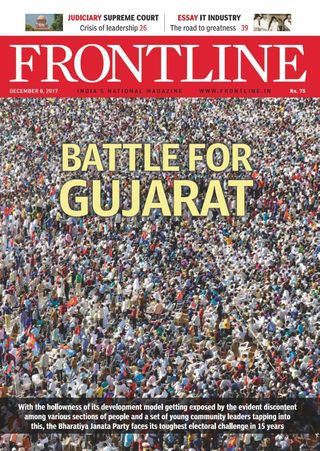
Caste has always been important in Gujarat’s electoral politics. Now, with several social groups speaking up for their rights and against perceived injustices, caste equations have infused uncertainty into the 2017 Assembly elections.

THERE IS AN EXCITEMENT AND ENERGY IN Gujarat that was not seen in the past Assembly elections. The difference this time appears to be the heightened political activism of communities that may play a critical role in deciding the fate of the two national parties contesting the elections. Patidars (Patels), Other Backward Classes (OBCs) and Dalits appear to be setting the agenda, and this might override all other factors. They all appear determined to dethrone the Bharatiya Janata Party (BJP), which has repeatedly let them down for two decades.
The BJP and the Congress have been speaking about jobs and development during their campaigns, but closer to election day it seems to be boiling down to caste politics. The Patidar agitation over the past two years and the horrific atrocities against Dalits have spurred young leaders of these communities to raise their voices and make their demands heard. No such voices were heard in 2012.
Political analysts see a shift from communal polarisation to fragmentation on caste lines. “The BJP has been in power since 1998. They came on the plank of Hindu unity. We are seeing that unity disintegrate in this election,” said Achyut Yagnik, a political commentator and founder of the Centre for Social Knowledge and Action in Ahmedabad. “The difference is that in 2014 the Patidars were the backbone of the BJP. Today, a good percentage of them are backing Hardik Patel, who is vowing to bring them down.”

Diese Geschichte stammt aus der December 8, 2017-Ausgabe von FRONTLINE.
Abonnieren Sie Magzter GOLD, um auf Tausende kuratierter Premium-Geschichten und über 9.000 Zeitschriften und Zeitungen zuzugreifen.
Sie sind bereits Abonnent? Anmelden
WEITERE GESCHICHTEN VON FRONTLINE

FRONTLINE
How Not To Handle An Epidemic
The lockdowns were meant to buy time to put in place appropriate health measures and contain the coronavirus’ spread, but they have failed to achieve the objective and heaped immense misery on the marginalised sections of society. India is still in the exponential phase of the COVID-19 infection and community transmission is a reality that the government refuses to accept.

9 mins
June 5, 2020
FRONTLINE
Tragedy on foot
As the COVID-19-induced lockdown cuts the ground beneath their feet in Tamil Nadu, thousands of migrant workers are trudging along the highway to the relative safety of their upcountry homes.
11 mins
June 5, 2020
FRONTLINE
Sarpanchs as game changers
Odisha manages to keep COVID-19 well under control because of the strong participation of panchayati raj institutions and the community at the grass-roots level under the leadership of Chief Minister Naveen Patnaik.
7 mins
June 5, 2020
FRONTLINE
Scapegoating China
As the COVID-19 death rate spikes and the economy tanks in the United States, Donald Trump and his advisers target China and the World Health Organisation with an eye to winning the forthcoming presidential election.
10 mins
June 5, 2020

FRONTLINE
New worries
Kerala’s measured approach to the pandemic and lockdown has yielded results. But it still has to grapple with their huge economic impact on its economy, which it feels the Centre’s special financial relief package does little to alleviate.
9 mins
June 5, 2020
FRONTLINE
No love lost for labour
Taking advantage of the lockdown and the inability of workers to organise protests, many State governments introduce sweeping changes to labour laws to the detriment of workers on the pretext of reviving production and boosting the economy.
8 mins
June 5, 2020
FRONTLINE
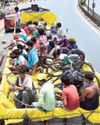
Capital's Malthusian moment
In a world that needs substantial reorienting of production and distribution, Indian capital is resorting to a militant form of moribund neoliberalism to overcome its current crisis. In this pursuit of profit, it is ready and willing to throw into mortal peril millions whom it adjudicates as not worth their means—an admixture of social Darwinism born of capital’s avarice and brutalism spawned by Hindutva. .
14 mins
June 5, 2020
FRONTLINE
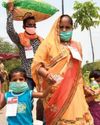
Understanding migration
When governments and their plans are found to be blatantly wanting in addressing reverse migration, exercises such as the Ekta Parishad’s survey of migrant workers throughout India can be useful to work out creative long-lasting solutions.
10 mins
June 5, 2020
FRONTLINE
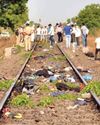
Waiting for Jabalpur moment
The Supreme Court’s role in ensuring executive accountability during the ongoing lockdown leaves much to be desired. Standing in shining contrast is the record of some High Courts.
15 mins
June 5, 2020
FRONTLINE
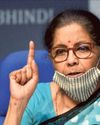
An empty package
The Modi regime, which has been unable to control the COVID-19 infection, restore economic activity and provide relief to millions exposed to starvation, trains its sights on Indian democracy, making use of the panic generated by fear and a lockdown that forecloses paths of resistance.
17 mins
June 5, 2020
Translate
Change font size