
Mit Magzter GOLD unbegrenztes Potenzial nutzen
Erhalten Sie unbegrenzten Zugriff auf über 9.000 Zeitschriften, Zeitungen und Premium-Artikel für nur
Versuchen GOLD - Frei
Back To The Booth
FRONTLINE
|October 13, 2017
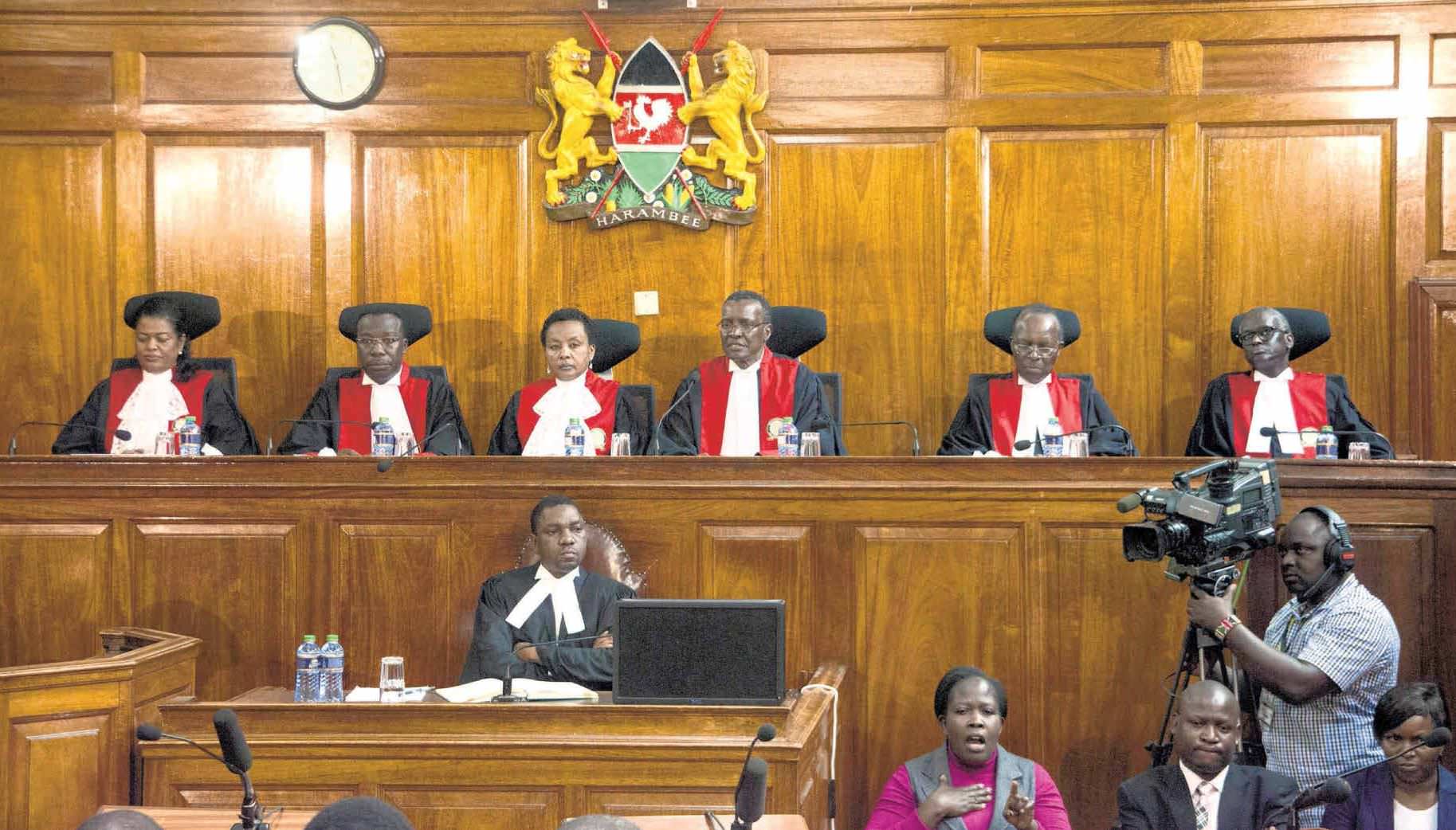
Kenyans are hoping for the best in the presidential election that has been scheduled for October 17 after the Supreme Court nullified the election that was held in August because of electoral irregularities.

THE KENYAN SUPREME COURT’S UNEXPECTED decision in the last week of August to nullify the election victory of incumbent President Uhuru Kenyatta in the general election held on August 8 is being hailed as a landmark judgment, unprecedented in the politics of the African continent. A six-member bench voted four to two in favour of cancelling the presidential election and ordering a new one within 60 days. The court said that the “recently concluded election was not conducted according to the Constitution” and was therefore “invalid, null and void”. It blamed the country’s Independent Electoral and Boundaries Commission (IEBC), as the Kenyan election commission is called, for not following the basic principles of transparency and the rule of law in conducting the election.
The Supreme Court, among other things, found fault with the procedure the IEBC used for the tallying of votes. The IEBC’s lawyers admitted in court that the “official website” that released the results was not in fact the “public portal” the public was initially led to believe it was. The IEBC also conceded that on many occasions it had bypassed the electronic system while tallying the votes. The international media and the majority of the international observers, including those from the African Union, had pronounced the elections generally fair and free. They relied on the results relayed by the “official portal” of the IEBC to come to this conclusion. The IEBC had argued in the Supreme Court that despite some of the glaring errors that were pointed out, the margin of Kenyatta’s victory was so big that the errors would not have altered the final outcome.
MISSING FORMS

Diese Geschichte stammt aus der October 13, 2017-Ausgabe von FRONTLINE.
Abonnieren Sie Magzter GOLD, um auf Tausende kuratierter Premium-Geschichten und über 9.000 Zeitschriften und Zeitungen zuzugreifen.
Sie sind bereits Abonnent? Anmelden
WEITERE GESCHICHTEN VON FRONTLINE

FRONTLINE
How Not To Handle An Epidemic
The lockdowns were meant to buy time to put in place appropriate health measures and contain the coronavirus’ spread, but they have failed to achieve the objective and heaped immense misery on the marginalised sections of society. India is still in the exponential phase of the COVID-19 infection and community transmission is a reality that the government refuses to accept.

9 mins
June 5, 2020
FRONTLINE
Tragedy on foot
As the COVID-19-induced lockdown cuts the ground beneath their feet in Tamil Nadu, thousands of migrant workers are trudging along the highway to the relative safety of their upcountry homes.
11 mins
June 5, 2020
FRONTLINE
Sarpanchs as game changers
Odisha manages to keep COVID-19 well under control because of the strong participation of panchayati raj institutions and the community at the grass-roots level under the leadership of Chief Minister Naveen Patnaik.
7 mins
June 5, 2020
FRONTLINE
Scapegoating China
As the COVID-19 death rate spikes and the economy tanks in the United States, Donald Trump and his advisers target China and the World Health Organisation with an eye to winning the forthcoming presidential election.
10 mins
June 5, 2020

FRONTLINE
New worries
Kerala’s measured approach to the pandemic and lockdown has yielded results. But it still has to grapple with their huge economic impact on its economy, which it feels the Centre’s special financial relief package does little to alleviate.
9 mins
June 5, 2020
FRONTLINE
No love lost for labour
Taking advantage of the lockdown and the inability of workers to organise protests, many State governments introduce sweeping changes to labour laws to the detriment of workers on the pretext of reviving production and boosting the economy.
8 mins
June 5, 2020
FRONTLINE
Capital's Malthusian moment
In a world that needs substantial reorienting of production and distribution, Indian capital is resorting to a militant form of moribund neoliberalism to overcome its current crisis. In this pursuit of profit, it is ready and willing to throw into mortal peril millions whom it adjudicates as not worth their means—an admixture of social Darwinism born of capital’s avarice and brutalism spawned by Hindutva. .
14 mins
June 5, 2020
FRONTLINE
Understanding migration
When governments and their plans are found to be blatantly wanting in addressing reverse migration, exercises such as the Ekta Parishad’s survey of migrant workers throughout India can be useful to work out creative long-lasting solutions.
10 mins
June 5, 2020
FRONTLINE
Waiting for Jabalpur moment
The Supreme Court’s role in ensuring executive accountability during the ongoing lockdown leaves much to be desired. Standing in shining contrast is the record of some High Courts.
15 mins
June 5, 2020

FRONTLINE
An empty package
The Modi regime, which has been unable to control the COVID-19 infection, restore economic activity and provide relief to millions exposed to starvation, trains its sights on Indian democracy, making use of the panic generated by fear and a lockdown that forecloses paths of resistance.
17 mins
June 5, 2020
Translate
Change font size