Versuchen GOLD - Frei
WAY FORWARD FOR KASHMIRI PANDITS
Geopolitics
|March 2020
KANWALJIT SINGH TALWAR suggests ways to undo India’s largest internal displacement
-

India’s largest internal displacement stems from the Pakistan sponsored militancy in Kashmir where since 1989 nearly 95 percent of the Kashmiri Pandits, an estimated 2,50,000 to 3,50,000 people were forced to leave their homeland. Lack of political will of the then government to recognize their displacement as genocide triggered or ethnic cleansing, but instead terming it as a migration by the community at their will has compounded their ignominy. Consequently, without an “IDP Status”, Kashmiri Pandits were denied access to relief and aid from the UN and other international humanitarian organizations. Sadly, a prosperous community is on the brink of extinction due to the collective failure of the state and central government to rehabilitate them back to their homeland. Majority of the displaced Kashmiri Hindus live in camps in Jammu with no or little hope of return to their roots.
The National Conference leaders constituted the first interim government and abandoned their commitment to secular norms and set out to reorganize the state on the basis of communal precedence of the Muslim majority. Sheikh Abdullah prevailed upon Nehru not to accord any constitutional protection rights to minorities in the valley even while he was insisting for a separate identity of Kashmiri Muslims in the Indian constitution. The destabilization process of Kashmiri Hindus started zealously after independence through the Muslimisation of administrative services and the implementation of discriminatory and arbitrary land reforms. The introduction of 'communal quotas' for jobs set the tone for entry of large number of Jamaat-I- Islami cadres as well as sympathizers into crucial segments of state administration. The specific purpose of the land reforms was not to create an egalitarian socioeconomic order in rural Kashmir butto appease middle and rich Muslim peasantry.

Diese Geschichte stammt aus der March 2020-Ausgabe von Geopolitics.
Abonnieren Sie Magzter GOLD, um auf Tausende kuratierter Premium-Geschichten und über 9.000 Zeitschriften und Zeitungen zuzugreifen.
Sie sind bereits Abonnent? Anmelden
WEITERE GESCHICHTEN VON Geopolitics
Geopolitics
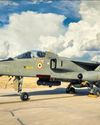
IAF seeks Ecuador Jaquar airframes
The Indian Air Force has initiated discussions with the Ecuadorian Air Force to acquire its remaining grounded SEPECAT Jaguar airframes, as part of a broader effort to extend the service life of India's Jaguar strike fleet through 2035.

1 min
January 2026
Geopolitics
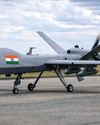
INDIA TO LAUNCH INDIGENOUS 6-TONNE HALE UAV
India's effort to build an indigenous High Altitude Long Endurance (HALE) unmanned aerial vehicle has moved into a critical transition stage. The Aeronautical Development Establishment has issued an Expression of Interest to identify a Development-cum-Production Partner for the proposed six-tonne class HALE UAV, while simultaneously preparing to seek cabinet committee on Security approval to formally initiate the development phase.
2 mins
January 2026

Geopolitics
IAF evaluates SPICE 250 for precision strikes
The Indian Air Force is evaluating the SPICE 250 precision-guided munition as part of its effort to strengthen standoff strike capabilities against a wide range of targets in contested environments.
1 min
January 2026
Geopolitics
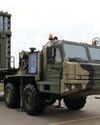
Russia offers S-350 Vityaz with full tech transfer to India
Russia has renewed its offer to supply the Rundian Armed Forces with the S-350 Vityaz air defence system, positioning it as a complementary layer to India's existing S-400 Triumf regiments.
1 min
January 2026

Geopolitics
India inducts first indigenous Pollution Control Vessel
Defence Minister Rajnath Singh recently commissioned Indian Coast Guard Ship Samudra Pratap, the first of two Pollution Control Vessels, calling it a reflection of India's increasingly mature and capable defence industrial ecosystem.
1 min
January 2026
Geopolitics
DAC clears indigenous EW suite for IAF's Mi-17 V5 fleet
The Defence Acquisition Council has accorded Acceptance of Necessity (AON) for multiple DRDO-developed systems, including an advanced Electronic Warfare (EW) Suite for the Indian Air Force's Mi17 V5 helicopter fleet.
1 min
January 2026
Geopolitics
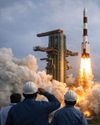
WHY PSLV-C62 FAILURE WILL BADLY HURT INDIA
In space research, satellite launch failures are not uncommon. Yet the failure of ISRO's PSLV-C62 will hurt India, its space ambitions, and its military capabilities for years to come
5 mins
January 2026

Geopolitics
Prime Toolings targets 10 kN thrust milestone by March
Prime Toolings has reiterated its confidence in achieving a 10 kN thrust benchmark by March 2026, even after recent propulsion trials initially fell short of expectations. The company said the development effort was originally structured around an 8 kN thrust objective, but early test runs stabilised at approximately 6 kN. Rather than treating this outcome as a setback, the company views it as a valuable learning phase inherent to complex propulsion development.
1 min
January 2026
Geopolitics
IRRELEVANT UNITED NATIONS
If anything, the U.S. invasion of Venezuela and the capture of its President Nicolás Maduro, or, for that matter, President Donald Trump's habit of imposing economic sanctions on countries effortlessly, constitute a trend that makes the existence of the United Nations (U.N.) irrelevant in its present form. It is an affront to the world body by undermining the principles of collective security and multilateralism.
4 mins
January 2026

Geopolitics
Indian startup Carbine Systems tests first private DEW prototype
Belgaum-based Carbine Systems has testing of its first directed-energy weapon prototype, H.A.R.A. Mk 1 (Hyper Amplification Radiant Array),. marking a notable milestone for India's indigenous laser-weapons ecosystem.
1 min
January 2026
Translate
Change font size