Versuchen GOLD - Frei
Dealing With China
Geopolitics
|June 2020
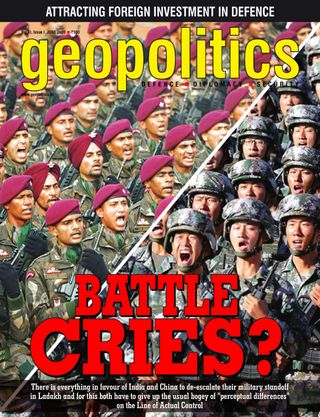
Consistency has never been a virtue for the Communist rulers of China in settling their border disputes with the neighbours. They have used different principles for different countries. And this is the biggest bottleneck in arriving at an amicable solution to the present faceoff between the Chinese and Indian troops, argues Prakash Nanda

For nearly two months, troops of India and China have been facing each other at three places in Ladakh (Pangong sector, Galwan sector and Hot Springs). There have been minor skirmishes, but now the situation is that of a standoff, which, many analysts consider, is likely to be a prolonged one. Because, the Modi government, like its predecessors, cannot take the easy option of declaring that since the Line of Actual Control (LAC) in the border has not exactly been identified and accepted by both the countries, perceptions of the LAC differ from time to time by their respective troops, that in these cases the two countries have devised ways to settle the differences through their local commanders and diplomatic means and that there is nothing to worry as both New Delhi and Beijing are committed to “the maintenance of peace and tranquilly” along the LAC as per their bilateral agreement on September 7, 1993.
Committed to nationalism that the Modi government is (at least, it professes so), it cannot hide the facts like its predecessors that since 2002, the Chinese have been systematically transgressing the LAC into the Indian side. If the so-called perceptions vary, then why is that we have not come across a single instance of the Chinese complaining of Indian transgression? And, what is worse, the Chinese have not necessarily gone back to their previous positions after the diplomatic or local commander-level talks have defused the situations in the past.

Diese Geschichte stammt aus der June 2020-Ausgabe von Geopolitics.
Abonnieren Sie Magzter GOLD, um auf Tausende kuratierter Premium-Geschichten und über 9.000 Zeitschriften und Zeitungen zuzugreifen.
Sie sind bereits Abonnent? Anmelden
WEITERE GESCHICHTEN VON Geopolitics
Geopolitics
Tata expands Morocco push with LAMV offer
After securing an order for its WhAP 8x8 armoured vehicle from the Royal Moroccan Army, Tata Advanced Systems Limited is now actively promoting its Light Armoured Multipurpose Vehicle in the same market.

1 min
February 2026
Geopolitics
Armenia eyes India's Astra Missile for Su-30SM fleet
Armenia is in advanced discussions with India to acquire the Astra beyond-visual-range air-to-air missile, signalling a deepening of defence ties between the two countries.
1 min
February 2026

Geopolitics
SUVI V1 becomes India's first Type-Certified UAV
In India's unmanned aviation sector has reached a significant regulatory milestone with Okulo Aerospace announcing that its SUVI V1 platform has received Type Certification from the Directorate General of Civil Aviation.
1 min
February 2026
Geopolitics
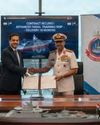
Swan Defence wins Oman naval training ship contract
Swan Defence and Heavy Industries has secured a defence export contract from the Government of the Sultanate of Oman for the construction and supply of an advanced naval training ship for the Royal Navy of Oman.
1 min
February 2026

Geopolitics
HAL'S 'DHRUV' BET
Hindustan Aeronautics Limited (HAL) is attempting a careful reset of the Dhruv helicopter narrative, positioning the platform simultaneously as a cornerstone of India's future civil helicopter market and as a rehabilitated workhorse returning to frontline maritime service.
2 mins
February 2026
Geopolitics
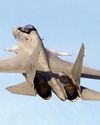
India Offers Su-30MKM Upgrade to Malaysia
India has offered a midlife modernisation package for Malaysia's fleet of 18 Sukhoi Su-30MKM fighters, marking a significant step in bilateral defence-industrial cooperation.
1 min
February 2026
Geopolitics
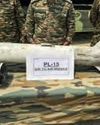
Astra upgrade rooted in indigenous R and D
Recent reports linking the Indian Air Force's Astra missile upgrades to Chinese PL-15 technology have been firmly dismissed by defence officials and scientists.
1 min
February 2026

Geopolitics
COMMAND OR COMPLIANCE? RECLAIMING THE SPIRIT OF MILITARY INITIATIVE
What does it truly mean to be a military leader in a democracy? It is a question sparked by the recent controversy surrounding General Manoj Naravane's memoir. While the government always has the final say, a great general shouldn't just wait for instructions; they must lead with confidence, give honest advice, and take decisive action on the battlefield. KARAN KHARAB highlights why India needs a military culture that rewards bold Initiative over hesitation and \"seeking orders.\"
8 mins
February 2026
Geopolitics
India's integrated air combat plan from Mk1A to MkIII
India's combat aviation landscape is entering a defining phase, marked by parallel developments in aircraft production and missile technology that together reflect a broader push toward operational self-reliance.
3 mins
February 2026

Geopolitics
DEFENCE BUDGET 2026-27: FOCUS ON CAPITAL ACQUISITIONS
While there is an overall increase in the latest defence budget, the statistics only tell half of the story, explains AMIT COWSHISH
11 mins
February 2026
Translate
Change font size