
Mit Magzter GOLD unbegrenztes Potenzial nutzen
Erhalten Sie unbegrenzten Zugriff auf über 9.000 Zeitschriften, Zeitungen und Premium-Artikel für nur
Versuchen GOLD - Frei
Paradox Lost
Philosophy Now
|April/May 2022
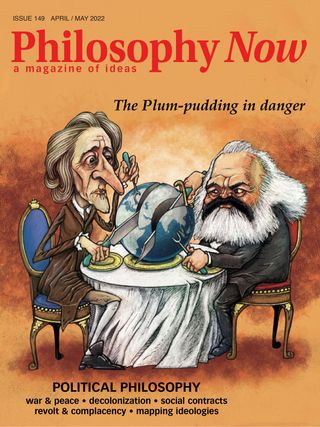
Paul Tissier argues that Russell’s Paradox isn’t really a paradox.
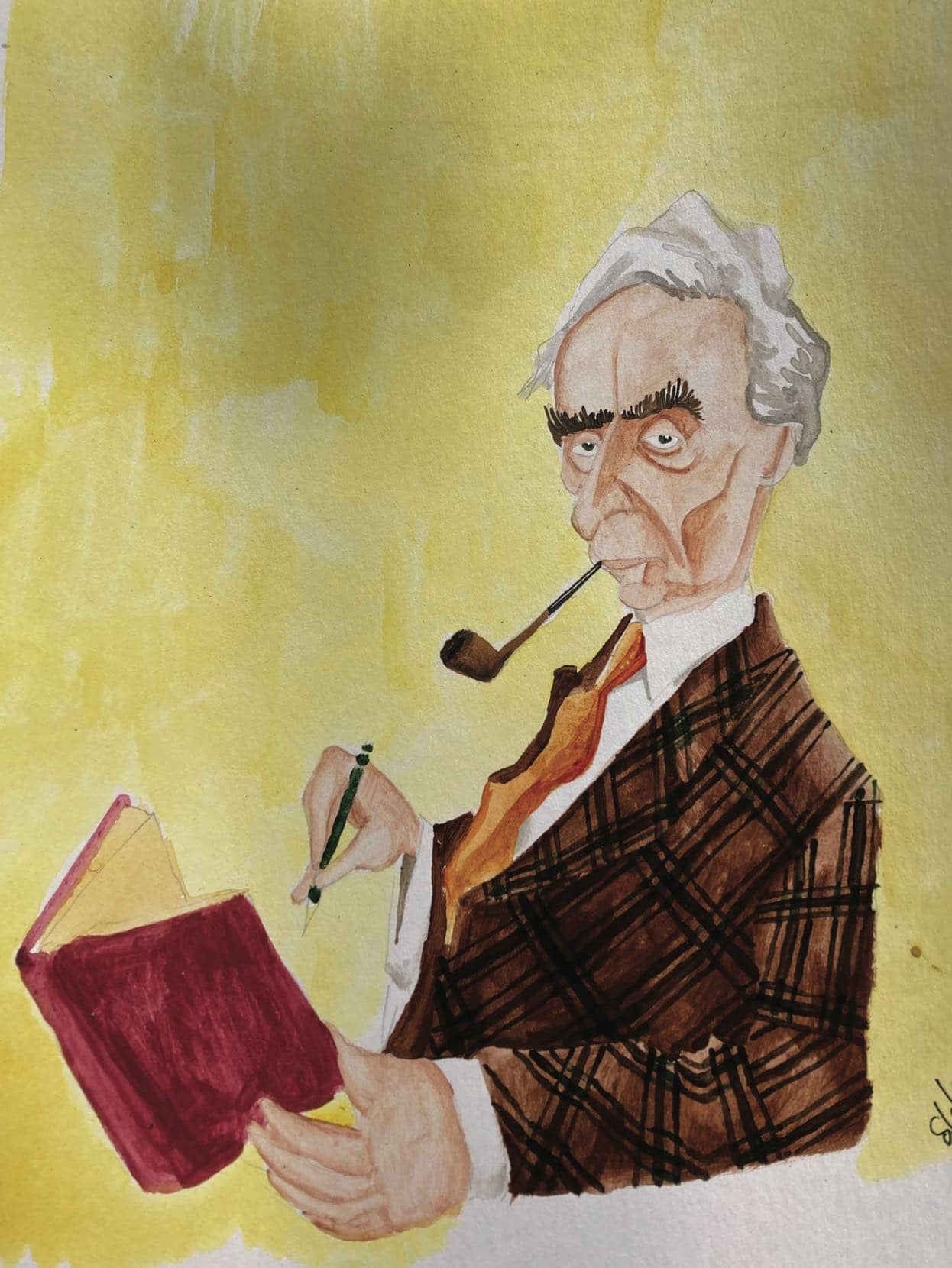
Ali: There can’t be real paradoxes, can there? Those that purport to be paradoxes actually contain ambiguities in meaning, neglected information, hidden assumptions… In short, it’s all smoke and mirrors.
Bev: You might think so. However, Russell’s Paradox in set theory has attracted a lot of serious attention in the literature. In fact, Gottlob Frege, a leading logician and mathematician at the time, felt that this paradox devastated his fundamental work on set theory and the foundations of mathematics.
Ali: So if Russell’s Paradox holds up, it would, rather worryingly, shake the foundations of mathematics?
Bev: Right. So let’s see what is involved. We all know – or think we know – what a ‘set’ is: a collection of all those and only those entities with a defined property. A set’s members can be simple objects, or can be sets themselves. It’s the last possibility we’re interested in here. Sets can also be non-self-membered, or self-membered: they can belong to themselves, or not. Examples of the former would include the set of all finite sets, which is infinite and hence non-self-membered. On the other hand, the set of all infinite sets is itself infinite and so must be included in itself, so it is self-membered. All sets either are non-self-membered or self-membered.
Ali: OK… But I feel like I’m about to be trapped, or perhaps conned.
Bev: Well consider the set of all non-self-membered sets, which for the sake of argument, let’s call ‘N’.
Ali: Hang on! Does such a set even exist?

Diese Geschichte stammt aus der April/May 2022-Ausgabe von Philosophy Now.
Abonnieren Sie Magzter GOLD, um auf Tausende kuratierter Premium-Geschichten und über 9.000 Zeitschriften und Zeitungen zuzugreifen.
Sie sind bereits Abonnent? Anmelden
WEITERE GESCHICHTEN VON Philosophy Now

Philosophy Now
The Possibility- Bearing Animal
Raymond Tallis explores a twilight zone.

7 mins
February/March 2026

Philosophy Now
Amazing Times at the Pub Agora
John Douglas Mullen is a philosophical bar fly on the wall.
8 mins
February/March 2026
Philosophy Now
Friedrich Nietzsche (1844-1900)
Hilarius Bogbinder considers the all too human life of the notorious iconoclast.
11 mins
February/March 2026

Philosophy Now
Heisenberg's Philosophy of Quantum Mechanics
Kanan Purkayastha explains how Werner Heisenberg's 1925 paper turned the quantum theory of the early 1900s into the quantum mechanics of today.
10 mins
February/March 2026
Philosophy Now
Cicero & the Ideal of Virtue
Abdullah Shaikh explores Cicero's ideas about the core Roman principle of virtus.
13 mins
February/March 2026

Philosophy Now
ROPE
Les Jones has a Nietzschean take on a Hitchcock thriller.
6 mins
February/March 2026
Philosophy Now
What Have the Romans Ever Done For Us?
Salve! This issue's theme is Roman Philosophy. But as the rebels in Monty Python's Life of Brian asked, what have the Romans ever done for us? The question seems relevant here; we are philosophers, not archaeologists.
2 mins
February/March 2026
Philosophy Now
Paul Guyer
Paul Guyer is an American philosopher and a leading scholar of both Immanuel Kant and aesthetics. AmirAli Maleki interviews him about Kant's political and moral vision.
9 mins
February/March 2026
Philosophy Now
Identity in the Age of Connectivity
Sara Asran explores the dynamics of identity online.
6 mins
February/March 2026
Philosophy Now
A Very Short History of Critical Thinking
Luc de Brabandere summarises a long history through key figures of thought.
7 mins
February/March 2026
Translate
Change font size