
Mit Magzter GOLD unbegrenztes Potenzial nutzen
Erhalten Sie unbegrenzten Zugriff auf über 9.000 Zeitschriften, Zeitungen und Premium-Artikel für nur
Versuchen GOLD - Frei
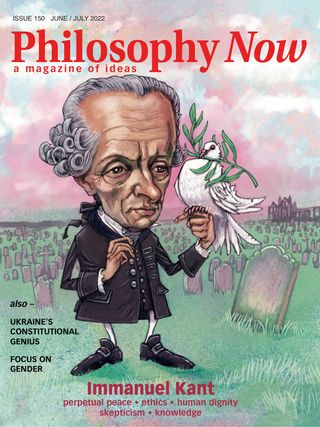
Did Kant Solve Skepticism?
Philosophy Now
|June / July 2022
Thomas Morrison asks just what Kant learned from his Critique of Pure Reason.

Can we know how things really are regardless of how they appear to us? Throughout history, many philosophers - known as skeptics - have argued that we can not. Part of what Immanuel Kant is attempting in his Critique of Pure Reason (1781) is to show that arguments for skepticism are unsound since they rest on a misuse or misunderstanding of concepts such as 'experience', 'things', and 'knowledge'. I hope to show that in this specific sense Kant does solve skepticism, but that by changing the meaning of crucial terms he leaves us with a far more puzzling problem.
Knowing Skepticism
How did we get ourselves into the problem of skepticism to begin with?
There are two assumptions operating in the skeptic's question. The first is that there is a distinction between appearances and reality - between objects as they appear to us and objects as they are in themselves, independent of us. The second is that there is a distinction between direct and indirect knowledge between our own immediate experiences and what we can come to know only indirectly, by inferring it from experience. These two assumptions together lead to what I will call the 'mind world gap': the gap between the inner and outer worlds; that is, between appearances and reality; or between thought, and the world we think about.

Diese Geschichte stammt aus der June / July 2022-Ausgabe von Philosophy Now.
Abonnieren Sie Magzter GOLD, um auf Tausende kuratierter Premium-Geschichten und über 9.000 Zeitschriften und Zeitungen zuzugreifen.
Sie sind bereits Abonnent? Anmelden
WEITERE GESCHICHTEN VON Philosophy Now

Philosophy Now
Bilbo Theorizes About Wellbeing
Eric Comerford overhears Bilbo and Gandalf discussing happiness.

9 mins
December 2025 / January 2026

Philosophy Now
What Women?
Marcia Yudkin remembers almost choking at Cornell
11 mins
December 2025 / January 2026

Philosophy Now
Islamic Philosophers On Tyranny
Amir Ali Maleki looks at tyranny from an Islamic perspective.
4 mins
December 2025 / January 2026

Philosophy Now
Peter Singer
The controversial Australian philosopher defends the right to choose to die on utilitarian grounds
5 mins
December 2025 / January 2026

Philosophy Now
Another Conversation with Martin Heidegger?
Raymond Tallis talks about communication problems.
7 mins
December 2025 / January 2026

Philosophy Now
Letters
When inspiration strikes, don't bottle it up. Email me at rick.lewis@philosophynow.org Keep them short and keep them coming!
17 mins
December 2025 / January 2026
Philosophy Now
The Philosophy of William Blake
Mark Vernon looks at the imaginative thinking of an imaginative artist.
9 mins
December 2025 / January 2026

Philosophy Now
Philosophical Haiku
Peering through life’s lens God in nature is deduced: The joy of being.
1 mins
December 2025 / January 2026

Philosophy Now
Philosophy Shorts
More songs about Buildings and Food' was the title of a 1978 album by the rock band Talking Heads. It was about all the things rock stars normally don't sing about. Pop songs are usually about variations on the theme of love; tracks like Rose Royce's 1976 hit 'Car Wash' are the exception. Philosophers, likewise, tend to have a narrow focus on epistemology, metaphysics and trifles like the meaning of life. But occasionally great minds stray from their turf and write about other matters, for example buildings (Martin Heidegger), food (Hobbes), tomato juice (Robert Nozick), and the weather (Lucretius and Aristotle). This series of Shorts is about these unfamiliar themes; about the things philosophers also write about.
2 mins
December 2025 / January 2026

Philosophy Now
Hedonic Treadmills in the Vale of Tears
Michael Gracey looks at how philosophers have pursued happiness.
8 mins
December 2025 / January 2026
Translate
Change font size