Versuchen GOLD - Frei
Hyperthyroidism And Diabetes
Diabetes Health
|Oct-Nov'18
DrShriraamMahadevanexplains how thyroid dysfunction can affect different organs of the body.
-

Quick thyroid related facts
It is a butterfly-shaped gland situated in front of the neck just below the voice box surrounding the windpipe.
It produces hormones like triiodothyronine (T3) and thyroxine (T4) which promotes other hormones to regulate growth, physical development and metabolism.
Proper functioning of the thyroid gland is very important for the well-being of the body. An imbalance may affect metabolism.
Over-secretion of hormones by the thyroid gland is called hyperthyroidism and under-secretion is called hypothyroidism.
Research studies have shown that women have a higher risk of developing thyroid dysfunction than men.
Thyroid dysfunction and Diabetes
Thyroid dysfunction and Diabetes are both endocrine conditions. Thyroid dysfunction is caused by an impaired secretion of triiodothyronine and thyroxine hormones, whereas Diabetes is caused by an impaired secretion or action of insulin.
The American Diabetes Association (ADA) classification of Diabetes has listed hyperthyroidism as a secondary form of Diabetes. Excess secretion of thyroid hormones (or hyperthyroidism) increases metabolism. This altered carbohydrate metabolism is a result of decreased insulin sensitivity at the peripheral tissues, impaired secretion of insulin and altered appetite and increased food intake.
Studies have found a strong link between Type 1 Diabetes and thyroid dysfunction. Like Type 1 Diabetes, hyperthyroidism is commonly caused by autoimmune factors. It is crucial to treat the thyroid dysfunction in people with Type 1 Diabetes along with managing blood sugar levels.
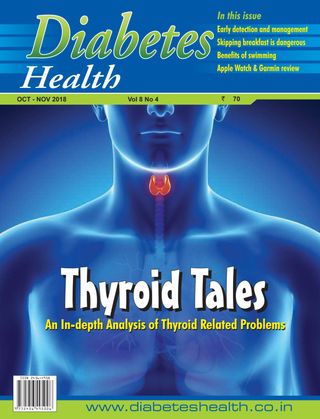

Diese Geschichte stammt aus der Oct-Nov'18 -Ausgabe von Diabetes Health.
Abonnieren Sie Magzter GOLD, um auf Tausende kuratierter Premium-Geschichten und über 9.000 Zeitschriften und Zeitungen zuzugreifen.
Sie sind bereits Abonnent? Anmelden
Translate
Change font size