Versuchen GOLD - Frei
Parliament Of Owls
BBC Wildlife
|December 2018
They may be a rare sight in Britain but long-eared owls aren’t so shy and retiring elsewhere.
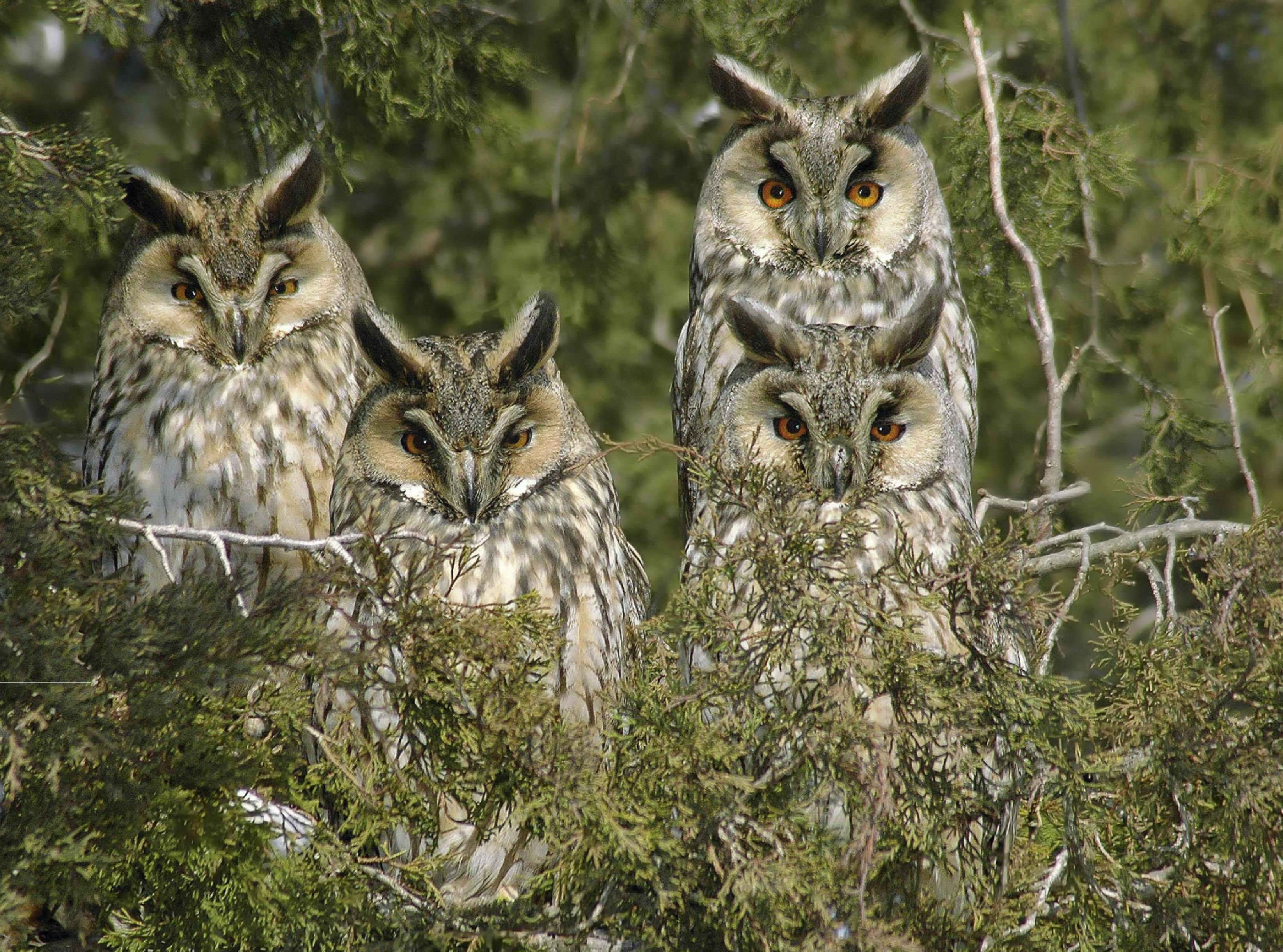
With its chameleonlike ability to meld perfectly into a background of bark and foliage, the long-eared owl is possibly one of the hardest to see in Britain. It is one of our most nocturnal and shy owls, and rare too – on average, there is thought to be around 3,500 breeding pairs here in summer. If you do spot one it might be the startling, orange-sapphire eyes that you’ll see first – its tall ear tufts (not true ears but soft, feathery protrusions) confirm the owl’s identity. So, with UK sightings usually few and far between, where’s the best place to see this elusive beauty? Luckily, I had had a tip-off.
“Serbia?” my husband Rick said. I could see him picturing landmines and armed police. But all that was out of date. “It’s okay,” I said. “It’s been safe to go there for years. I won’t be on my own. I’ll be in a group.”
The tip-off was from the 'Urban Birder’, David Lindo, who was leading the owl expedition. In previous years, Serbia has not had a good press but David said that it was now quite safe to visit – the people were friendly and actively welcomed ecotourism. David’s contact on the ground, Milan, was promoting bird-watching trips to help raise the profile of Serbian wildlife. He would be taking us to see the largest known gathering of long-eared owls in the world. ‘If you don’t see an owl on this trip, we will eat our binoculars!’ the website proclaims. There had been reports of 800 owls gathering in a single location. I was going to the owl capital of the world, to their international HQ – Kikinda.
Helping hand
“This is my Kikinda town,” quips David when we arrive. There were only two rules for the trip – ‘always look up’ and ‘don’t scare the owls’. Having agreed to these, we set off.

Diese Geschichte stammt aus der December 2018-Ausgabe von BBC Wildlife.
Abonnieren Sie Magzter GOLD, um auf Tausende kuratierter Premium-Geschichten und über 9.000 Zeitschriften und Zeitungen zuzugreifen.
Sie sind bereits Abonnent? Anmelden
WEITERE GESCHICHTEN VON BBC Wildlife
BBC Wildlife
"I was terrified the elephant would ram us"
African elephant in Kenya

2 mins
January 2026
BBC Wildlife
ALL YOU EVER NEEDED TO KNOW ABOUT THE Fennec fox
THE FENNEC FOX IS THE SMALLEST fox in the world, with a body length that can be as little as 24cm.
3 mins
January 2026
BBC Wildlife
INTO THE PLASTISPHERE
A unique synthetic ecosystem is evolving in our oceans – welcome to the plastisphere
7 mins
January 2026
BBC Wildlife
“More than half of all animal life exists in a parasitic relationship, and all life lives in symbiosis”
Our survival depends on species evolving to live together - but some relationships take dark turns
7 mins
January 2026
BBC Wildlife
Are animals able to dream?
SLEEP IS A MYSTERIOUS THING. FOR A long time, we weren't sure why we do it.
1 mins
January 2026
BBC Wildlife
Does a cuckoo know it's a cuckoo?
ABSURD LITTLE BIRDS ACROSS THE world lay their eggs in the nests of other species, leaving the hapless parents to raise a changeling at the expense of their own offspring.
2 mins
January 2026
BBC Wildlife
Orcas killing young sharks
Juvenile great whites are easy prey for orca pod
1 mins
January 2026

BBC Wildlife
Ocean goes on tour
Acclaimed film touring the UK, backed by live orchestra and choir
1 min
January 2026
BBC Wildlife
Feisty bats hunt like lions
Winged mammals use a 'hang and wait' strategy to take down large prey
1 mins
January 2026

BBC Wildlife
SNAP-CHAT
Richard Birchett on magical merlins, wily coyotes and charging deer
2 mins
January 2026
Translate
Change font size