
Mit Magzter GOLD unbegrenztes Potenzial nutzen
Erhalten Sie unbegrenzten Zugriff auf über 9.000 Zeitschriften, Zeitungen und Premium-Artikel für nur
Versuchen GOLD - Frei
Heavenly Hydrangeas
Country Life UK
|September 11, 2019
Mark Griffiths extols the beauties of this shrub, from its 18th-century beginnings to its revival in the hands of hydrangea champion Maurice Foster

IN 1736, Peter Collinson, a London merchant and plant connoisseur, introduced a shrub, seeds of which had been sent to him from its native Virginia. Superficially, it resembled a guelder rose (Viburnum opulus), in that its flowerheads were round, white and composed of a central mass of small, petal-less fertile florets with larger and showy petaloid sterile florets around its periphery.
In 1753, the Swedish botanist Linnaeus named this plant Hydrangea arborescens and made it the first and founding species of his new genus Hydrangea. From the Greek for ‘small water vessel’, the name hydrangea itself was an allusion to the shape of this New World newcomer’s seed capsules and not (as some understandably surmise) to the genus’s habit of fainting in hot weather as if from thirst. Collinson’s shrub became popular with gardeners, as our first and, for a while, only hydrangea.
All that changed in 1789 when Sir Joseph Banks had one of its cousins shipped from China to Kew. This was H. macrophylla, a Japanese native with far more spectacular flowers than H. arborescens, in shades of red, pink, purple and blue. Suddenly, hydrangeas were no longer pure, pale and delicately understated, but bold and brilliantly colourful. This recent introduction was ‘supremely magnificent,’ wrote William Curtis in 1799, if baffling in that ‘it will sometimes happen that a plant which has produced red flowers one year, shall produce blue another, though growing in the same pot’. We did not yet understand that blue-flowered forms of this species and the related H. serrata will turn pink or mauve unless grown in markedly acid soils or treated with aluminium or iron.

Diese Geschichte stammt aus der September 11, 2019-Ausgabe von Country Life UK.
Abonnieren Sie Magzter GOLD, um auf Tausende kuratierter Premium-Geschichten und über 9.000 Zeitschriften und Zeitungen zuzugreifen.
Sie sind bereits Abonnent? Anmelden
WEITERE GESCHICHTEN VON Country Life UK
Country Life UK
Opposites can attract
As a big bookcase designed by Peter Waals proves large pieces of furniture can do well, a notable collection shows harmony can be born from difference

3 mins
June 03, 2026
Country Life UK
His green and pleasant land
Few artists travelled as little as John Constable, but his deep knowledge of the parts of England he loved gave him insights that others missed. Susan Owens explores the places that delighted him
6 mins
June 03, 2026
Country Life UK
Dreaming of roses
A thousand English roses now bloom in the restored walled garden that forms the heart of this 27-acre estate, writes Charles Quest-Ritson
4 mins
June 03, 2026

Country Life UK
Ring for peace
A COPIOUS quantity of apple strudel became the unintended consequence of a winter walking holiday in the Austrian Tyrol.
2 mins
June 03, 2026
Country Life UK
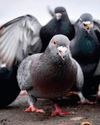
Best of the pests
Pity the feral pigeon: long campaigned against as an urban nuisance, it is the descendant of birds lured into human service, some of which distinguished themselves in wartime
3 mins
June 03, 2026
Country Life UK
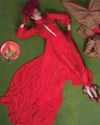
Red alert
The time is ripe for tomatoes in every form. We are days into British Tomato Fortnight (June 1–14) and weeks from Royal Ascot (June 16–20), where Bright Tomato has been declared the inaugural Colour of the Year by Ascot creative director Daniel Fletcher.
1 mins
June 03, 2026
Country Life UK
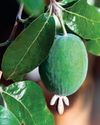
Totally tropical
I FIRST grew pineapple guava, also called feijoa (Acca or Feijoa sellowiana) almost a quarter of a century ago, when there were few nurseries stocking them.
3 mins
June 03, 2026
Country Life UK
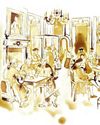
Brewed awakening: where London learnt to talk
Rupert Clague explores how caffeine-fuelled conversation in Hanoverian London’s ‘penny universities’ helped shape the modern world—and where that same spirit still lingers today
5 mins
June 03, 2026
Country Life UK
The legacy Percy Shaw and cat's eyes
BEHIND the retina in a cat’s eyes lurks the tapetum lucidum, a layer of tissue that acts as a mirror, or a retroreflector, and allows the animal to see in the dark.
1 mins
June 03, 2026
Country Life UK
Britain is told to spill the beans
HOME-GROWN legumes have a vital role to play in strengthening national food security and reducing the UK's increasing reliance on imported food, the audience heard at last month's UK Legume Research Community Conference, held at the James Hutton Institute in Invergowrie, Perthshire.
2 mins
June 03, 2026
Translate
Change font size