
Mit Magzter GOLD unbegrenztes Potenzial nutzen
Erhalten Sie unbegrenzten Zugriff auf über 9.000 Zeitschriften, Zeitungen und Premium-Artikel für nur
Alfred Fagon - A Unique Caribbean Voice
BBC History Magazine
|February 2022
Having migrated from Jamaica as a teenager, Alfred Fagon emerged as a powerful playwright who created African-Caribbean characters to speak truths about the challenges facing black people in Britain. Stephen Bourne introduces a writer who helped transform black British theatre in the 1970s and 80s

On 11 June 2020, a statue in Bristol was damaged. But while the media debates continued to rage about the toppling of the figure of slave trader Edward Colston during a Black Lives Matter protest the previous week, the defacement of this bronze bust in the St Pauls area attracted little comment. Arguably, though, the man depicted, the groundbreaking playwright and actor Alfred Fagon, is much more relevant to Bristol's residents today than the controversial merchant who lived three centuries earlier.
Born in southern Jamaica in 1937, one of 11 children of an orange-plantation worker, Fagon migrated to Britain in 1955 when his homeland was still a colony of the empire. Initially, the teenager worked for British Rail in Nottingham before a stint in the army - during which he became a boxing champion in the Royal Corps of Signals - and he then spent time travelling. By the time that Jamaica gained its independence in 1962, Fagon had made Bristol his home, settling in St Pauls and working as a welder. It was not long, however, before he began pursuing his dream of being an actor and writer.
In 1970, he won a role in Black Pieces by Trinidadian playwright Mustapha Matura, which opened at the Institute of Contemporary Arts (ICA) in London. This was a breakthrough for Fagon in more ways than one: not only did it mark his London acting debut, but Matura had broken new ground with this work in encouraging his actors to speak in patois, the dialect of the Caribbean islands. Until that point, Fagon had never seen patois written down let alone used in theatre.
His friend Roland Rees, a pioneering theatre director, later observed how Black Pieces had “persuaded (Fagon) that he could write plays with characters that could tell his stories, culled from his own experience, in a language natural to them.


Diese Geschichte stammt aus der February 2022-Ausgabe von BBC History Magazine.
Abonnieren Sie Magzter GOLD, um auf Tausende kuratierter Premium-Geschichten und über 9.000 Zeitschriften und Zeitungen zuzugreifen.
Sie sind bereits Abonnent? Anmelden
WEITERE GESCHICHTEN VON BBC History Magazine
BBC History UK
On the skids
Richard Rodgers and Oscar Hammerstein II's smash musical Oklahoma! opened on Broadway on 31 March 1943.

1 min
Christmas 2025

BBC History UK
Small pleasures
Memory is imperfect, but what if you could get a professional model maker to recreate a moment from the past?
1 min
Christmas 2025

BBC History UK
Bath in five places
In the Georgian era, Bath became arguably Britain's most fashionable destination. KIRSTEN ELLIOTT promenades five historic highlights
3 mins
Christmas 2025
BBC History UK
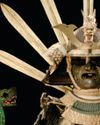
End times
Why do civilisations that dominated their epoch fail? In an era of autocracy, climate change, the rise of Al and a first-hand understanding of how deadly pandemics can be, it's a question that seems pertinent.
1 min
Christmas 2025
BBC History UK
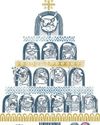
What are the origins of the Yule Lads?
To learn about the Jólasveinar (Yule Lads), we must start with their mother, the terrifying ogress Grýla. Her name appeared in Icelandic texts as early as the 13th century, although it wasn’t until later that those 13 mischievous lads became associated with her. Folk tales and poems tell how she descends from the mountains with an empty sack to stuff full of children. Grýla owns the monstrous Jólaköttur (Yule Cat), which roams the countryside on Christmas Eve, searching for children to gobble up if they're not wearing new clothes.
1 mins
Christmas 2025

BBC History UK
Santa Claus v Father Christmas
The true identity of the white-bearded, red-robed figure who fills children's stockings at Christmas has long been debated. Thomas Ruys Smith sizes up the merry contenders
8 mins
Christmas 2025

BBC History UK
Frontier friction
Set in Washington Territory in 1854, The Abandons is a Western that's unusual for having two matriarchs, women whose lives become entangled, at its centre.
1 min
Christmas 2025

BBC History UK
The Last Days of Pompeii: The Immersive Experience
Delve into the culture of daily Roman life, witness the momentous eruption of Mount Vesuvius, and follow its fallout in Immerse LDN's new exhibition. In a blend of cutting-edge technology and vivid storytelling, this exhibition launches visitors into Pompeii's rich history with recreations of the ancient city's beautiful pre-eruption landscape, a 360-degree virtual reality Roman amphitheatre experience, and a digital metaverse recreating Pompeii's 'Villa of Mysteries'.
1 min
Christmas 2025
BBC History UK
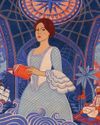
Elizabeth Marsh The corsair's captive
Taken hostage by a Barbary ship's captain in the 18th century, a young Englishwoman found herself fighting for her freedom in Marrakech. ADAM NICHOLS introduces a brave captive who later wrote a book about her dramatic experiences
6 mins
Christmas 2025

BBC History UK
29 DECEMBER 1170: Thomas Becket is murdered in Canterbury
Knights loyal to Henry II rid him of the “low-born cleric”
2 mins
Christmas 2025
Translate
Change font size