
Mit Magzter GOLD unbegrenztes Potenzial nutzen
Erhalten Sie unbegrenzten Zugriff auf über 9.000 Zeitschriften, Zeitungen und Premium-Artikel für nur
Versuchen GOLD - Frei
Shipping Stone
Archaeology
|September/October 2018
A wreck off the Sicilian coast offers a rare look into the world of Byzantine commerce

NEARLY 1,500 YEARS AGO, a Byzantine merchant ship swung perilously close to the Sicilian coastline, its heavy stone cargo doing little to help keep it on course. The ship’s crewmen were probably still clinging to the hope that they could reach a safe harbor such as Syracuse, 25 miles to the north, when a wave lifted the vessel’s 100-foot hull and dashed it on a reef, sending as much as 150 tons of stone to the seafloor. The doomed ship was carrying a large assemblage of prefabricated church decorations—columns, capitals, bases, and even an ornate ambo, or pulpit. These stone pieces lay on the seafloor for 14 centuries until a fisherman spotted some in 1959 while hunting for cuttlefish.
Covering an area a bit smaller than a football field and lying under 25 feet of water nearly a mile offshore of the fishing village of Marzamemi, the site was first studied in the 1960s by Gerhard Kapitän, a pioneering German underwater archaeologist. He believed the Marzamemi shipwreck played an important role in a massive state-led building campaign ordered by Justinian I, the great Byzantine emperor known as the “Last Roman,” whose name is synonymous with a resurgence in the fortunes of the Roman Empire in the Late Antique period. Based on several design details on the decorations, Kapitän concluded that not only had the ship sunk during Justinian’s reign, but that it had probably taken on its cargo—the decorative elements of a church’s nave—near Constantinople before heading west. He wrote that the marble blocks pointed to “the existence of a large organization clearly directed by a central administration” that dispatched the decorations for a new state-built church. Kapitän felt the Marzamemi marbles constituted “an almost complete set of elements for a Byzantine basilica with the certainty that all the parts are original and of the same period.”

Diese Geschichte stammt aus der September/October 2018-Ausgabe von Archaeology.
Abonnieren Sie Magzter GOLD, um auf Tausende kuratierter Premium-Geschichten und über 9.000 Zeitschriften und Zeitungen zuzugreifen.
Sie sind bereits Abonnent? Anmelden
WEITERE GESCHICHTEN VON Archaeology
Archaeology
THE EGYPTIAN SEQUENCE
Until now, the earliest Egyptians to have even part of their DNA sequenced were three people who lived between 787 and 544 B.C.

1 mins
November/December 2025
Archaeology
SOURCE MATERIAL
As early as 40,000 years ago, some hunter-gatherers in southern Africa ventured long distances to procure special types of stone to make their tools.
1 min
November/December 2025

Archaeology
Secrets of the Seven Wonders
How archaeologists are rediscovering the ancient world's most marvelous monuments
13 mins
November/December 2025
Archaeology
ACTS OF FAITH
Evidence emerges of the day in 1562 when an infamous Spanish cleric tried to destroy Maya religion
12 mins
November/December 2025

Archaeology
OASIS MAKERS OF ARABIA
Researchers are just beginning to understand how people thrived in the desert of Oman some 5,000 years ago
8 mins
November/December 2025
Archaeology
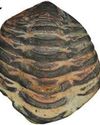
FOSSIL FORCE
One of the planet's most successful arthropods, trilobites, abounded in the oceans from about 520 million to 250 million years ago.
1 min
November/December 2025
Archaeology
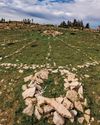
BIGHORN MEDICINE WHEEL, WYOMING
Perched almost 9,700 feet above sea level on Medicine Mountain in Wyoming's Bighorn Range, the Medicine Wheel is an 80-foot-diameter circular structure made from limestone boulders.
2 mins
November/December 2025
Archaeology
ANCIENT LOOK BOOK
A young woman buried in China's Tarim Basin some 2,000 years ago went to the afterlife accompanied by the height of fashion.
1 mins
November/December 2025
Archaeology
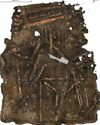
A FAMILIAR FACE
In the early eleventh century, a landslide on the island of Ostrów Lednicki in western Poland caused a hillfort to collapse and slip to the bottom of Lake Lednica.
1 min
November/December 2025
Archaeology
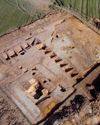
Temples to Tradition
A looted cache of bronzes compels archaeologists to explore Celtic sanctuaries across Burgundy
13 mins
November/December 2025
Translate
Change font size