
Mit Magzter GOLD unbegrenztes Potenzial nutzen
Erhalten Sie unbegrenzten Zugriff auf über 9.000 Zeitschriften, Zeitungen und Premium-Artikel für nur
Versuchen GOLD - Frei
AUTOMATION IN APPAREL INDUSTRY
Textile Value Chain
|February 2021
Automation is most often defined as, automatically controlled operation of an apparatus, process or system by mechanical or electronic devices that take the place of human organs of observation, effort, and decision. The purpose of this paper was to investigate the status and the effects of technology adoption on the level of organizational factors within the context of the apparel industry.

Introduction
Definition
Automation is often defined as, The automatic operation of an instrument, process or system by mechanical or electronic devices that replace human organs for observation, effort, and resolution. The intensified competition in the global market, it became important for manufacturers to thrive, to gain sustainable competitive advantage by innovations in technology or concepts as well as in production. Typical production in the garment manufacturing process still involves large manual operations and automatic assembly. Garment manufacturing is still more labour intensive than technical work, so the need for technical support may not be significant in apparel industry technology. Faced with the rising cost of labour, advanced textile manufacturing technologies have been called upon to increase productivity and produce high-quality goods, at high volume, in short cycles, at low cost [1]. The adoption of advanced technology is a way to improve such areas and meet export standards. Recent automation in apparel industry includes computerized data monitoring, computer-aided designing, automatic fabric spreader, automatic fabric cutters, high-speed sewing machines, advanced pressing and finishing machines, etc. This contributes to the development of advanced goods in the global supply of clothing and provides a new understanding of how manufacturers can embrace technology and remain competitive in the global market.
The need for Automation in Apparel Industry
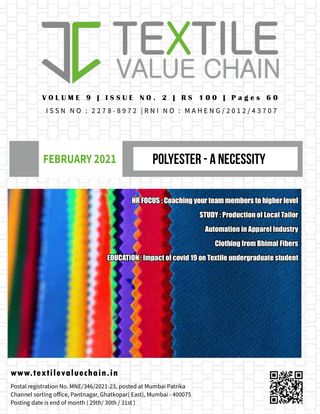

Diese Geschichte stammt aus der February 2021-Ausgabe von Textile Value Chain.
Abonnieren Sie Magzter GOLD, um auf Tausende kuratierter Premium-Geschichten und über 9.000 Zeitschriften und Zeitungen zuzugreifen.
Sie sind bereits Abonnent? Anmelden
WEITERE GESCHICHTEN VON Textile Value Chain

Textile Value Chain
The New Age of Men's Tailoring: From Bespoke to Hybrid Models
Part 1 of the Series: The Evolving World of Men's Tailored Wear

4 mins
January 2026

Textile Value Chain
The Textile Landscape of 2025: A Year of Transformation
Navigating Policy Reforms, Trade Agreements, and Global Events
5 mins
January 2026

Textile Value Chain
Recycled Fibres vs Virgin Fibres: The Real Cost, Footprint & Business Opportunity
For decades, the textile industry asked only one question when choosing raw material:
3 mins
January 2026

Textile Value Chain
2025 in Perspective: A Stronger, Cleaner, Smarter Future for Textiles
The year 2025 reminded the textile and apparel sector that resilience now matters more than pace.
5 mins
January 2026

Textile Value Chain
Heimtextil as a Working lab for Sutlej and its Customers
When the global home textiles industry gathers in Frankfurt this January, Sutlej Textiles is approaching Heimtextil with a clear intent: to treat the fair less as a product parade and more as a live development lab with its buyers and partners.
4 mins
January 2026

Textile Value Chain
Weaving Heritage into Future: A Conversation with Ms Roop Rashi Mahapatra
In an era where fast fashion dominates the global textile landscape, Khadi stands as a timeless symbol of India's heritage, sustainability, and self-reliance.
11 mins
January 2026

Textile Value Chain
Home Textiles: Ever-growing Market to Evergreen Product Source
Indian Home textiles have always enjoyed a special market position, and demand continues to increase, capturing a premium to the budgeted market across different markets, but with one constant hunger for extraordinary design, a super comfortable feel, and the appeal of sophistication, along with changing market dynamics.
4 mins
January 2026

Textile Value Chain
The Velvet Revolution: How This Timeless Fabric is Redefining Modern Textiles
When you run your hand across velvet, something happens.
3 mins
January 2026

Textile Value Chain
SPGPrints Achieves Landmark Success at ITMA ASIA 2025 With Transformative Textile Printing Technology and Key Order Closures
SPGPrints, the global leader in innovative textile printing solutions, announced an overwhelmingly successful participation in ITMA ASIA 2025 at the Singapore Expo.
2 mins
January 2026

Textile Value Chain
Development of Home Textile Products from Post-Consumer Textile Waste
With the growing concern over textile waste and its environmental impact, sustainable approaches for fabric reuse are urgently needed.
5 mins
January 2026
Translate
Change font size