
Mit Magzter GOLD unbegrenztes Potenzial nutzen
Erhalten Sie unbegrenzten Zugriff auf über 9.000 Zeitschriften, Zeitungen und Premium-Artikel für nur
Versuchen GOLD - Frei
Best Shearing Practices An Facilitie
Stockfarm
|July 2021
Small adjustments for greater productivity

Many people are unaware of the fact that wool shearing not only complements a sheep producer’s income but is also an essential measure to keep animals healthy and productive. A sheep bearing its full fleece, for example, will start to overheat if temperatures exceed 21°C.
Unlike the Wiltipoll – developed from the Australian Wiltshire Horn sheep breed – as well as a few hairy sheep types, most sheep cannot shed their wool. They need to be sheared and good shearing practices are therefore high on the list of biosecurity measures in the fibre industry.
To shear sheep and Angora goats, however, is a costly affair and South African shearers must be well trained to perform the task as cost-effectively as possible. The National Wool Growers’ Association (NWGA) plays an indispensable role in this regard.
The world of shearers
“Shearing a sheep or Angora goat requires effort and good technique – something that cannot be mastered overnight,” says Izak Klopper, manager of shearer training at the NWGA.
“However, there is more to it than just the training of shearers and gaining the necessary experience. Suitable shearing facilities and the conditions under which shearers work are often neglected, and this can make or break a shearer. Even the slightest gesture such as taking a few minutes to talk to the shearers after a hard day’s work can make a big difference to their productivity and attitude towards the work.
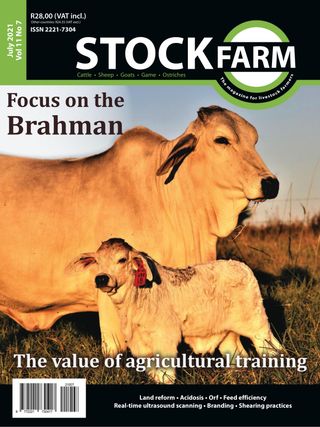

Diese Geschichte stammt aus der July 2021-Ausgabe von Stockfarm.
Abonnieren Sie Magzter GOLD, um auf Tausende kuratierter Premium-Geschichten und über 9.000 Zeitschriften und Zeitungen zuzugreifen.
Sie sind bereits Abonnent? Anmelden
WEITERE GESCHICHTEN VON Stockfarm
Stockfarm
Trust and muffins lead the way
In any business, communicating in silos is the main cause of issues among managers. With only three of us managing things, myself on sheep, Gert on vehicles and Mbali on payments, breaking through our silos is easy. Twice a week we hold short morning meetings to report progress and problems towards our goal of turning grass into sheep for profit.

2 mins
December 2025
Stockfarm
Santa's new team
Last December, we warned Santa Claus of the perils of visiting South Africa with his team of reindeer. We cautioned him about the biological hazards his reindeer might bring into the country, and the import tariff issues he might encounter when trying to bring in all those gifts. We also elaborated on the heat and other environmental challenges his team might face. But we also told him about our friendly farmers and the braais he might be invited to, complete with a beverage of his choice.
3 mins
December 2025
Stockfarm
The effect of iucerne hay quaiiiy on feedlot lambs
Lucerne hay is one of the most widely used roughage sources for ruminant diets, largely due to its reputation for providing high-quality nutrition. Important considerations for producers who use lucerne hay in their feed programme include assessing the true value of lucerne hay, determining the most suitable grade for specific feeding purposes, considering its cost, and balancing these factors against optimal feedlot performance.
3 mins
December 2025
Stockfarm
Imfuyo-yami Ingumcebo Wami: Livestock as a legacy of wealth and wisdom
In the heart of KwaZulu-Natal, under the warm sun and the watchful gaze of the rolling hills, the Hlawini Community Hall in Umfolozi Local Municipality came alive with the spirit of unity, learning, and tradition. The occasion? The Umfolozi Livestock Farmers' Information Day, held under the banner of the Agricultural Research Council's (ARC) Kaonafatso ya Dikgomo (KyD) project, a national an initiative aimed at empowering communal livestock farmers through knowledge, technology, and sustainable practices.
3 mins
December 2025
Stockfarm
Celebrating the 2025 Komga Agricultural Show
This year's Komga Agricultural Show, energised by the arrival of summer and filled with festive stalls, was a hive of activity. The grounds came alive with live music, a poultry exhibition, the familiar sounds of cattle and sheep in the pens, displays of horsemanship, and top-quality technology and implements on show.
2 mins
December 2025
Stockfarm
DSA reaches new milestone on the road to excellence
The Dairy Standard Agency (DSA) has enjoyed an exceptional 2025 so far, marking two major achievements that underscore its ongoing pursuit of excellence.
3 mins
December 2025
Stockfarm
Samic: Protector of red meat quality
If you thought the South African Meat Industry Company (Samic) is just about carcass competitions, think again. Fact is, the company plays a pivotal role in South Africa's meat supply chain, upholding rigorous standards of quality, safety, and transparency from the farm gate to the plate.
3 mins
December 2025
Stockfarm
Wireworm management in small stock
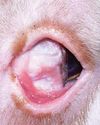
Years of indiscriminate dosing have eliminated weaker wireworms, allowing resistant populations to dominate and spread through flocks. Wireworms typically hatch following good rains and warm nights. When larvae move up the green grass, they are ingested by grazing sheep. About 20 days later, the worms begin sucking blood, leading to anaemia and, in severe cases, death.
2 mins
December 2025

Stockfarm
Back to basics at the 2025 LRF Stockman School
The 17th Annual LRF Stockman School, hosted by the Livestock Registering Federation (LRF), kicked off with great enthusiasm at the Aldam Holiday Resort and Conference Centre in the Free State. Held over three days, the event brought together leading experts from a range of fields who met everyone's expectations by addressing relevant and timely topics head-on.
7 mins
December 2025
Stockfarm
Vertical gains in the lambing pen: It's not just about the numbers
In a world where rising input costs and increasing consumer demands play a decisive role, it has become more important than ever for red meat producers to raise lambs that not only benefit the producer but also add value throughout the entire supply chain.
4 mins
December 2025
Translate
Change font size