
Mit Magzter GOLD unbegrenztes Potenzial nutzen
Erhalten Sie unbegrenzten Zugriff auf über 9.000 Zeitschriften, Zeitungen und Premium-Artikel für nur
A beginners' guide to auctions
Farmer's Weekly
|October 08, 2021
Livestock auctions offer a relatively safe way for farmers to trade their animals, with a fairly low barrier to entry. Cornel Landman and Anton Vos spoke to Glenneis Kriel about factors that producers have to consider when participating in these events, and the administrative processes that need to be adhered to.

Auctions present an easy option for farmers who have surplus animals to sell or have no agreements with buyers. They also give a true reflection of what the market is willing to pay at any given time, and money and animal transfers are done on the same day.
Animals can be sold at a private or public auction, with the number of animals involved and the value of the animals being the main determinant of where they should be sold.
Cornel Landman, owner of Karoo Lusern, regularly buys and sells animals at auctions in the Klein Karoo.
“I buy most of the livestock we finish in our feedlots directly from farmers. But I still go to auctions at least twice a month to get a feel for the market, network with buyers and sellers, and support the local farming industry by purchasing livestock from smallholder farmers. Their only means of selling livestock is at auctions.
“When auction volumes are low, the auctioneers often ask me to supply the auction with additional animals to increase auction numbers, which I happily do if my livestock numbers allow,” he says.
Private auctions are usually hosted once a year, with the animals of only one seller or group of sellers being on offer. Public auctions, in contrast, are held weekly or monthly, with schedules being available from auction houses.
Hosting a private auction can reduce transport costs if the auction is hosted on the farm, but it adds other costs, as the farmer needs to set up amenities and facilities to host the event.
Anton Vos, managing director of Vleissentraal, says this can be overcome by making use of the facilities of the auctioning company, but it adds the challenge of moving a large number of livestock.


Diese Geschichte stammt aus der October 08, 2021-Ausgabe von Farmer's Weekly.
Abonnieren Sie Magzter GOLD, um auf Tausende kuratierter Premium-Geschichten und über 9.000 Zeitschriften und Zeitungen zuzugreifen.
Sie sind bereits Abonnent? Anmelden
WEITERE GESCHICHTEN VON Farmer's Weekly

Farmer's Weekly
Christmas books to charm and delight
During the holiday season, one usually takes a well-earned break from the daily rutt, and there is no better time to catch up on some reading. Patricia McCracken has selected a wide spectrum of titles to tuck into.

4 mins
December 19-26, 2025

Farmer's Weekly
From chance to choice: a women's rise to farming success
Many raisin producers assume that retiring without a son to take over the farm means the end of the family business. Alcois Blaauw, this year's winner of the Raisins SA Female Producer Award, proves that assumption to be wrong. Glenneis Kriel reports.
4 mins
December 19-26, 2025

Farmer's Weekly
Grandparents below, and kids upstairs!
Dear Jonno,My wife and I want to escape to the countryside.
1 min
December 19-26, 2025
Farmer's Weekly
The Unseen Protector
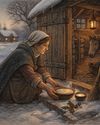
The belief in the Unseen Protector or Unseen Shepherd endured for around 600 years, from the 13th century up until the 19th century. The farmer or his wife would provide a bowl of fresh cream and gruel to appease a spirit, whose blessing was imperative for a good summer harvest and animal health and fertility.
2 mins
December 19-26, 2025
Farmer's Weekly
THE HITCHING POST
I am a 67-year-old farmer residing on a farm near Harding in KwaZulu-Natal.
1 mins
December 19-26, 2025
Farmer's Weekly
Pet-friendly family accommodation in the Waterberg
With travel time of only a little over three hours from Johannesburg and 30 minutes from Vaalwater, guests will find Waterberg Cottages in Limpopo. Guests can plan a family-friendly holiday or weekend with plenty of activities to keep everyone occupied on this peaceful 2 500ha private game reserve.
4 mins
December 19-26, 2025
Farmer's Weekly
The Shuman legacy continues under the watchful eye of a fifth-generation farmer
Ken Shuman, co-owner of Hilson Shuman Farming, is committed to carrying on his father's towering legacy through innovation and adaptation.
9 mins
December 19-26, 2025

Farmer's Weekly
History's most famous musket
The Brown Bess musket was the standard issue firearm for British forces from 1722 to 1838. As Mike Burgess writes, this much-loved weapon contributed significantly to the consolidation of the British Empire that by 1922 was in control of a quarter of the earth's surface.
4 mins
December 19-26, 2025

Farmer's Weekly
Muddy soil can cause lameness due to footrot
It is important to clean legs and hooves and check for lameness in horses on a daily basis, especially when there is heavy rain
2 mins
December 19-26, 2025

Farmer's Weekly
The role of family farmers in sub- Saharan Africa
As part of the United Nations' recognition of family farming as a vital component of the global agricultural landscape, the decade between 2019 to 1928 was declared the Decade for Family Farming globally. Annelie Coleman compiled this report.
6 mins
December 19-26, 2025
Translate
Change font size