
Mit Magzter GOLD unbegrenztes Potenzial nutzen
Erhalten Sie unbegrenzten Zugriff auf über 9.000 Zeitschriften, Zeitungen und Premium-Artikel für nur
Versuchen GOLD - Frei
Vax Cocktail Endgame Against Covid-19
BioSpectrum Asia
|BioSpectrum Asia Sep 2021
The world has been under the deadly spell of the coronavirus, with multiple waves of the pandemic decimating lives and economy in a fell swoop. In a record short span of time, numerous vaccines were developed to combat COVID-19. However, the ground reality seems, as per some experts, that administering a mix of vaccines presents better outcomes. Whether this approach holds good, needs a closer look.

Vaccine mixing, which began unintentionally, is now gaining traction. There is a significant interest in mixing two different types of COVID-19 vaccines to mitigate against supply shocks or shortages that might otherwise reduce the speed of vaccine roll-out.
Canada which sort of started this trend unintentionally to manage its vaccine supply issues by allowing the mixing of vaccines. On June 1, 2021, the Canadian health agency, Health Canada asked those who had taken the Pfizer shot to take Moderna’s mRNA vaccine for their second dose. This has helped Canada overcome a supply bottleneck that delayed Pfizer doses in June.
Taking it even further, on June 17, 2021, the Canadian government recommended those who received the AstraZeneca (adenoviral vector-based vaccine) as the first dose should preferably take either the Pfizer or Moderna mRNA vaccine for their second dose. This decision was taken in light of the rare clotting events reported with the AstraZeneca vaccine.
Germany also followed suit by recommending the same AstraZeneca/Pfizer combo. The country reportedly allowed this heterologous approach on efficacy grounds.
In July 2021, Thailand became one of the first in Southeast Asia to officially start mixing vaccines. The country’s National Communicable Disease Committee issued a recommendation to give AstraZeneca jabs as the second dose to individuals who had initially received China’s Sinovac (based on inactivated virus technology), to build stronger immunity against the highly contagious delta variant which has created havoc in the country.
South Korea also introduced mix-and-match inoculations, using the AstraZeneca vaccine for the first dose and Pfizer for the second.
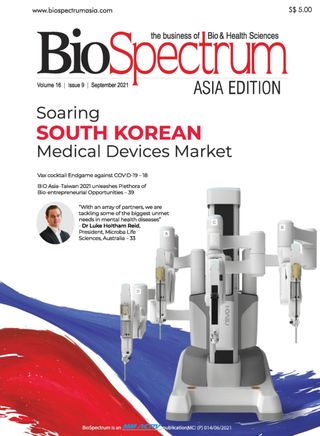

Diese Geschichte stammt aus der BioSpectrum Asia Sep 2021-Ausgabe von BioSpectrum Asia.
Abonnieren Sie Magzter GOLD, um auf Tausende kuratierter Premium-Geschichten und über 9.000 Zeitschriften und Zeitungen zuzugreifen.
Sie sind bereits Abonnent? Anmelden
WEITERE GESCHICHTEN VON BioSpectrum Asia

BioSpectrum Asia
Kyorin and Lunatus partner to launch Lasvic tablets in 9 Middle Eastern countries
Japan's Kyorin Pharmaceutical has entered into an exclusive distribution agreement with Lunatus Marketing & Consulting FZCO for Lasvic tablets (Lascufloxacin hydrochloride).

1 min
BioSpectrum Asia Feb 2026
BioSpectrum Asia
Biotium launches GlycoLiner Cell Surface Glycoprotein Labeling Kits
US-based Biotium, a leading innovator in fluorescent dyes and life science reagents, has announced the launch of GlycoLiner Cell Surface Glycoprotein Labeling Kits for rapid, selective, and covalent labeling of cell surface glycoproteins.
1 min
BioSpectrum Asia Feb 2026

BioSpectrum Asia
Vaxxas appoints former Merck Global Vaccines President David Peacock as CEO
Australia-based Vaxxas has announced the appointment of global biopharmaceutical executive David Peacock as Chief Executive Officer (CEO) to lead the commercialisation of the company's proprietary high-density microarray patch (HD-MAP) vaccination technology.
1 min
BioSpectrum Asia Feb 2026

BioSpectrum Asia
Thermo Fisher partners with NVIDIA leveraging AI to advance scientific instrumentation
US-based Thermo Fisher Scientific Inc. has announced a strategic collaboration with NVIDIA to power artificial intelligence (AI)based solutions and laboratory automation at scale.
1 min
BioSpectrum Asia Feb 2026

BioSpectrum Asia
Bruker consolidates ownership of TOFWERK in expansion of mass spectrometry portfolio
Bruker Corporation has announced the acquisition of an additional 60 per cent ownership stake in TOFWERK AG, a Switzerland-based innovator in ultra-fast time-of-flight (TOF) mass spectrometry technology for small molecule applied markets, consolidating Bruker's ownership to 100 per cent.
1 min
BioSpectrum Asia Feb 2026
BioSpectrum Asia
Bioengineered tissue by Japan emerges as revolutionary treatment for secondary lymphedema
A research team led by Associate Professor Kosuke Kusamori from the Faculty of Pharmaceutical Sciences at Tokyo University of Science (TUS), Japan, is pioneering an innovative technique for lymphatic tissue engineering that could revolutionize the treatment of secondary lymphedema.
1 min
BioSpectrum Asia Feb 2026
BioSpectrum Asia
Chitose and Fujifilm Biosciences to drive global innovation and biopharma manufacturing
Japan-based Chitose Laboratory Corp. & Fujifilm Biosciences Inc. have announced a new strategic alliance that leverages the strengths of both companies in advancing biopharmaceutical production.
1 min
BioSpectrum Asia Feb 2026

BioSpectrum Asia
Vibrant Therapeutics on-boards Dr Han Lee as Co-CEO
Vibrant Therapeutics, a clinical-stage biotechnology company based in China and US, has announced the appointment of Dr Han Lee as co-chief executive officer (CEO).
1 min
BioSpectrum Asia Feb 2026

BioSpectrum Asia
IIT-D and AIIMS develop swallowable microdevice for microbiome study
Researchers at the Indian Institute of Technology (IIT) Delhi, and All India Institute of Medical Sciences (AIIMS) have developed an ingestible device that can sample bacteria directly from the small intestine, opening a new window into the human gut microbiome.
1 min
BioSpectrum Asia Feb 2026
BioSpectrum Asia
Ambitious research to develop multivalent vaccines against multiple deadly filoviruses
Scientists at the University of Oxford, in collaboration with partners, will spearhead the development of new vaccines that aim to provide comprehensive protection against multiple lethal filoviruses, including Ebola virus, Sudan virus, Bundibugyo virus, and Marburg virus.
1 min
BioSpectrum Asia Feb 2026
Translate
Change font size