Versuchen GOLD - Frei
The All Blacks
BBC Wildlife
|April 2017
A serpent in the water, a pair of wings hung out to dry, a fish thief. Derek Niemann introduces the cormorant, a bird that provokes strong, often contradictory emotions.
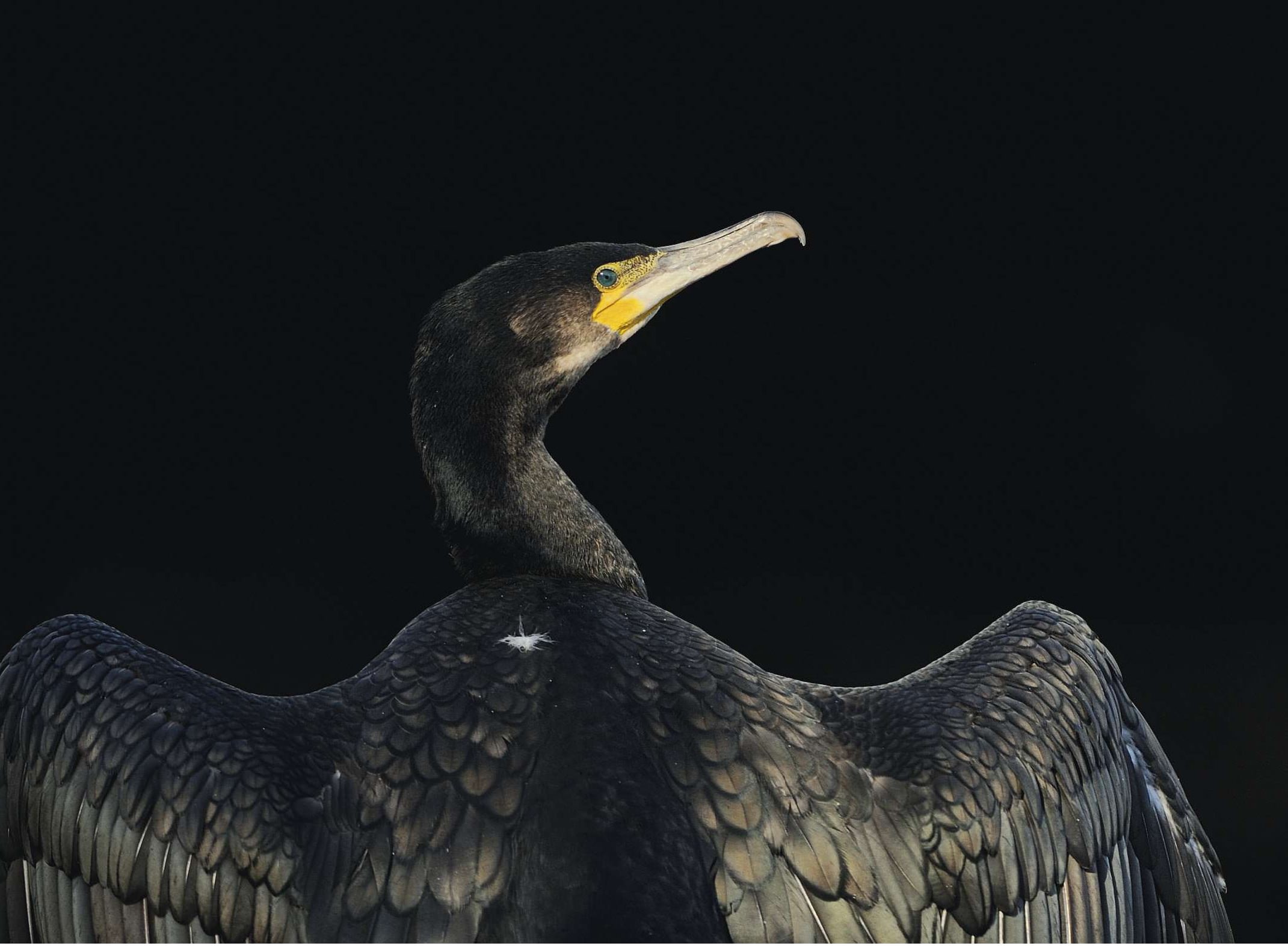
Do cormorants have an easy life? They seem to be nature’s posers, sitting around for hours at a time in full view, loitering on a sandbank or an islet, the wild equivalents of a street corner, indifferent to their surroundings and the people staring at them.
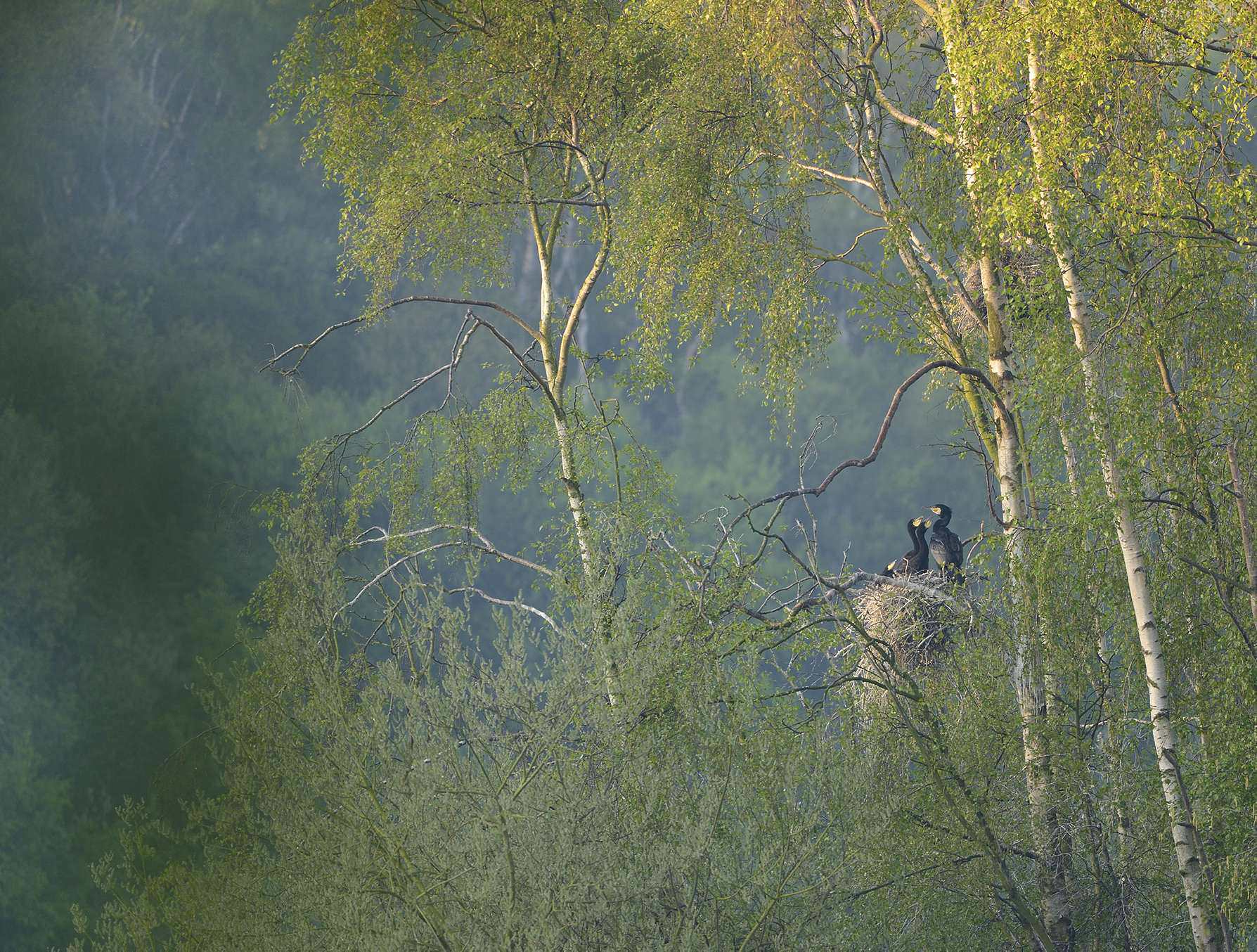
Studies show that members of the cormorant family spend up to 90 percent of their time roosting or ‘loafing’. Our species, Phalacrocorax carbo – often called the great cormorant – is the most widespread of them all, found on every continent bar South America. It shares the apparent inclination of its fellows towards indolence and the tendency to sit out in the open in groups, like a pride of dozy lions, making it one of our most easily observable birds.
On an exposed perch, a cormorant is the selfie on a stick. And it seems this bird is comfortably at home in both town and country: a metal handrail works as well as a branch for a perch, a pylon does as a tree, fish in a city reservoir are just as desirable as those from a rural river.
Cormorants are ungainly, ugly, statuesque, beautiful. Watch one crash-land into the shallows before the beach, waddle up the shore on oversized webbed feet, splay its tail on the ground and cock its bill at a graceless angle. A flick of the wrist unfolds its wings into the classic stance, like a bentarmed version of the Angel of the North. It stands, wings out, for minutes at a time, tilting them to catch the breeze and dry its feathers.
SINISTER SYMBOL
Our ancestors were unnerved. Poet John Milton cast Satan in


Diese Geschichte stammt aus der April 2017-Ausgabe von BBC Wildlife.
Abonnieren Sie Magzter GOLD, um auf Tausende kuratierter Premium-Geschichten und über 9.000 Zeitschriften und Zeitungen zuzugreifen.
Sie sind bereits Abonnent? Anmelden
WEITERE GESCHICHTEN VON BBC Wildlife
BBC Wildlife
"I was terrified the elephant would ram us"
African elephant in Kenya

2 mins
January 2026
BBC Wildlife
ALL YOU EVER NEEDED TO KNOW ABOUT THE Fennec fox
THE FENNEC FOX IS THE SMALLEST fox in the world, with a body length that can be as little as 24cm.
3 mins
January 2026
BBC Wildlife
INTO THE PLASTISPHERE
A unique synthetic ecosystem is evolving in our oceans – welcome to the plastisphere
7 mins
January 2026
BBC Wildlife
“More than half of all animal life exists in a parasitic relationship, and all life lives in symbiosis”
Our survival depends on species evolving to live together - but some relationships take dark turns
7 mins
January 2026
BBC Wildlife
Are animals able to dream?
SLEEP IS A MYSTERIOUS THING. FOR A long time, we weren't sure why we do it.
1 mins
January 2026
BBC Wildlife
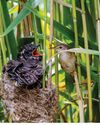
Does a cuckoo know it's a cuckoo?
ABSURD LITTLE BIRDS ACROSS THE world lay their eggs in the nests of other species, leaving the hapless parents to raise a changeling at the expense of their own offspring.
2 mins
January 2026
BBC Wildlife
Orcas killing young sharks
Juvenile great whites are easy prey for orca pod
1 mins
January 2026
BBC Wildlife
Ocean goes on tour
Acclaimed film touring the UK, backed by live orchestra and choir
1 min
January 2026
BBC Wildlife
Feisty bats hunt like lions
Winged mammals use a 'hang and wait' strategy to take down large prey
1 mins
January 2026
BBC Wildlife
SNAP-CHAT
Richard Birchett on magical merlins, wily coyotes and charging deer
2 mins
January 2026
Translate
Change font size