Versuchen GOLD - Frei
ON LOCATION WATER WORLDS
BBC Wildlife
|March 2022
Peter Bassett takes us beneath the surface, filming the extraordinary plants that live in lakes, rivers and streams

What’s this episode’s theme?
How plants survive in one of the most challenging locations on Earth: in and underwater. If you’re on land, you’re rooted to the spot and your environment doesn’t change. If you live in, say, a mountain stream with a torrent of water cascading past, that presents a huge strain. So, we look at how plants feed and carve out niches in different watery worlds.
What particularly impressive plant behaviour do you show?
We’re all familiar with the Venus flytrap, but it’s a far more sophisticated plant than we realise. People think you simply flick the trigger hairs and the plant clamps shut. Not so. We take Sir David to Kew Gardens, where he shows that if you flick the hairs once, nothing happens; but if you flick them again within 20 seconds, the plant reacts. This is because Venus flytrap mechanisms use a lot of energy and the plant must be aware of false alarms: one ‘touch’ might just be a drop of water, but two in succession is more likely to be prey.
There’s more. The trap doesn’t seal completely, so tiny creatures can escape, which is fine as they’re not worth eating. If bigger insects, which can’t escape, trigger the hairs five more times, the plant starts the process of digestion. It’s amazing – in a way, the plant is counting.

What rarely seen behaviour is there?

Diese Geschichte stammt aus der March 2022-Ausgabe von BBC Wildlife.
Abonnieren Sie Magzter GOLD, um auf Tausende kuratierter Premium-Geschichten und über 9.000 Zeitschriften und Zeitungen zuzugreifen.
Sie sind bereits Abonnent? Anmelden
WEITERE GESCHICHTEN VON BBC Wildlife
BBC Wildlife
“Our canoe was nearly sunk by a hippo”
Hippos in Niger

3 mins
March 2026

BBC Wildlife
Why does Australia have such weird animals?
AUSTRALIA IS A LONG WAY FROM anywhere and has been for a very long time. The landmass definitively separated from the supercontinent of Gondwana around 40 million years ago and, since then, has existed - as a big blob in the middle of an even bigger ocean - in glorious geographical isolation.
2 mins
March 2026
BBC Wildlife
Which country has the fewest native animals?
AT AROUND 61KM² SAN MARINO, IN Europe, is one of the world's smallest countries. Entirely landlocked, it is surrounded by Italy.
1 min
March 2026

BBC Wildlife
Why do some species sunbathe?
RING-TAILED LEMURS ARE FAMED FOR their 'sun-worshipping' posture, legs and arms outstretched to reveal their pale bellies. Like humans, they do it to save energy and boost health. Sunlight is necessary to many bodily processes. As a source of vitamin D it's required to maintain bone and muscle health. It is also related to the production of serotonin, the chemical that regulates mood, sleep and stress response.
1 mins
March 2026
BBC Wildlife
ALL YOU EVER NEEDED TO KNOW ABOUT THE Piranha
PIRANHAS HAVE A REPUTATION as some of the most dangerous freshwater hunters: terrifying predators capable of devouring a large mammal in mere minutes.
3 mins
March 2026
BBC Wildlife
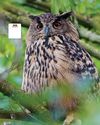
EAGLES LANDING
Eagle owls were once heavily persecuted. But thanks to a new initiative, these magnificent birds are reclaiming a wetland home
7 mins
March 2026
BBC Wildlife
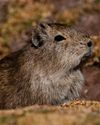
Do wild guinea pigs exist?
GUINEA PIGS, WHICH ARE NOT pigs and not from Guinea, are domesticated rodents that do not exist in the wild.
1 min
March 2026
BBC Wildlife
SNAP-CHAT: THE INSIDE WORLD OF WILDLIFE PHOTOGRAPHY
Boris Belchev on birds, batteries and battling bears with pop music
3 mins
March 2026
BBC Wildlife
Does anything live in the Bermuda Triangle?
THE BERMUDA TRIANGLE, IN THE NORTH Atlantic Ocean, has become infamous for the planes and ships that are said to have vanished without a trace while travelling through the area.
1 min
March 2026
BBC Wildlife
Do animals have different blood types?
HUMANS HAVE FOUR MAIN BLOOD GROUPS: A, B, AB and O.
1 min
March 2026
Translate
Change font size