
Mit Magzter GOLD unbegrenztes Potenzial nutzen
Erhalten Sie unbegrenzten Zugriff auf über 9.000 Zeitschriften, Zeitungen und Premium-Artikel für nur
Reviews Canon EOS 90D
African Birdlife
|January - February 2020
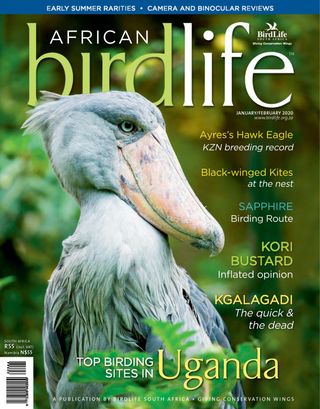
Canon’s new EOS 90D is a DSLR camera equipped with an APS-C sensor (crop sensor) and an impressive array of features.

At the time of writing, the 90D is retailing for less than R20 000, but its performance and features are comparable to those found in far more expensive models in the Canon line-up.
The image sensor has the APS-C format and at 22mm wide it is smaller than the 35mm (full-frame) sensor found in cameras such as the Canon 6D Mark 2, the 5D Mark 4 and the 1DX Mark 2. A major advantage to the smaller image sensor is that it reduces the cost of the camera, but a drawback is compromised image quality when ambient light is low. In bright light, there is less noticeable difference in image quality output between an APS-C sensor camera and a full-frame. How much that matters will depend upon each user’s interpretation of image quality and their respective needs, be they for screen or print.
The 90D replaces the 80D and it has an impressive list of improvements. Notable among these are several that affect performance in areas that really matter to bird and wildlife photographers, for instance speed, continuous shooting, and resolution.
Build quality
The camera has a chassis constructed of alloy and composite material and it is well covered with grippy rubber. The camera build is somewhat tougher than the entry-level Canon bodies, but not quite as rugged as the 7D Mark 2 or the 5D Mark 4.
Controls
The 90D has a set of controls nearly as complete as any DSLR, with both front and rear dials, as well as assigned buttons for changing focus modes. A new addition to this range (last seen in the 50D) is a dedicated autofocus multi-controller, which makes it very easy to move the active focus point around the frame, enabling you to compose quickly. The camera also has a well-designed rear touch screen that can be used for selecting or checking your settings. Reviewing images is fun on the touch screen and it supports swipe gestures.

Diese Geschichte stammt aus der January - February 2020-Ausgabe von African Birdlife.
Abonnieren Sie Magzter GOLD, um auf Tausende kuratierter Premium-Geschichten und über 9.000 Zeitschriften und Zeitungen zuzugreifen.
Sie sind bereits Abonnent? Anmelden
WEITERE GESCHICHTEN VON African Birdlife
African Birdlife
Southern SIGHTINGS
MID-JULY TO MID-SEPTEMBER 2025

2 mins
November/December 2025
African Birdlife
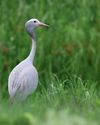
BLUE CRANE
A symbol of pride and vulnerability
6 mins
November/December 2025
African Birdlife
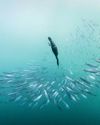
CHAOS AT THE KOM
Between 1 and 3 December 2024 there was a remarkable sardine run off Kommetjie on the Cape Peninsula.
1 min
November/December 2025
African Birdlife
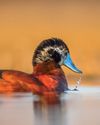
Ramsar Convention on Wetlands
Whatever form they take, from peatlands to estuaries, wetlands are critical for the survival of waterbirds, such as the White-winged Flufftail, Maccoa Duck and Grey Crowned Crane. They are highly productive ecosystems that are characterised by diverse and abundant food sources and they provide essential feeding, breeding, migratory and resting habitat for numerous species. iSimangaliso Wetland Park, for example, supports more than 500 bird species.
1 mins
November/December 2025
African Birdlife
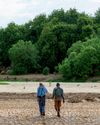
FRAMING wild feathers
WINNERS OF THE BIRDLIFE SOUTH AFRICA PHOTOGRAPHY COMPETITION 2025
4 mins
November/December 2025
African Birdlife
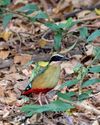
PITTA PILGRIMAGE
Look there - on that branch, behind those green leaves!’ Crouching in thick forest, with sweat dripping, heart pounding and eyes straining, I frantically searched with my binoculars, trying to work out which branch, which green leaves - indeed, which darned tree? I was close to panicking as we had come so far, and yet I just couldn't see where our guide was pointing.
4 mins
November/December 2025
African Birdlife
Unlocking a DIGITAL WORLD of bird stories
For more than 75 years, the South African Bird Ringing Unit (SAFRING), now hosted by the FitzPatrick Institute of African Ornithology, has woven together the complex life stories of southern Africa's birds.
1 mins
November/December 2025
African Birdlife
MIRRORLESS MARVEL
Testing Canon's R1 in the field
3 mins
November/December 2025
African Birdlife
Is NECHISAR NIGHTJAR a hybrid?
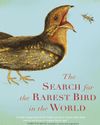
Vernon Head's award-winning book The Search for the Rarest Bird in the World brought widespread attention to the curious case of the Nechisar Nightjar. In 1992, a dead nightjar was found on a dirt road in Nechisar National Park, southern Ethiopia. A wing was collected and the bird was later described as a new species based on its distinctive large white wing patch. Its scientific name, Caprimulgus solala, attests to the fact that it is known only from a single wing.
2 mins
November/December 2025
African Birdlife
a TALL Tail
In the high grass of eastern South Africa, midsummer is when the Long-tailed Widowbird transforms the veld into a stage.
1 min
November/December 2025
Translate
Change font size