يحاول ذهب - حر
Managing energy transition risks
November 2024
|EPR Magazine (Electrical & Power Review)
Energy transition is a strategic shift to low-carbon or renewable sources to address climate change and ensure long-term energy security, but it is also fraught with multiple challenges. The authors believe that using an Enterprise Risk Management ERM) framework can help develop comprehensive Strategies to address such challenges.
-
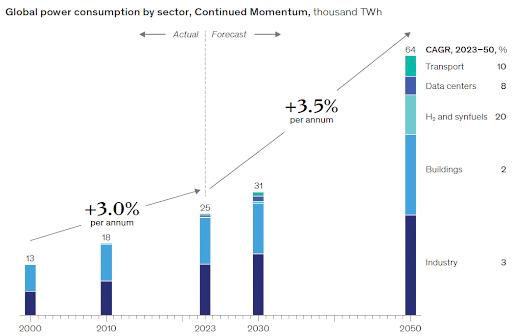
Energy transition refers to the shift from fossil fuels to low-carbon or renewable sources. It I also involves decarbonising industries such as processing, manufacturing, transportation, utilities and construction. India has chosen an energy transition path to meet 50 percent of its electricity demand from renewables with an installed RE capacity of 500 GW by 2030, and achieve net-zero emissions by 2070.
Energy transition has to deal with technological limitations, capital availability, policy constraints, and social and workforce issues. The involvement of multiple stakeholders, whose interests often clash with the goals of energy transition, makes it even more complicated.
Energy and climate policy stakeholders include governments and international organisations focusing on energy security and climate goals, while companies seek profitability, sustainability, and compliance.
Investors prioritise financial returns and ESG risks, while consumers demand affordability. Other key players include environmental groups, workers, technologists, regulators, communities, academia, and the media.
Risks and challenges of energy transition
Economic and financial risks: Energy transition requires the adoption of renewable energy sources across all sectors, which requires significant upfront investment and may involve market risks, such as demand volatility, supply chain constraints, and cost escalations.
Policy and regulatory risks: Government policies can help attract financing and investments in clean energy and decarbonisation projects. However, subsidies on fossil fuels can threaten the competitive pricing of renewable energies.


هذه القصة من طبعة November 2024 من EPR Magazine (Electrical & Power Review).
اشترك في Magzter GOLD للوصول إلى آلاف القصص المتميزة المنسقة، وأكثر من 9000 مجلة وصحيفة.
هل أنت مشترك بالفعل؟ تسجيل الدخول
المزيد من القصص من EPR Magazine (Electrical & Power Review)

EPR Magazine (Electrical & Power Review)
Wirepas certification a major step toward India's upcoming phase of AMI deployments
The Wirepas Certified programme is a major advancement for India's massive AMI deployments. This affirms device suitability for the diverse and challenging environments in the country. Teppo Hemiä, CEO of Wirepas discusses more with EPR.

2 mins
December 2025
EPR Magazine (Electrical & Power Review)
BESS becoming the backbone of power capacity additions
India is undergoing a rapid clean energy revolution, aiming to deploy 500 GW of non-fossil capacity by 2030, of which it has already reached 250 GW.
6 mins
December 2025

EPR Magazine (Electrical & Power Review)
Transformer industry undergoes evolution to meet capacity addition
The projected increase of over 433,000 MVA in substation capacity nationwide has served as a guiding force for the transformer sector. Amit Varshney shares his expertise in talks with EPR.
3 mins
December 2025

EPR Magazine (Electrical & Power Review)
RenewSys elevates solar module reliability with advanced encapsulant technologies
To enhance the efficiency and reliability of its products, RenewSys has introduced advanced encapsulants and backsheets, including AA EVA (Anti-Acid) to combat internal corrosion, ENT POE to guarantee PID-free performance, and environmentally friendly options like the Green Backsheet.
2 mins
December 2025
EPR Magazine (Electrical & Power Review)
REC facilitates MoU between MePDCL and CPRI for quality testing in Meghalaya
REC Limited, a Maharatna Public Sector Enterprise under the Ministry of Power and a leading NBFC, has successfully mediated a crucial Memorandum of Understanding (MoU) between Meghalaya Power Distribution Corporation Limited (MePDCL) and the Central Power Research Institute (CPRI).
1 min
December 2025

EPR Magazine (Electrical & Power Review)
SECI, Andhra finalise 1200 MWh BESS and 50 MW hybrid project
Solar Energy Corporation of India Limited (SECI), a Navratna CPSU under the Ministry of New & Renewable Energy (MNRE), Government of India, has exchanged Government Orders (GOs) with the Government of Andhra Pradesh for the development of a 1200 MWh Battery Energy Storage System (BESS) at Nandyal and a 50 MW Hybrid Solar Project.
1 min
December 2025

EPR Magazine (Electrical & Power Review)
Convergence of digitalisation, automation, and electrification is the foundation of next-gen infra
Panasonic Life Solutions India is on a mission to contribute to reliable, sustainable electrification across various sectors in the country. Shahab Naqvi shares insights about the company's strategies in talks with EPR. Let us know more from him.
3 mins
December 2025

EPR Magazine (Electrical & Power Review)
FY26 to attract $20-25 bn in renewable investments in India
The renewable energy sector in India has just hit a turning point. Between April and August 2025, the country added a record 20.1 gigawatts (GW) of renewable power capacity, a 123 per cent increase compared to the same period last year, when additions totalled just 9 GW. According to data from the Ministry of New and Renewable Energy (MNRE) and market observers like ICRA, this pace positions India to cross 35 GW of new capacity by the end of FY26, the highest annual addition in its clean-energy history.
3 mins
December 2025

EPR Magazine (Electrical & Power Review)
Wirepas certification a major step toward India's upcoming phase of AMI deployments
This certification provides DISCOMs and AMISPs with confidence that a device has passed the toughest real-world tests for scalability, interoperability and reliability.
2 mins
December 2025
EPR Magazine (Electrical & Power Review)
Renewable surge strains the grid as storage strengthens stability
The CEA mandates co-located ESS (approx. 2 hours) for new solar projects, aiming to reach 60 GW of storage by FY 2032 (including 42 GW of BESS and 19 GW of pumped hydro).
3 mins
December 2025
Listen
Translate
Change font size