
استمتع بـUnlimited مع Magzter GOLD
احصل على وصول غير محدود إلى أكثر من 9000 مجلة وصحيفة وقصة مميزة مقابل
Plastic Was Supposed to Be Sustainable
September 2025
|Scientific American
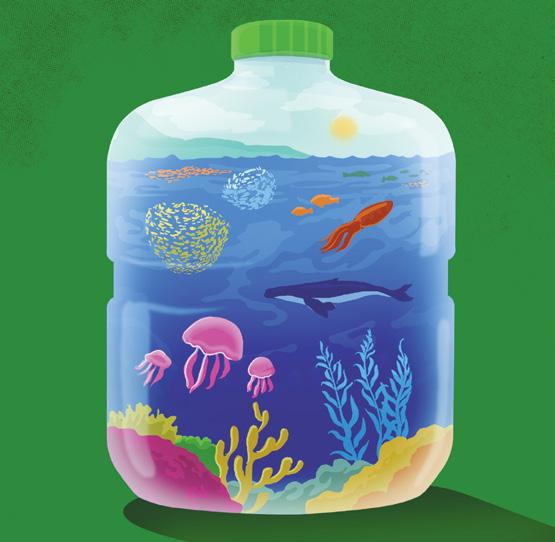
Synthetic polymers became one of our biggest environmental crises instead
IN 1864 SCIENTIFIC AMERICAN published a competition launched by a billiard-table manufacturing company: “Ten Thousand Dollars for a Substitute for Ivory.” The owners of Phelan & Collender were pleased to see it; they wrote to the magazine to elaborate on what they were looking for in an “ivory alternative” that could be used to make billiard balls and hoped it would “have the effect of stimulating the genius of some of your numerous readers.” The real stuff from elephant tusks had become scarce, but its elasticity, hardness and density were hard to find in another material.
A printer from Albany, N.Y., named John Wesley Hyatt came up with an answer in celluloid, a moldable, compound material made up of cellulose nitrate, a polymer that held the ball together; camphor, an organic compound that provided flexibility and durability; and ground-up cow bone, to give the ball the right mechanics for play. Rather than accepting the $10,000 reward and signing away the rights to his invention, Hyatt patented his object in 1869 and started his own company, selling celluloid billiard balls that conservation scientist Artur Neves, writing in 2023, called “the founding object of the plastics industry.”
The creation of the “first plastic” was essentially an answer to a sustainability problem. There were only so many elephants, tortoises and silkworms to go around, and their tusks, shells and fibers were increasingly in demand. Articles and advertisements from the early era of the plastics industry portray such materials as relieving pressure on natural resources. In a 2023 paper in PNAS Nexus, Neves and his colleagues called Hyatt’s celluloid billiard balls one of “the first successful efforts to substitute materials to assist the survival of endangered animals.”

هذه القصة من طبعة September 2025 من Scientific American.
اشترك في Magzter GOLD للوصول إلى آلاف القصص المتميزة المنسقة، وأكثر من 9000 مجلة وصحيفة.
هل أنت مشترك بالفعل؟ تسجيل الدخول
المزيد من القصص من Scientific American

Scientific American
Probiotic Hope and Hype
Despite their popularity, supplements with billions of \"good\" microbes help only a few illnesses, research shows

3 mins
January 2026
Scientific American
Mondays Really Are More Stressful
The start of the workweek can be a biologically measurable stressor, with consequences for long-term health that can stretch into retirement
4 mins
January 2026

Scientific American
Tiny Display
An e-paper breakthrough brings extremely high-resolution color
2 mins
January 2026
Scientific American
Fine-Feathered Snack
A bat's tracker documents a dramatic midair hunt
2 mins
January 2026

Scientific American
OUR ROBOTIC PICTURE
Will mechanical helpers ever be commonplace at home, at work and beyond?
11 mins
January 2026

Scientific American
"Use Your Words" Can Be Good for Kids' Health
Writing or expressing feelings can help adults mentally and physically. Kids are no different
5 mins
January 2026

Scientific American
Distant Diplomacy
Unrelated species “talk” and understand one another to avoid threats
2 mins
January 2026
Scientific American
Behind the Nobel
A 2025 winner reflects on the mysterious T cells that won him the prize
5 mins
January 2026

Scientific American
A Suite of Killers
Heart ailments, kidney diseases and type 2 diabetes actually may be part of just one condition. It's called CKM syndrome
10 mins
January 2026
Scientific American
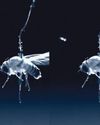
Static Launch
Tiny worms leap toward their fruit fly hosts with an electric “tractor beam”
3 mins
January 2026
Listen
Translate
Change font size