يحاول ذهب - حر
Can Psychopathy Be Cured?
July/August 2025
|Scientific American
New treatments help to reduce callous and unemotional traits in children, guiding them toward productive lives
LILLYTH QUILLAN KNEW ALMOST IMMEDIATELY that something was wrong with her baby. At around eight months old with eight sharp new teeth, he began deliberately biting her breast as she fed him, then looking her in the eyes and laughing. Even though she cried out and pulled him away for significant stretches of time, whenever she returned to nursing, he'd bite again—and then snicker. Within days she had to switch to bottle feeding.
Quillan's son, Alex (his name has been changed for privacy), was almost expelled from preschool because he repeatedly hurt other children. In middle school he began stealing and selling his parents' electronics. He would pretend to hug his mom, then headbutt her instead. “I remember hitting my mom as a kid,” Alex says. “I know I shouldn't have enjoyed it, but at the time, I did.” He adds, “If you're looking for a reason, I wish I had it.” By high school he was using a gun to commit armed robberies.
Quillan, who comes from an upper-middle-class family of northern California artists, was 22 years old and essentially a single mother when she started raising Alex. By the time he was five, she'd married her now husband, who adopted Alex. The couple tried all types of discipline short of corporal punishment. They saw counselors, psychologists and psychiatrists; wasted thousands of dollars on brain scans; got diagnoses of attention deficit hyperactivity disorder and Asperger's syndrome; and tried medications, therapies and special education. Nothing worked.
Finally, when Alex was 14, Quillan told her own therapist that she thought her son was a sociopath. The therapist said such terms weren't used to describe children—but she diagnosed him with conduct disorder, which can be a precursor to psychopathy in adults.
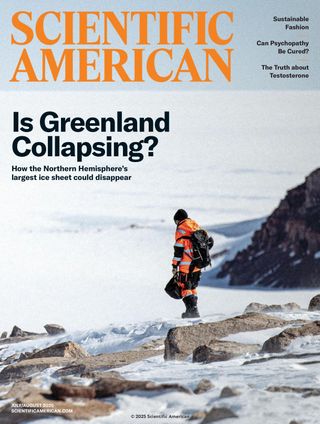

هذه القصة من طبعة July/August 2025 من Scientific American.
اشترك في Magzter GOLD للوصول إلى آلاف القصص المتميزة المنسقة، وأكثر من 9000 مجلة وصحيفة.
هل أنت مشترك بالفعل؟ تسجيل الدخول
المزيد من القصص من Scientific American

Scientific American
Probiotic Hope and Hype
Despite their popularity, supplements with billions of \"good\" microbes help only a few illnesses, research shows

3 mins
January 2026
Scientific American
Mondays Really Are More Stressful
The start of the workweek can be a biologically measurable stressor, with consequences for long-term health that can stretch into retirement
4 mins
January 2026
Scientific American
Tiny Display
An e-paper breakthrough brings extremely high-resolution color
2 mins
January 2026
Scientific American
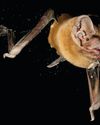
Fine-Feathered Snack
A bat's tracker documents a dramatic midair hunt
2 mins
January 2026

Scientific American
OUR ROBOTIC PICTURE
Will mechanical helpers ever be commonplace at home, at work and beyond?
11 mins
January 2026
Scientific American
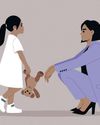
"Use Your Words" Can Be Good for Kids' Health
Writing or expressing feelings can help adults mentally and physically. Kids are no different
5 mins
January 2026
Scientific American
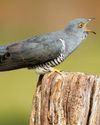
Distant Diplomacy
Unrelated species “talk” and understand one another to avoid threats
2 mins
January 2026
Scientific American
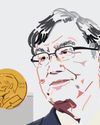
Behind the Nobel
A 2025 winner reflects on the mysterious T cells that won him the prize
5 mins
January 2026
Scientific American
A Suite of Killers
Heart ailments, kidney diseases and type 2 diabetes actually may be part of just one condition. It's called CKM syndrome
10 mins
January 2026
Scientific American
Static Launch
Tiny worms leap toward their fruit fly hosts with an electric “tractor beam”
3 mins
January 2026
Listen
Translate
Change font size