يحاول ذهب - حر
MELTED LIKE WAX
September 16, 2025
|Down To Earth
The Western Himalayas have taken a severe hit this monsoon, as shifting wind patterns fuel extreme weather events across the region.
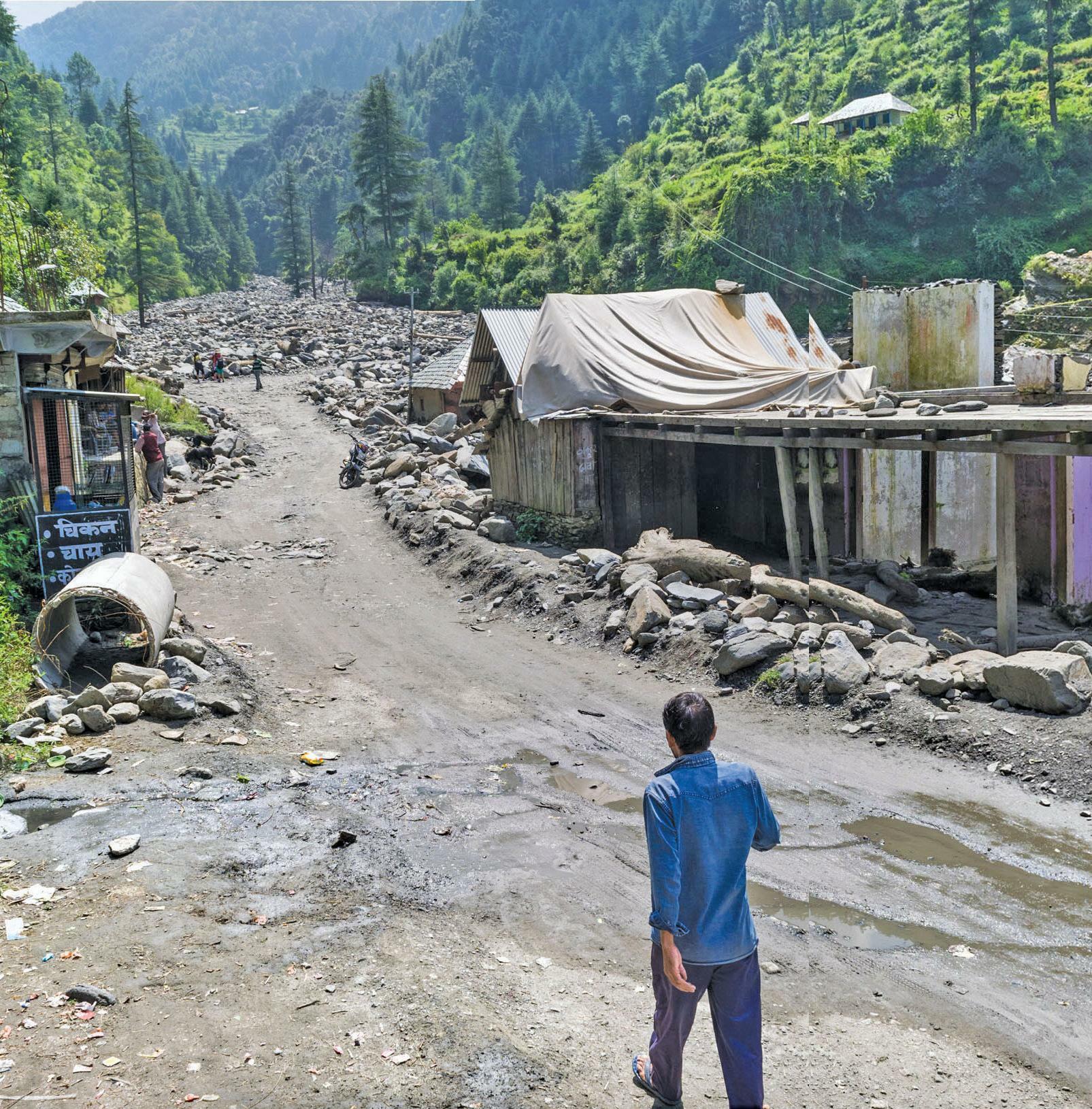
FOR THOSE living in the Western Himalayan region, there was nothing august about August 2025, or the two months preceding it.
The states of Uttarakhand and Himachal Pradesh and the Union Territories (UTs) of Jammu and Kashmir and Ladakh were battered by a series of extreme weather events, from heavy rains to cloudbursts to flash floods, as soon as the monsoon season officially began on May 24. The chain of tragedies started as early as May 27, when a cloudburst triggered flash floods and landslides in north Kashmir’s Kupwara district and damaged the under-construction 12 MW Karnah Hydro Power Project. From that point on, nearly every week brought one or more disasters. An analysis by Down To Earth (DTE) shows that between June 1 and August 31, these four states and UTs experienced extreme weather events on 88 out of 92 days, and recorded 506 deaths. In other words, they accounted for nearly one-quarter of all monsoon-related fatalities across the country during that period.
In fact, the number of days during which the four states and UTs have experienced extreme weather events (which include heavy rains, floods, landslides, cloudburst, lightning and storms) is higher than in any other monsoon season since 2022. In Jammu and Kashmir, the proportion of days with extreme weather events during the first three months of the monsoon season has increased from 10.8 per cent in 2022 to 51 per cent. The proportion of extreme weather days have almost doubled in Himachal Pradesh, Uttarakhand and Ladakh.

هذه القصة من طبعة September 16, 2025 من Down To Earth.
اشترك في Magzter GOLD للوصول إلى آلاف القصص المتميزة المنسقة، وأكثر من 9000 مجلة وصحيفة.
هل أنت مشترك بالفعل؟ تسجيل الدخول
المزيد من القصص من Down To Earth

Down To Earth
BEYOND COLLATERAL DAMAGE
Recent geopolitical conflicts are urging a reconsideration of what constitutes environmental harm in war and the limits of existing legal frameworks

3 mins
April 01, 2026

Down To Earth
Masterstroke
Residents of a small Kerala town reject an inadequate state-led development blueprint and create their own master plan that prioritises protection of historic water systems and urban commons
4 mins
April 01, 2026

Down To Earth
Rethinking E20
It is pertinent to explore potential of ethanol as high-value industrial feedstock
4 mins
April 01, 2026
Down To Earth
Food in the age of climate change
WHEN WE eat, we contribute to climate change. But food is also about livelihoods, about nutrition and about nature.
3 mins
April 01, 2026

Down To Earth
FADING WINTER
India's winters are warming, becoming shorter, shifting and spilling beyond their traditional bounds. The consequences are already evident in meltwater availability, forest-fire intensity and changes in flowering cycles and insect behaviour.
20 mins
April 01, 2026

Down To Earth
War on Iran strikes India's pharmaceuticals sector
Shortages of critical raw materials and rising input costs for the drug industry will have global consequences
4 mins
April 01, 2026

Down To Earth
POWER IN AN AGE OF INSECURITY
Energy transition is no longer solely about emission reduction but also about energy security
3 mins
April 01, 2026
Down To Earth
Re-discovery of fuelwood
THE WEST Asia conflict has made visible a multi-billion dollar energy market in India.
2 mins
April 01, 2026

Down To Earth
A CASE THAT RESHAPED INDIA'S ENVIRONMENT
The case of MC Mehta v Union of India stands as proof that a proactive judiciary can accelerate action even when the executive drags its feet
4 mins
April 01, 2026

Down To Earth
FOREVER DEPENDENT
India depends on global fertiliser supply chains for 70 per cent of its needs, leaving its food security exposed to geopolitical disruptions
6 mins
April 01, 2026
Listen
Translate
Change font size