
استمتع بـUnlimited مع Magzter GOLD
احصل على وصول غير محدود إلى أكثر من 9000 مجلة وصحيفة وقصة مميزة مقابل
يحاول ذهب - حر
LANGUAGE OF HUNGER, ECO-COLONISATION
May 16, 2025
|Down To Earth
Devastation of nature and plight of humans have been dominant discourses in poetry and fiction
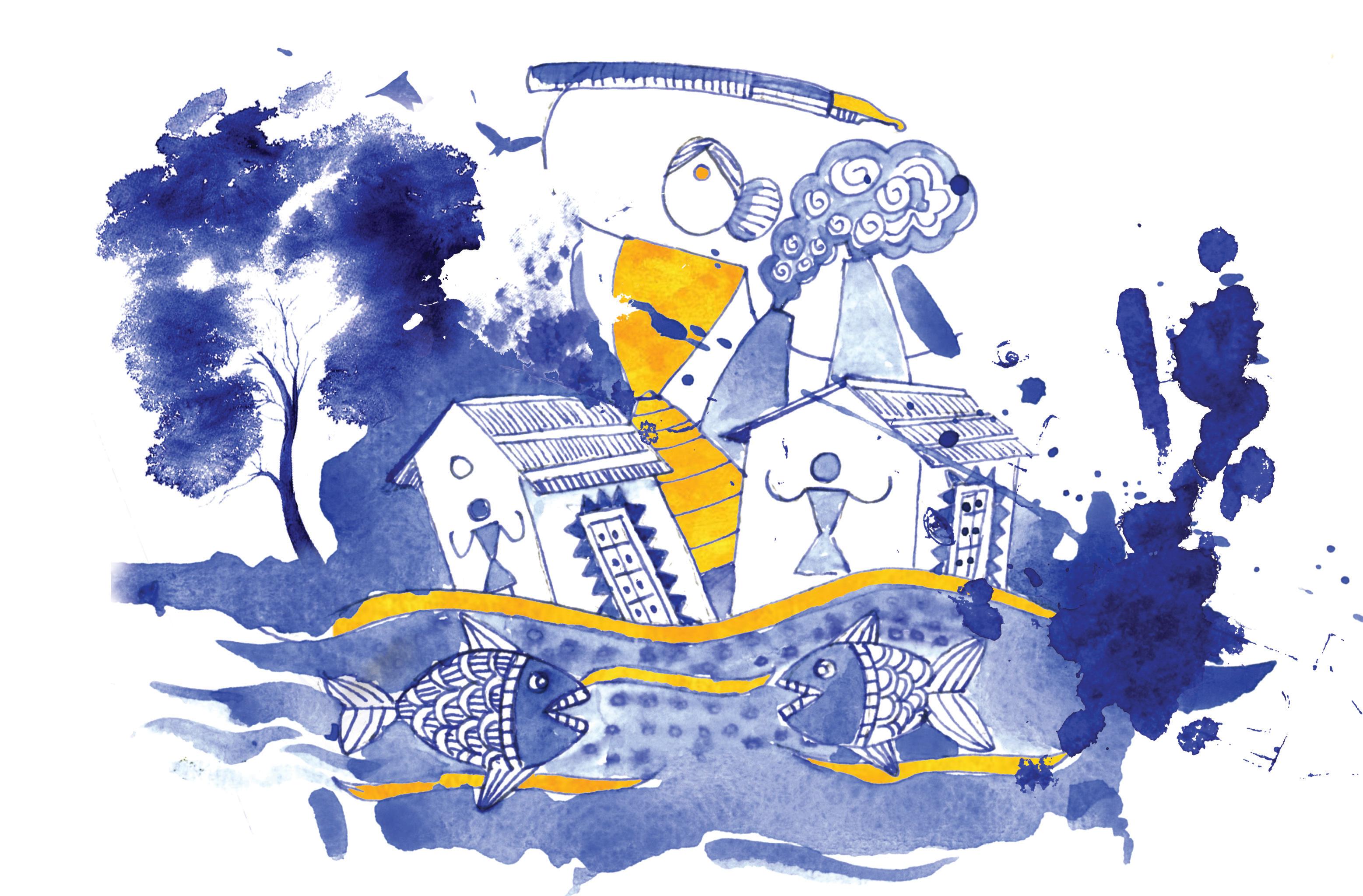
When I started writing poetry in the late 1980s, I confronted a vast tract of death consciousness and alienation. The poets of my time and my language were talking about something which was not at all familiar to my reality or imagination. Most of them were singing in unidentifiable tunes and their images looked too distant. I found my own language to be absurd, meaningless and hard to crack. Our poets and writers were rich with awards; they had the shining laurel over their head and as a teenager I obviously aspired to be one among them.
I started writing by following the trend. But after writing a few, my poems also sounded alien to me. I could not relate myself with my own poems. It would be pertinent to point out that the Odisha of the 1980s was an unending tale of hunger deaths and distress childselling. Living in the land of hunger, I was singing the song of rootless solitude. Literature of my time was not my own; it had some kind of imported imagination planted in our language. The so-called modernism in Odia literature was a colonial hangover and middle-class hallucination. It had no root in Odia life, livelihood or living tradition.
Odia is one of the ancient languages of India. In a literary tradition of 1,000 years, images were mostly from nature. Life in literature was natural and spiritual. Odia literary tradition was deeply embedded with nature, and poetry was all about the beauty of nature and the struggle of humankind for survival.


هذه القصة من طبعة May 16, 2025 من Down To Earth.
اشترك في Magzter GOLD للوصول إلى آلاف القصص المتميزة المنسقة، وأكثر من 9000 مجلة وصحيفة.
هل أنت مشترك بالفعل؟ تسجيل الدخول
المزيد من القصص من Down To Earth

Down To Earth
GREAT NICOBAR DILEMMA
In the fragile ecosystem of Nicobar, strategic development must align with constitutional commitment to protect environment, indigenous dignity

3 mins
March 16, 2026
Down To Earth
CATCH BY THE ROOTS
Sabai grass could be a game-changer for the marginalised economies of West Bengal's dry uplands. All it needs is an efficient market strategy
4 mins
March 16, 2026

Down To Earth
POWERING TRANSITION
India's renewable ambitions are rising rapidly, with half of its installed power capacity now coming from non-fossil sources. Yet the gap between capacity and generation remains wide. The experiences of two pioneering states, Karnataka and Tamil Nadu, which together generate over a fifth of the country's renewable energy, offer crucial lessons for accelerating the transition, reports PUJA DAS from Bengaluru, Chennai, Mumbai and New Delhi
16 mins
March 16, 2026
Down To Earth
At core of survival
Water scarcity defines life in a village inside Sariska Tiger Reserve's critical habitat, as debates over its relocation drag on
5 mins
March 16, 2026

Down To Earth
What's on your plate
An upcoming digital tool can help people learn about the origin of their meals and make climate-positive food choices
2 mins
March 16, 2026

Down To Earth
'Bad environment can never be good economics'
The Supreme Court of India and even the high courts were once very active and took a proactive role in protecting the environment; unfortunately, that is no longer true
4 mins
March 16, 2026
Down To Earth
Things fall apart
IN THE past year, the world has counted more missiles and bombs than hours.
2 mins
March 16, 2026

Down To Earth
Universities in crisis, innovation is stifled
Political control and skewed policies have led to unrest in academia, stifling creativity and meaningful research
4 mins
March 16, 2026

Down To Earth
SPARK IN THE GAME
The Reserve Bank of India's restored recognition of Default Loss Guarantees re-enables credit flow into last-mile electric mobility
3 mins
March 16, 2026

Down To Earth
Ushering in new eras
An appraisal of the state of biodiversity conservation, pollution reduction and climate adaptation regimes in India
3 mins
March 16, 2026
Listen
Translate
Change font size