
استمتع بـUnlimited مع Magzter GOLD
احصل على وصول غير محدود إلى أكثر من 9000 مجلة وصحيفة وقصة مميزة مقابل
يحاول ذهب - حر
'Depopulation would mean fewer people contributing to advancement of knowledge'
October 16, 2025
|Down To Earth
Trends show that in a few decades, global population will begin to shrink. Once depopulation starts, no one knows how to stop it in a sustained way, write DEAN SPEARS and MICHAEL GERUSO, associate professors of economics, University of Texas at Austin, US, in their recent book, After the Spike. The authors, who are also economic demographers, argue that population decline will be detrimental to global progress and that a smaller population would not necessarily be better for the environment. In an interview with ADITYA MISRA, they say that the time to talk about depopulation is now because the search for a solution could take decades. Excerpts:

What are the consequences of depopulation—the worst-case scenarios—that the world needs to worry about or be prepared for?
A future with fewer people will be a future with slower improvements in some areas and stalled progress in others. Over the long run, larger populations—not only national populations, but the global population—make each of us better off. That’s one argument (though not the only one) that we make in detail in our book After the Spike: Population, Progress, and the Case for People.
Living in a big world with many other people makes each of us better off. As we wrote recently in The New York Times: “Whenever people need and want things, they make it more likely that you will get what you need and want. That's true if what you want is good public transportation (because a network of trains and buses can’t operate without enough riders), or green energy infrastructure built on the work of scientists and engineers across generations and borders, or a vaccine for a novel virus, or a cure for a rare disease that only the niche medical specialisation of a big world could produce.”
The past two centuries were a revolution in better living standards as our population climbed. We should not be complacent about retreating to a smaller world.
You write that when depopulation happens, it would not spontaneously halt at a smaller point. Why would it not? Would countries not take steps to check depopulation if it becomes a problem? Why should it be a concern now?
There is no reason to expect an automatic reversal, nor is any playbook sure to halt global depopulation once it starts.


هذه القصة من طبعة October 16, 2025 من Down To Earth.
اشترك في Magzter GOLD للوصول إلى آلاف القصص المتميزة المنسقة، وأكثر من 9000 مجلة وصحيفة.
هل أنت مشترك بالفعل؟ تسجيل الدخول
المزيد من القصص من Down To Earth

Down To Earth
Bitter pill
THE WEB SERIES PHARMA EXPOSES HARSH TRUTHS OF THE PHARMACEUTICAL INDUSTRY, WHERE PROFIT OFTEN BECOMES MORE IMPORTANT THAN HUMAN HEALTH

3 mins
January 16, 2026
Down To Earth
CHAOS IN-DEFINITION
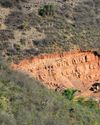
The Aravallis are perhaps India's most litigated hill range. More than 4,000 court cases have failed to arrest their destruction. The latest dispute concerns a narrow legal definition of this geological antiquity, much of which has been obliterated by mining and urban sprawl. While the Supreme Court has stayed its own judgement accepting that definition, it must see the underlying reality and help reconcile development and national security with conservation.
19 mins
January 16, 2026

Down To Earth
BITS: INDIA
Indore has recorded 16 deaths and more than 1,600 hospitalisations between December 24 and January 6.
1 min
January 16, 2026

Down To Earth
GUARANTEE EXPIRES
India's rural employment guarantee law is replaced with a centrally controlled, budget-capped scheme. Is this an attack on the right to work?
3 mins
January 16, 2026

Down To Earth
BLOOM OR BANE
Surge of vibrant pink water lilies in Kuttanad, Kerala, provides socio-economic benefits, but the plant's ecological impacts must be understood
4 mins
January 16, 2026
Down To Earth
INVISIBLE EMPLOYER
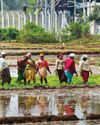
Field and academic evidence shows sharp falls in casual agricultural employment at places where groundwater access declines
3 mins
January 16, 2026

Down To Earth
Schemed for erasure
Does the VB-G RAMG Act address structural weaknesses long observed in MGNREGA's implementation?
10 mins
January 16, 2026

Down To Earth
School of change
An open school in Panagar, Madhya Pradesh, aims to protect children of tribal settlements from falling into the trap of addiction
2 mins
January 16, 2026

Down To Earth
PULSE OF RESILIENCE
As a climate-ready crop, cowpea shows potential for widespread use in India
3 mins
January 16, 2026
Down To Earth
BITS GLOBAL
Britain recorded its hottest and sunniest year ever in 2025, the country's meteorological office said on January 2.
1 min
January 16, 2026
Listen
Translate
Change font size